
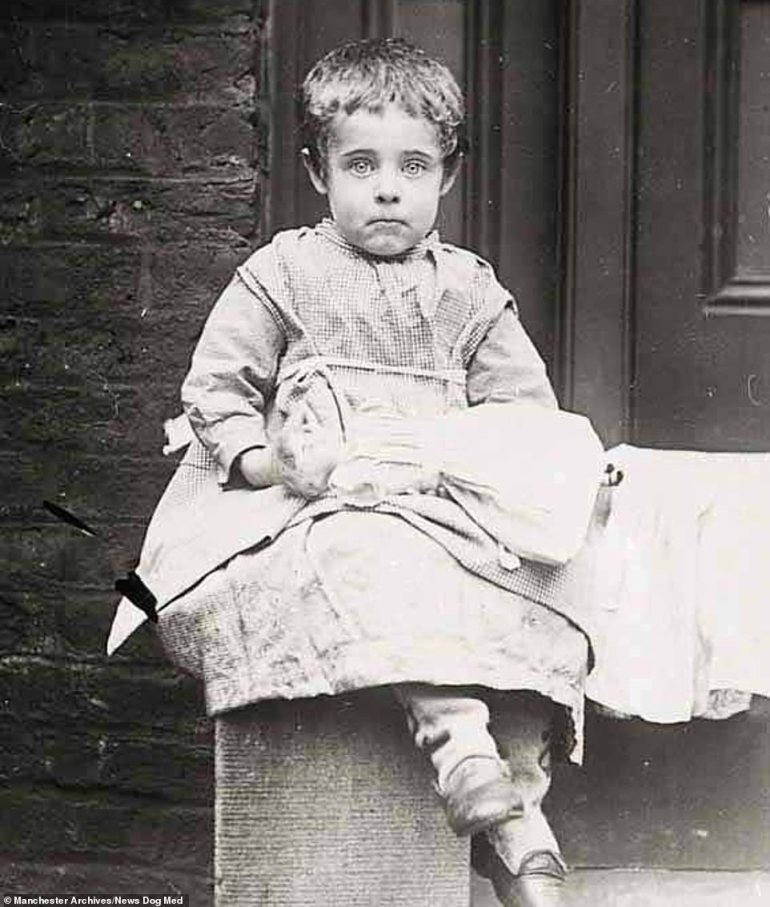
A sorrowful-looking child pictured at the Crumpsall Workhouse, Manchester, where this poignant collection of images was taken around 1897. They provide a vivid insight into how Victorian Britain dealt with its poor, sick and destitute

A wicker basket full of babies is wheeled through an empty courtyard past a stark, soot-lined brick wall, as a kindly nurse in ward dress fusses over them
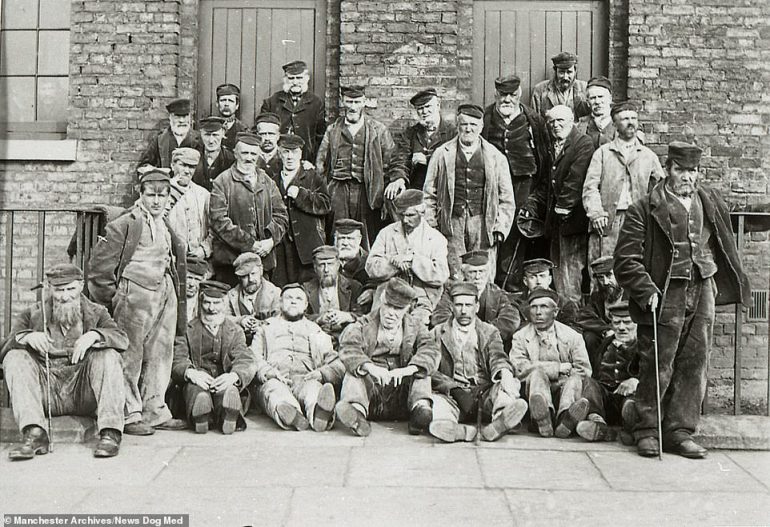
A group of male labourers pose for a photo on a set of steps in the courtyard of Crumpsall Workhouse, which required all able-bodied men and women to work as a condition of their entry
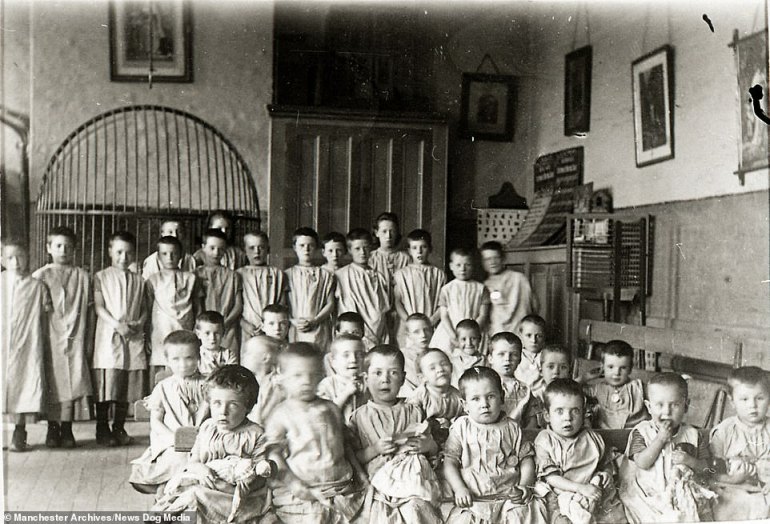
Children (like this group gathered in a room) where separated from their parents after entering workhouses. This was part of a deliberate policy of making the institutions as unwelcoming as possible to persuade people to use them as a last resort
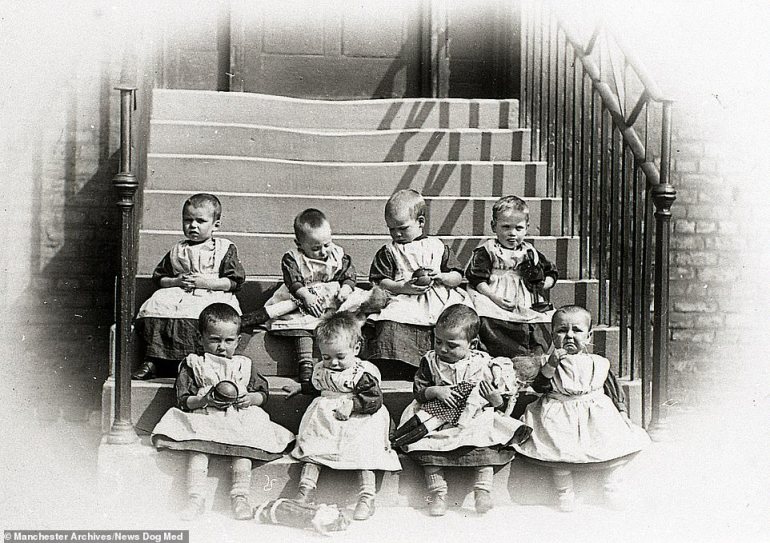
After The Poor Law Amendment Act was passed in 1834, people were only able to get poor relief if they went to live in a special workhouse and worked for their food and accommodation there.
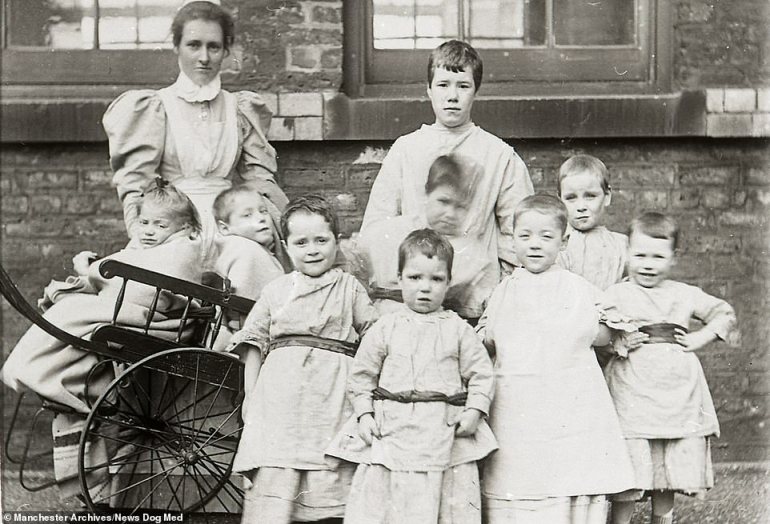
A girl in a wheel chair (left) is a reminder that workhouses were seen as places for the sick as well as the destitute. Many of the buildings that once housed workhouses were replaced with hospitals after the foundation of the National Health Service
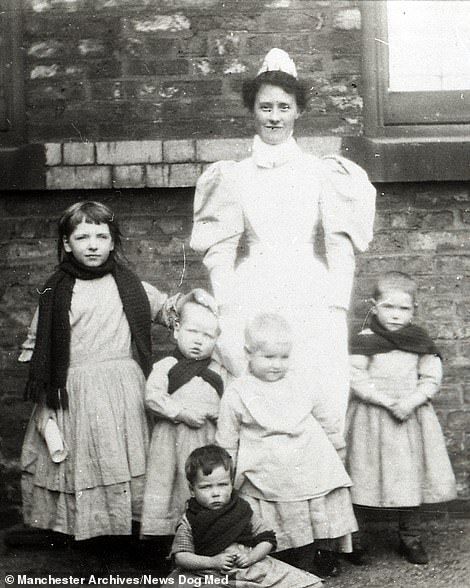

In the early days of the workhouses, professional nurses like this one – were actually a rarity, and much of the nursing work was done by volunteers, who were often drunk and completely unsuited to providing healthcare
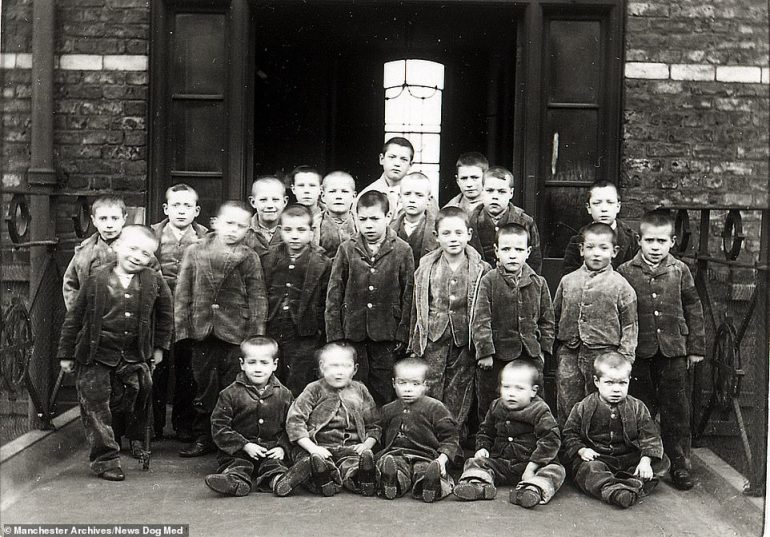
A group of boys wearing regulation workhouse uniform

Wards, like this one, provided healthcare for the sick poor who were unable to work. This varied hugely in quality across the country, depending on the amount of resources put into the system and the quality of the employees
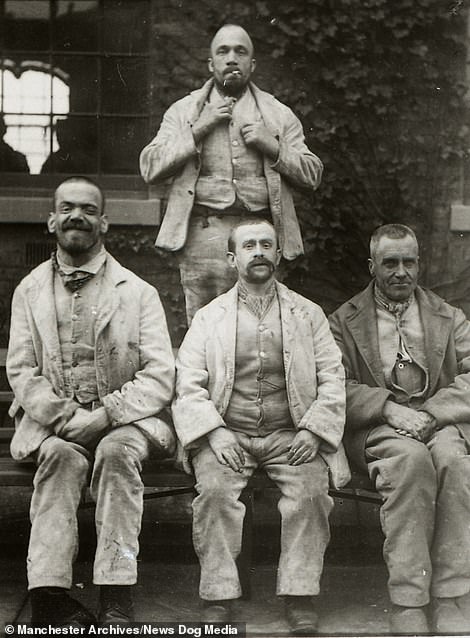
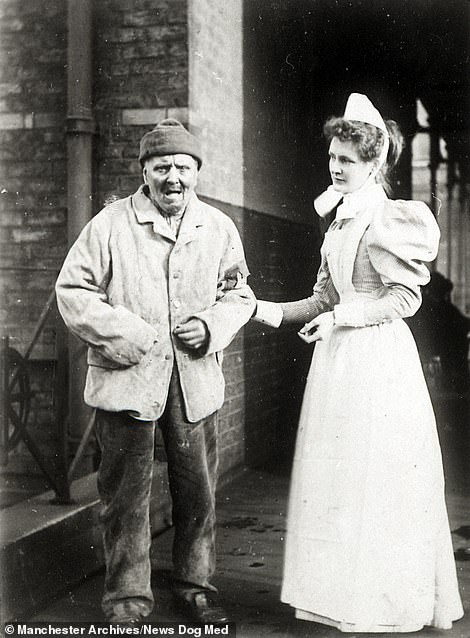
Although Victorian Britain had asylums for the mentally ill, people with learning difficulties were often confined to workhouses, where they were known by the demeaning title ‘idiots’
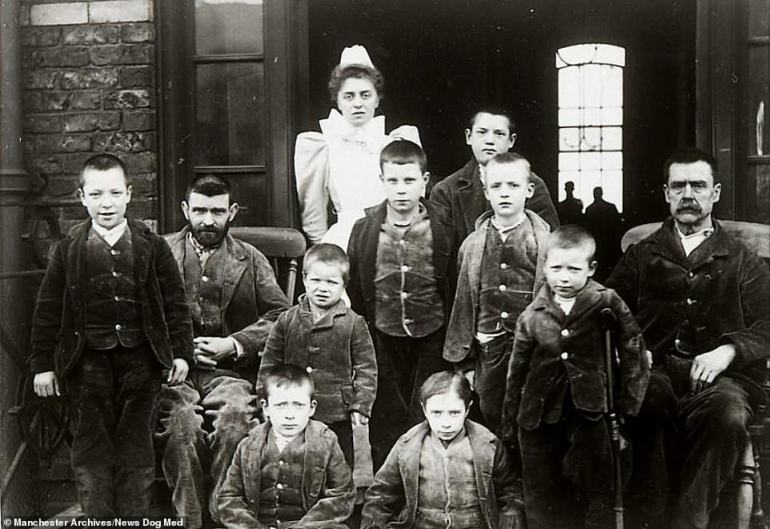
A group of people, including one boy leaning on a crutch a photo taken around the turn of the 19th century
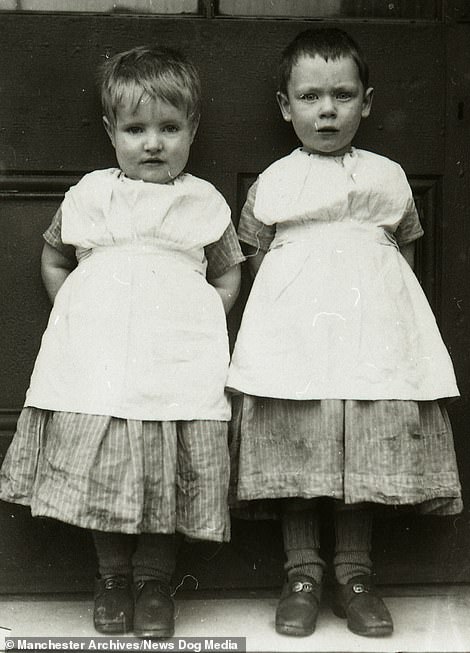
Two children in workhouse uniform pose for a photo
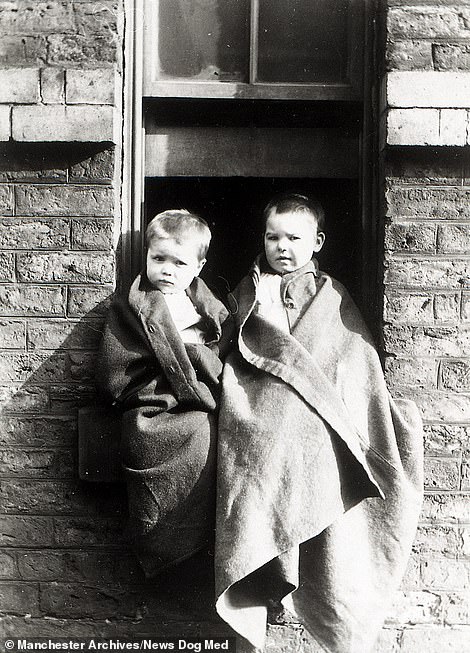
Two children in workhouse sit on a window ledge wrapped in sheets – perhaps bedclothes

This inmate’s large head (left) could be a sign of a medical condition which may have left him struggling to find work, and therefore likely to be confined to the workhouse

A nurse sits with a group of babies outside the building. Conditions were often poor even in the outdoor yards at Victorian workhouses
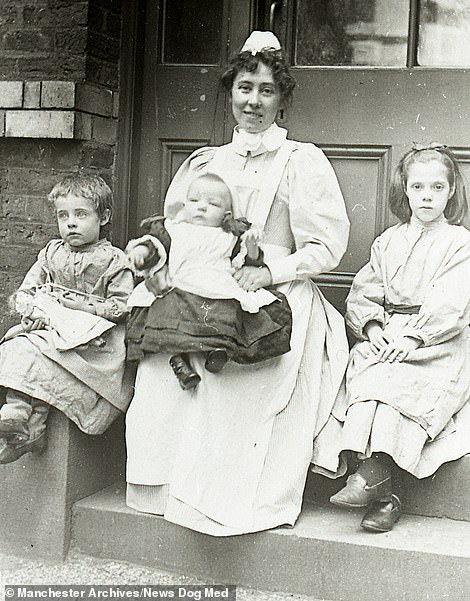
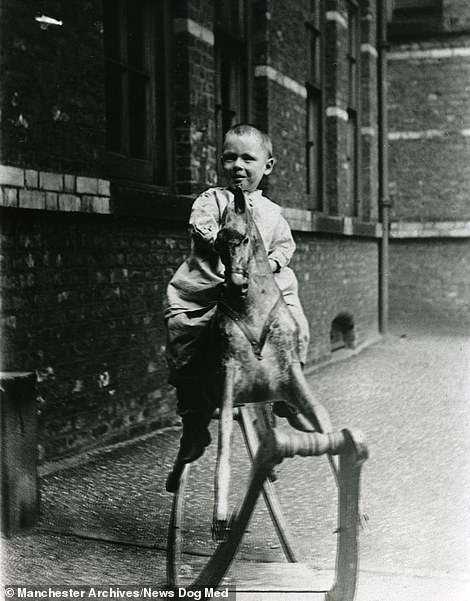
A smiling nurse holds a baby on the steps of the workhouse
and a child – with a shaved head to prevent lice – plays on a rocking horse
 ukhomeschool