

The term ‘digital safeguarding’ has been on the rise over the last few years, but what does it mean? We believe digital safeguarding means the same as safeguarding – protecting children, young people and adults at risk of abuse and neglect, with the only difference being that it is through, or on, digital mediums.
Why do we need digital safeguarding?
Digital connectivity comes with digital risks, such as cyber bullying, fraud, exploitation and grooming. These risks can lead to us experiencing social, physical, psychological or emotional harm. Microsoft’s Digital Civility study found that ‘those between the ages of 18 and 34 — are exposed to the highest levels of online risk’ this was followed by those aged 35-49 and then those aged 13-17.
As one the most vulnerable groups, how can we make sure we protect children and young people online?
Digital risks
In order to digitally safeguard children and young people, we need to understand the risks they are most likely to be exposed to.
The top risks children and young people face online are:
- Cyber-bullying
- Online Grooming
- Gaming addiction
- Sexual harassment
Cyber-bullying
Cyber-bullying is a specific kind of bullying which takes place over digital channels like social media platforms and on mobile phones. It can involve all kinds of victimisation including online trolling, the sharing of private photos, the sending of abusive messages, impersonation, cyber-stalking and more.
Cyber-bullying can affect children in many ways, depending on how long it goes on for and who it is by, it can lead to visible behavioural changes. As a parent, carer or teacher responsible for safeguarding,
here are some signs of cyber bullying to look out for.
How to spot signs of a child being cyber-bullied
With the dawn of the digital age and the proliferation of social media activity across the country, a new kind of bullying has emerged: cyber-bullying.
Cyber-bullying is a specific kind of bullying which takes place over digital channels like social media platforms and on mobile phones. It can involve all kinds of victimisation including online trolling, the sharing of private photos, the sending of abusive message, impersonation, cyber-stalking and more.
With the digital nature of cyber-bullying, it can be hard to spot cases unless the bullied person comes forward. In this blog, we take a look at how to spot the signs that a child is being targeted by a cyber-bully.
They become nervous when on their phone or computer
A good sign that a child may be the target of cyber-bullying is that they are nervous when responding to notifications on their phone, or while they are at the computer. One of the worst things about cyber-bullying is how easy it is for the bully to access their targets, and it can be hard for the bullied child to escape. When using their phone or computer, the child is vulnerable to real-time hate messages, trolling or flaming attempts, and so when they display nervousness when accessing phone or computer, it can indicate that they are being cyber-bullied.
They stop using phones and computers altogether
If your child has previous shown enthusiasm or has enjoyed using phones and computers in the past but has abruptly stopped in a short period of time, this can be a sign that they’re being cyberbullied. Cyber-bullying can be so severe that its target can want to turn the phone or computer off completely to avoid having to face the online abuse. The child might also try to hide their screen from you so you can’t see the abuse, either by only using it when you aren’t around or by turning the screen off in your presence.
They become worried about going to school
Cyber-bullying ca often transfer from the digital world to the real one, and cyber-bullying and real-life bullying rarely come without the other. If a child is scared or anxious about going to school, this can indicate that their tormentors are continuing the bullying offline, in the schoolyard or classroom. In these cases, after raising the issue with your child, it might be worth also getting in contact with their teacher with your concerns.
They become withdraw, anxious and depressed
Bullying, including cyber-bullying, is one of the leading causes of mental health issues among children in the UK. Depression, anxiety and low self-esteem are all examples of these problems – if you see the symptoms of these issues in your child, but you don’t see any evidence of real-world bullying, it may well be that your children is being targeted by cyber bullies. In this situation, it is important to talk to your child as soon as possible so that you can provide support from an emotional standpoint.
If you suspect your child is being bullied, either online or off, the first thing to do is to sit down and talk to them. If they don’t want to talk to someone they know, they can ring Childline on 0800 1111 for confidential support
Online grooming
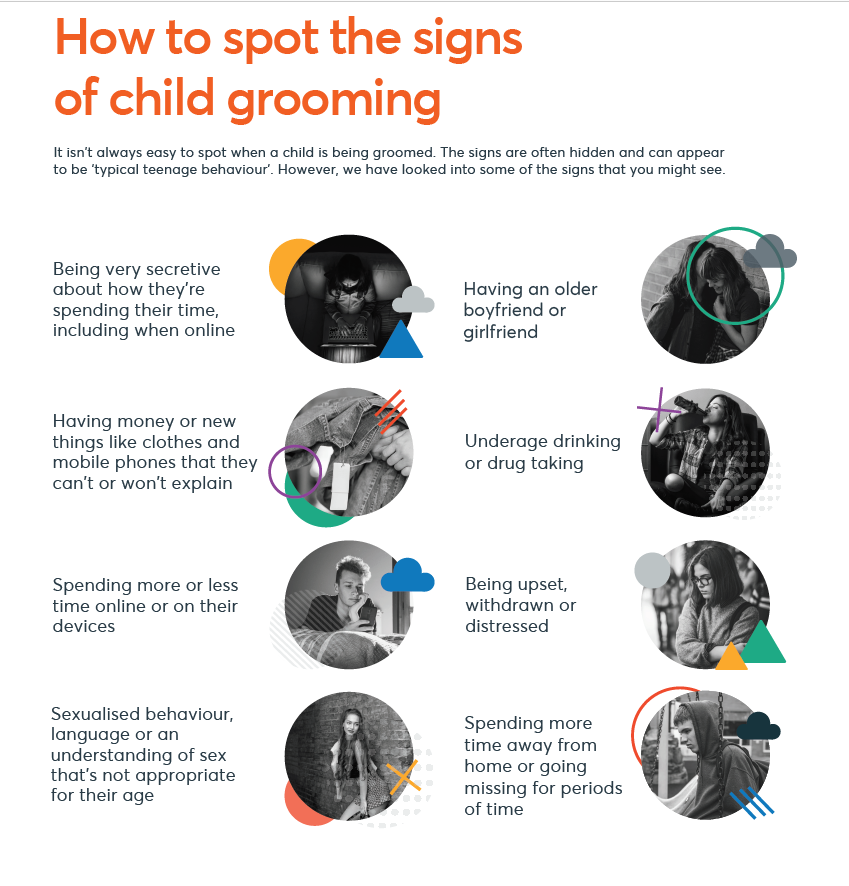
Online grooming typically involves an older person attempting to get close to a child with the intention of sexually abusing them. Although grooming can occur in real life, the internet provides a platform and anonymity, and perpetrators can easily pretend to be someone else and they have the means to exploit a larger audience.
Children and young people don’t always understand the risks of speaking to strangers online. In an age where the number of followers on social media equates to ‘success’, children and young people don’t vet out who is actually following them. In addition to this, they often post content with tagged locations making it easier to track them.
To help you spot the signs of child grooming,
Gaming addiction
Gaming addiction is a relatively new term which describes the action of compulsively playing games online or on mobile phones. The World Health Organization has classified gaming disorder as a mental health condition for the first time.
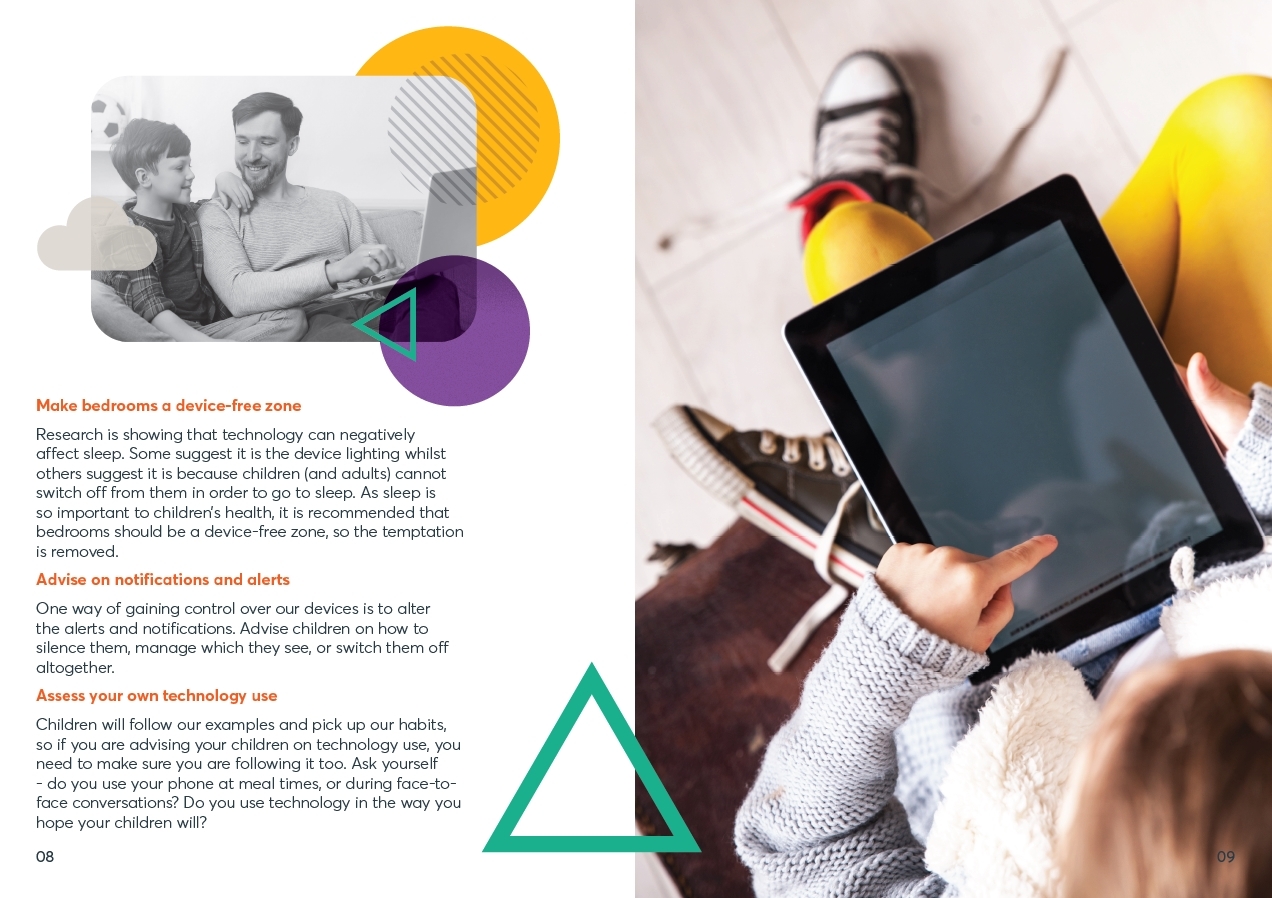
Gaming addiction can happen when children and young people have unrestricted and unmonitored access to the internet. As games can now be played on mobile phones, you can easily fall into the trap of playing for hours on end, often late into the night. Parents and carers should allow a limit on the time children use their phones to help restrict access.
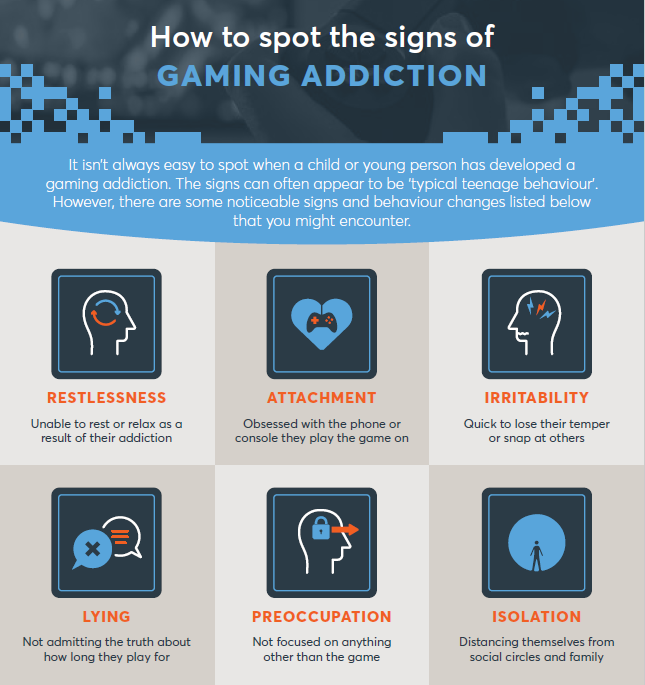
Gaming addiction can lead to depression and other mental health conditions, it can also be hard to spot but here are some signs that a child or young person may be addicted to gaming.
Simply put, gaming addiction is when an individual has a compulsive need to play games, to the point which it interferes with their normal life. If they’re not playing, then the individual will have compulsive thoughts about the game.
Gaming is a common part of life, especially for young children and teenagers and it can help develop cognitive ability such as improving memory, coordination and social skills. Although it has positive effects, gaming can however lead to addiction resulting in mental health issues.
Compulsive behaviours can develop when children and teenagers have unmonitored access to games. Often playing late into the night, the addictive nature of gaming means younger people can become easily hooked. When parents or carers are unaware of the time spent playing online it can be hard to monitor or understand when gaming addiction is materialising. Below are some symptoms which are common for those who have a gaming addiction.
Symptoms of gaming addiction
Restlessness
When they are unable to game, the individual finds it difficult to remain still and calm. They are constantly fidgeting, pacing and unable to focus on any other task due to frustration at not being able to play.
Attachment
Whatever medium they play their games on, be it a games console, their phone or online the individual forms an unhealthy attachment to it. Often spending most of their time playing the game.
Irritability
The individual is quick to lose their temper or snap at others if they’re away from the game for a long period of time. They also display signs of a bad mood if the game didn’t go well or they lose.
Preoccupation
The individual is fixated with thoughts of gaming activity, which can leave them unable to think about anything else. Often if they have important tasks to do, they are distracted and cannot focus.
Lying
A feeling of shame and guilt can preside which acknowledges they have an unhealthy addiction, the individual may often lie about the amount of time spent playing games.
Isolation
They are withdrawn from their usual social circle and usually the family. They also stop taking part in activities that they previously enjoyed, instead spending that time gaming.
How to help
Parents and Carers
As a parent or carer, if you notice a change in behaviour or the symptoms mentioned above you should consult with a Doctor for help and further information. Amid a growing number of teenagers and young people whose gaming use is affecting their mental health, the NHS has invested in a clinic dedicated to help those aged 13 – 25 deal with gaming addiction.
Teachers and Schools
As a teacher, you are more likely to notice a shift in behaviour than parents or carers. Students spend most of their day at school and if a gaming addiction has manifested you will notice changes to the way the student acts, behaves and how they focus in class.
The social cues are easily recognisable and when someone develops an addiction, they have a stark change in how they act and speak, so between parents, carers and teachers you should be able to pick up on it.
Just as you would traditionally safeguard children from other forms of abuse, if you spot the symptoms of gaming addiction you should consult your safeguarding lead and take it further.
Schools should look at their policies and procedures for internet and phone usage in school and can look to block certain games and sites being accessed. There are many crazes around schools from different games and challenges online so it can be hard to know when someone is addicted or if they’re simply passionate about gaming, however if you manage to intervene early you may be able to help the student before an addiction materialists.
Online sexual harassment
Sexual harassment can be defined as unwanted sexual conduct. As the digital world grows, sexual harassment has taken on new platforms and can be perpetuated online, specifically on social media sites.
Nearly a third of teenage girls have been sexually harassed online by children their own age, a study from charity Childnet suggests. The rise of sexting, revenge porn and unsolicited private images have catapulted online sexual harassment to the forefront over the last few years.
Sexual harassment can lead to a plethora of harm for children and young people, affecting them mentally, physically and emotionally.
How to help
There is an abundance of risks young people face online everyday. The ones we have highlighted are the main ones which can lead to detrimental effects on the health and mental wellbeing of children and young people.
As practitioners, parents and carers, it can be difficult to spot signs, or understand what young people are facing online. The approach needed to help digitally safeguard children and young people is a collective one, whereby all those who are responsible for safeguarding work together to look out for signs of cyber-bullying, sexual harassment, gaming addiciton and online grooming.
Having open and honest dialogue of the dangers and risks of the internet is also a great way to help shape and prepare children for digital resilience.
There are also a number of great resources for schools and teachers, such as The UK Council for Internet Safety’s framework for practitioners, designed to equip children and young people for digital life. In addition to this they have resources and guidance online to help you build a robust policy within your school, including the Digital Resilience Framework.
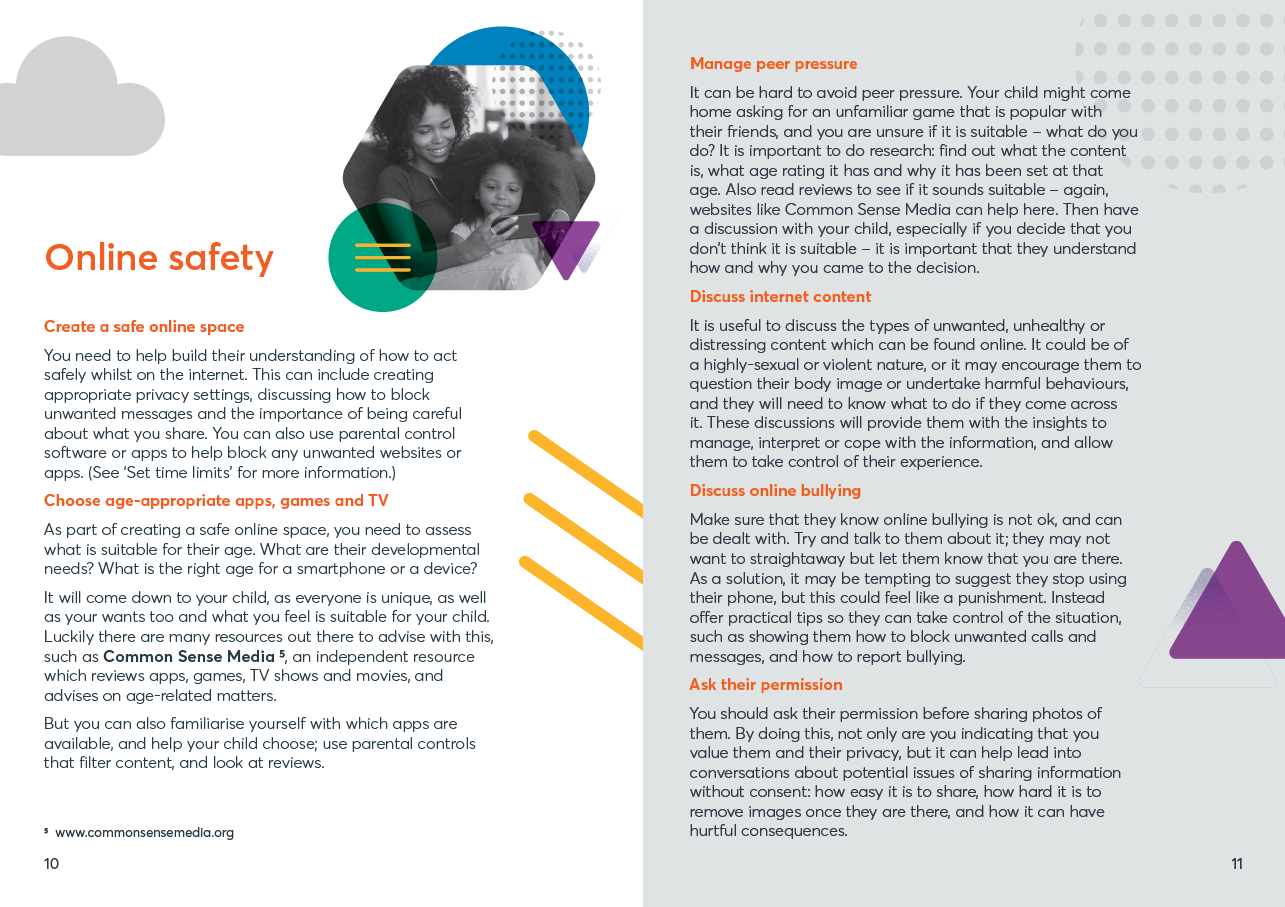
It can be daunting when your child starts to interact with the online world, and it is natural to want to do everything you can to keep them safe. But with an overwhelming amount of information out there, it’s hard to find the best ways to do this.
This is why we have put together a handy guide, which details practical tips, websites and resources you can use as a parent or carer to help your child develop digital resilience. It advises on how you can empower them to develop healthy attitudes, help them establish a balance between online and offline activities, and help them stay safe online.
right click and choose view image to enlarge


 ukhomeschool