
flower related folklore, which enjoys a long history of stories and legends spanning dozens of cultures.
April Flower Lore: Sweet Pea
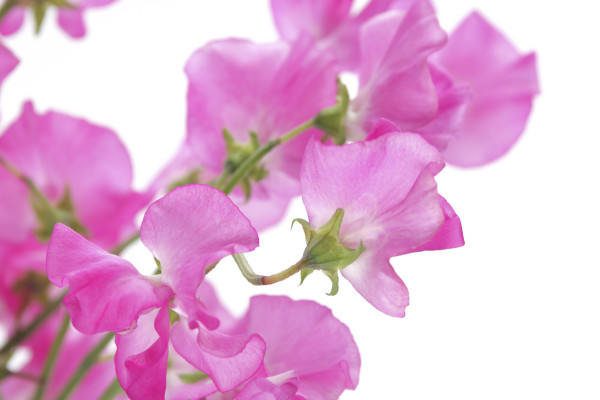
Flowers, perhaps more than any other part of the natural world, are fascinating because of the many layers of meaning people have shrouded them in throughout history. There is a whole sub-category of etiquette surrounding which flowers are appropriate to give at what times, and to whom. The unending rules surrounding something so simple as a flower can be dizzying. Another aspect of flower lore concerns the designated flowers for each month of the year. The official flower for April is the sweet pea.
Sweet Pea Folklore
One bit of folklore surrounding the sweet pea comes from Ireland, where it is believed that if you plant a sweet pea before sunrise between March 1 and March 20, and especially on St. Patrick’s Day, your sweet pea will grow to be larger and more fragrant.
In Victorian times, flowers were used as coded messages to express feelings that could not be spoken aloud. Sending sweet peas meant “Thank You for a Lovely Time.”
March Flower Lore: Daffodils
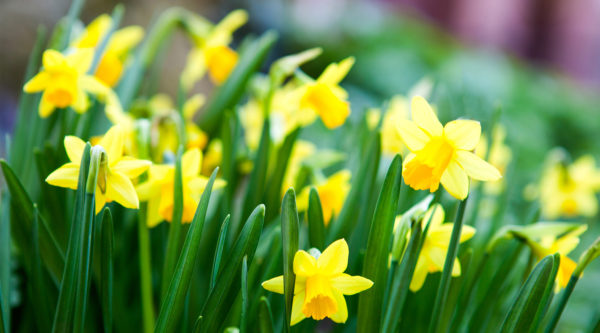
daffodils are among the earliest flowers to bloom each year, and often seen as harbingers of spring.
Daffodils take their name from the Greek word asphodel, meaning “kings spear.” This is somewhat confused by the fact that there is already a genus of plants that goes by the name asphodel. Jonquils, on the other hand, borrow their name from the Latin word for rush, a type of grass. Both plants are species of narcissus, named for the unfortunate youth of Greek legend who drowned while admiring his own reflection.
Daffodils: Symbols of Rebirth
Because they are one of the first flowers to return at the start of spring, daffodils are said to represent rebirth and new beginnings. Other popular meanings include faithfulness and honesty, because they never fail to return, year after year, even after the harshest of winters.
Traditonally, herbalists used daffodils as a cleansing agent, to remove impurities from the body. They can be used to induce vomiting, as well as to clean wounds, soothe burns, and ease joint or muscle pain. Modern medicine has also found the plant useful. Galantamine, a drug used to combat Alzheimer’s disease, is produced by daffodils.
February Flower Lore: Violets
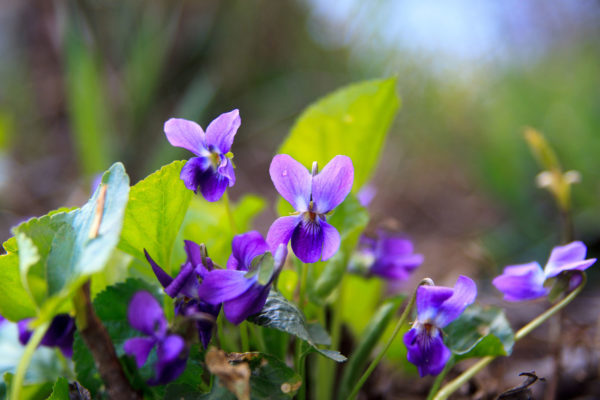
About Violets
There are actually hundreds of species of violets growing on nearly every corner of the Earth. Also known as pansies or heartsease, violets are usually, but not always, flowering perennial plants. As their name suggests, violets are generally…violet, or purple, in color, but again—not always. Other possible colors include blue, white, and yellow. Violets are known for their distinctive heart-shaped clusters of petals and very sweet fragrance.
They typically bloom in the early spring, and can be either cultivated or grow unbidden as common lawn weeds.
Violets are edible, and are often used to decorate salads, or sprinkled over fish or poultry. They are also often candied in sugar and eaten on their own or used to decorate pastries, or distilled into a sweet syrup used to make violet-flavored treats or liqueurs.
Because violets are rich in vitamins, A, C, and antioxidants, they are also used in herbal medicines, and can be used topically as an antimicrobial.
Violets’ Symbolism
The violet is said to be a symbol of faithfulness, modesty, and chastity. These meanings are connected to the Greek myth that explained its origin.
According to the Greeks, the goddess Artemis changed one of her nymph companions, who had sworn to remain a maiden forever, into a violet to protect her from the unwanted attentions of the god Apollo.
The flowers are also often associated with the Virgin Mary, and said to represent her chastity and faithfulness.
January Flower Lore: Carnations
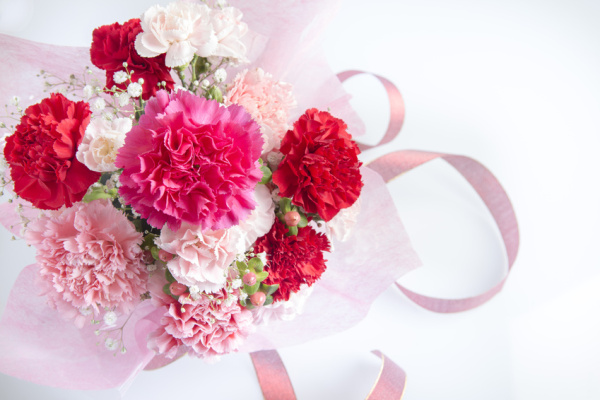
Another aspect of flower lore concerns the designated flowers for each month of the year. January’s official flower is the carnation.
What Are Carnations?
Carnations are a perennial herb native to the Mediterranean region. Carnation stems can grow to be at much as 30 inches tall, and the flowers are 2-3 inches wide with a large number of sweet smelling petals. Their natural color is a bright pinkish-purple, but other colors have been cultivated, including red, white, yellow, and green. Their formal name, dianthus, comes from Greek for “heavenly flower.”
Carnations are said to be primarily a symbol of love, though the meaning can differ depending on the color. In France, carnations are the traditional funeral flower, and are it is considered bad luck to give them for any other occasion.
The leaves of carnations were once mixed with wine to control fevers, while the flowers were believed to be an effective antidote some poisons. The plant was also once popularly used to add flavor to beer and wine.
Carnation Legends and Lore
One legend about the origin of carnations states that the plants sprang up from the tears of the Virgin Mary as she watched Jesus carrying his cross to Calvary. This is probably why pink carnations are, to this day, the symbol of motherly love.
December Flower Lore: Narcissus
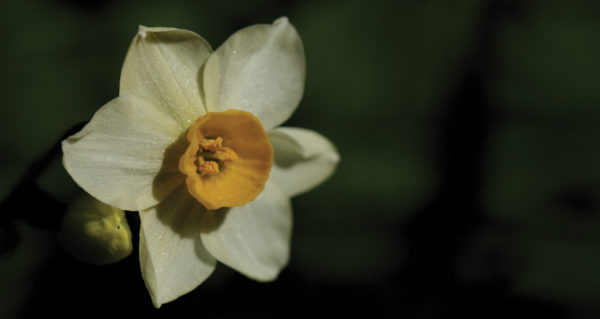
All varieties of narcissus have similar structure, with a bell-shaped center surrounded by six large petals. Native to the Mediterranean region, as well as parts of Asia, narcissus is among the earliest flowers to bloom each year, and often seen as harbingers of spring. Paperwhites, however, have long been associated with Christmas, because they are easy to grow indoors, and can be brought to bloom at this time of year.
Narcissus takes its name from the mythological Greek figure, Narcissus, a handsome youth who was so vain that he become transfixed by the sight of his own reflection in a pool of water and stood gazing at himself until the gods eventually turned him into a flower.
For that reason, narcissus flowers represent self-admiration, formality, and egotism. When given to someone else, the flowers mean that the recipient is sweet. The flowers are reminiscent of the myth not only because they like to grow at the edges of ponds, but also because the hardy, upright stems bend dramatically near the top, so that their blooms lean over toward the ground.
Traditionally, herbalists used narcissus plants as a cleansing agent, to remove impurities from the body. Modern medicine has also found the plant useful, as galantamine, a drug used to combat Alzheimer’s disease, is produced by daffodils.
November Flower Lore: Chrysanthemum
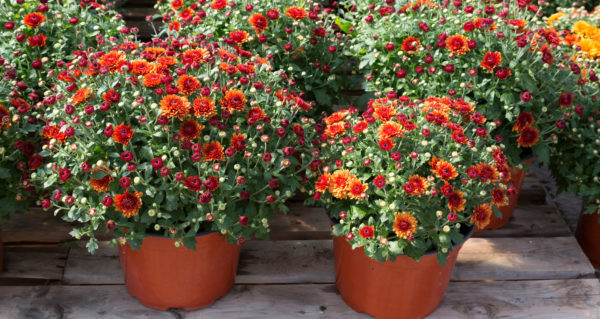
Chrysanthemums are a perennial flowering herb first cultivated in China More than 3500 years ago. It takes its name from Greek words chrysous, meaning “golden” and anthemon, meaning “flower.” They are the flower most associated with autumn.
Over time, people cultivated chrysanthemums to the point that the varieties most people have in their gardens are very different from the wild version. Domesticated chrysanthemums are much fancier than wild ones, and can come in a wide array of colors and shapes. From daisy-like cultivars to buttons to pompoms and more, gardeners now recognize 13 distinct blooms shapes. And while wild chrysanthemums are always yellow, cultivated flowers can be white, red, purple, pink, green, orange …
In China, people have long made a sweet drink from the flowers, called simply chrysanthemum tea, and the leaves are eaten steamed or boiled. The plant is also a potent insecticide and has traditionally been used medicinally for its antibacterial and antifungal properties.
In the United States, chrysanthemums are associated with love, luck, and happiness. In most of Asia, and in certain European countries, though, they are associated with death and mourning and are reserved for use in funeral arrangements. In Japan, where the flower has become the official emblem for the emperor, chrysanthemums are celebrated with an annual “Festival of Happiness.”
October Flower Lore: Calendula and Cosmos
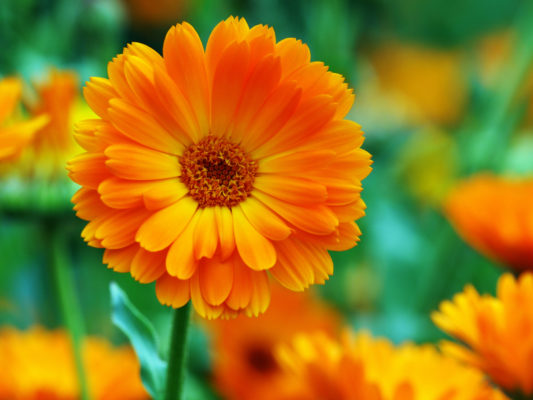
Another aspect of flower lore concerns the designated flowers for each month of the year. The official flower for October is calendula, also known as “pot marigold.”
Calendula is a musky-smelling perennial flower that can grow to be up to about 31” tall. The flowers are generally yellow, orange, or some combination of the two, with a large number of curly-edged petals. Though they can be grown at any time the climate allows, their golden coloring makes them a popular potted plant during the fall.
The name calendula comes from a belief among the ancient Romans that the plant always flowered on the first day of the month, or “calends.” Other popular names include Bride of the Sun, Drunkard, Goldes, Holigolde, Marybud, Marygold, Mary Goweles, Ruddes, Ruddles, Spousa Solis, and Summer’s Bride.
The petals are edible and make a popular addition to salads. They also make an attractive garnish. Due to their bold coloring, they have been historically used to make cosmetics and fabric dyes throughout much of the world.
The Romans used calendula to treat scorpion bites. It has also been used to relieve cramps, promote gastrointestinal health, heal wounds, boils, and bruises.
In the middle ages, calendula was one ingredient in a popular potion that was said to allow the drinker to see faeries. According to flower lore, sending someone calendula means “my thoughts are with you.”
Another Flower Attributed to October Is Cosmos
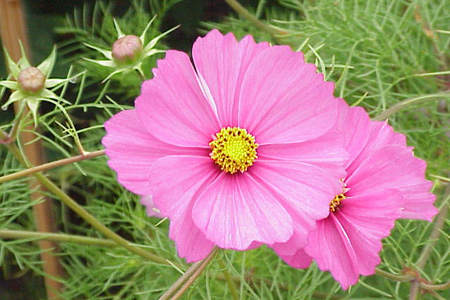
The name cosmos refers to any of about 20 species of herbaceous perennials native to the southern U.S., Mexico, and Central and South America. In good soil, the plants can grow to be nearly 7 feet tall. The flowers themselves have a central disk, usually yellow, with petals surrounding it, similar to members of the daisy family. Colors vary among the many species, from white through pink and light purple to golden yellows and oranges.
The name cosmos comes from the Greek word for harmony. Gardeners will frequently give a gift of cosmos, because they are said to bring good luck. Cosmos are lucky in at least one sense: they repel pests, which makes them a popular companion plant in many gardens.
According to the Victorian language of flowers, cosmos represent modestly. They are also often associated with a couple’s second wedding anniversary.
August Flower Lore: Gladiolus and Poppy
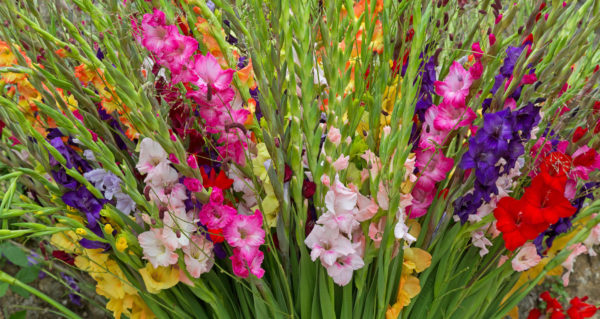
History and Lore of the Gladiolus
The name gladiolus comes from Latin word for “sword,” so named because the flowers grow up a long sword-like shaft. The name is commonly used for any of about 260 species of flowers, all of which share a similar body structure. They come in a range of colors, including pink, red, purple, orange, white, and more.
To the ancient Romans, gladioli represented strength of character, sincerity, and generosity. Their sword-like shape caused them to be associated with gladiators.
The ancient Greeks believed the flower sprang from the ground from the blood of Hyacinthus, a lover of the god Apollo who was accidentally slain by a discus. This myth eventually became more general, and one popular belief was that gladioli grew whenever anyone was slain by a sword.
Gladiolus’ Health Properties
In parts of Africa, the gladiolus is believed to have magical properties. It has been used to cure everything from common colds to painful menstruation but is most effective for digestive disturbances, including diarrhea, and constipation. In cultures where dysentery is common, it is often used to ease the symptoms.
The Poppy: August’s Other Official Flower
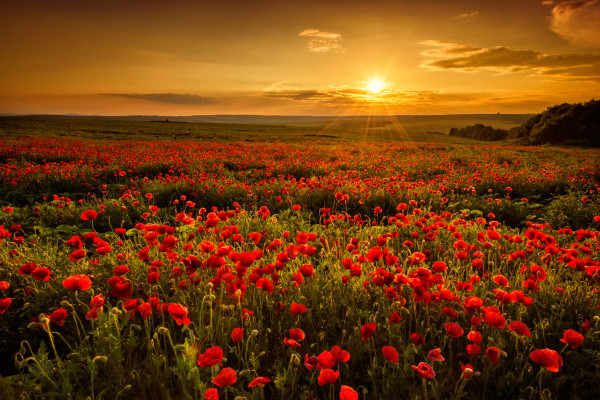
Poppies are vibrant flowers with large, round, papery petals. Poppy plants produce one flower per stem, each with four to six petals, depending on the species. They come in a wide variety of colors, including white, pink, orange, yellow, and most commonly red, and often have dark centers.
Poppy seeds are a popular culinary ingredient, most often used to top pastries. Opium poppies also contain compounds that are used to produce morphine and codeine, two powerful pain-relieving drugs. In ancient Egypt, doctors prescribed poppy seeds to patients as a pain reliever.
Poppy Symbolism
Poppies are rich in symbolism, having long been used as a symbol of sleep, peace, and death, due both to their deep red color, resembling blood, and their opiate properties. Poppies were used as offerings to the dead in ancient Greece and Rome, and were sometimes said to be a symbol of resurrection.
Today, poppies are most often associated with honoring soldiers who lost their lives at war, and are worn on Memorial Day in the unitrf kingdom,United States and Remembrance Day in Canada.
July Flower Lore: Larkspur and Water Lily
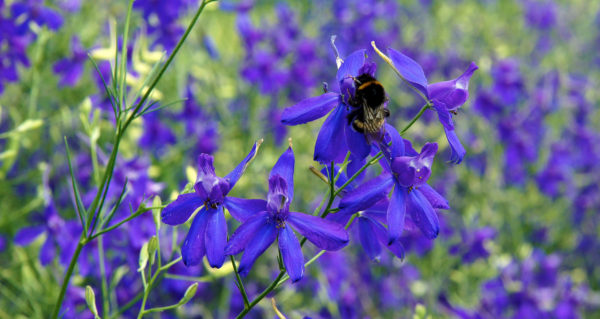
Larkspur can refer to any one of 300 species of perennial flowering plants in the delphinium family, as well as to their close cousins in the consolida family. Its genus name, delphinium, comes from the Greek word for dolphin because the plant was said to resemble a dolphin’s nose. Other popular names include lark’s heel, lark’s claw, and knight’s spur.
The flowers grow in groups along a single stalk, much like gladioli, and range in color from whites and yellows to deep reds, blues, and purples. Each flower has five petals and a protruding center — its “spur.”
Larkspur As Medicine? Just Don’t Eat It!
Larkspur is poisonous if ingested, and is responsible for many cattle deaths in areas where it grows wild in pastures. It is also said to have medicinal and magical properties and has been used to cure eye diseases, asthma, dropsy, and head lice. It was also believed to provide protection against lightning, and, in Transylvania, it was planted around stables, allegedly to keep witches away.
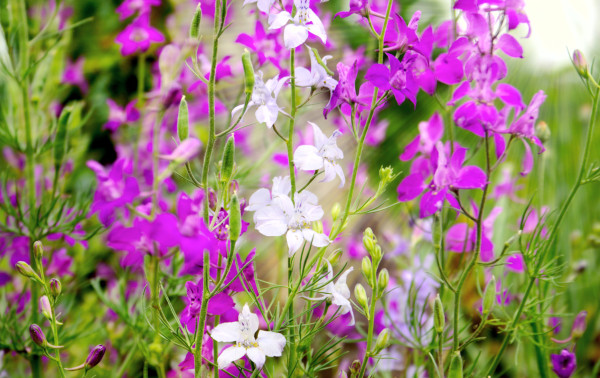
Numerous origin stories about larkspur exist. The ancient Romans, borrowing the dolphin terminology from the Greeks, believed that the god Neptune transformed an endangered dolphin into the flower for protection.The field larkspurs under the morning sun close up
The Pawnee tribe of North America believed that the mythological figure Dream Woman cut a hole in the sky to look down on Earth beings, and crumbs from the blue sky fell to the ground, becoming larkspur.
In medieval Italy, it was said that larkspur came about when three warriors slew a fierce dragon and wiped their swords in the grass. The dragon’s blue blood and venom mingled to create a beautiful, poisonous blue flower.
Like lily of the valley, the flower of May, larkspur is also associated with the Virgin Mary and is said to represent her tears.
Despite its toxic properties, larkspur is commonly associated with lightheartedness and youth, probably because it grows in mid-summer when many people have fond memories of carefree days away from school.
During the Victorian era, flowers came to have a language of their own. People used them to send messages they wouldn’t otherwise speak aloud. According to this language, pink larkspur symbolizes fickleness, white larkspur symbolizes joy, and purple larkspur communicates that the recipient is sweet.
July’s Other Birth Flower Is the Water Lily
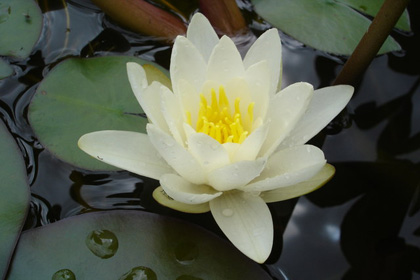
Water lilies come in two varieties: tropical and hardy — depending what type of climate they thrive in — and an array of colors, including yellow, orange, pink, red, white, purple, and blue. The flowers and leaves also come in a wide-range of sizes and shapes.
Traditionally, water lilies have been used in herbal medicine as astringent, antiseptic, and anesthetic. Native Americans mashed the plant’s roots to soothe swollen limbs.
Also known as Nymphaeaceae, water lilies are associated with the water nymphs of Greek mythology, minor female deities who were as free-spirited and strong-willed as they were sensual and mysterious.
June Flower Lore: Rose and Honeysuckle
Legends and Lore of the Rose
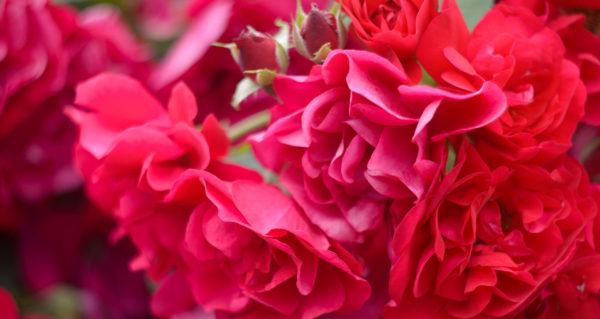
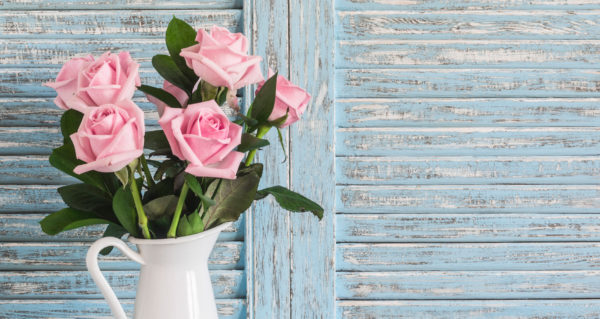
- Roses have long been seen as the flower of passion in various cultures. The ancient Greeks believed that Aphrodite, the goddess of love, named roses in honor of her son Eros, the god of love.
- There are more than 100 species, in a variety of sizes and colors. A gift of this flower can have many different meanings, depending on their color, and the number of roses in the bouquet.
- Throughout history, they have been adopted as the symbol of countless causes. They are the official emblem of numerous countries, including Bulgaria, the United Kingdom, and even the United States.
- They have also taken on religious connotations over the centuries, being used to represent not only Jesus and the Virgin Mary but also all Christian martyrs.
- During the 20th Century, roses became a symbol of freedom and non-violent resistance in oppressed nations.
- Rose oil has been used in perfume for centuries because of its distinctive, and highly aromatic scent.
- Rose hips, the fruit of the rose plant, are edible and rich in vitamin C. They are often used in jams and jellies, tea, and other recipes, as well as in cosmetics. The petals and leaves are frequently used in herbal medicines, primarily to treat stomach problems.
- The rose bush’s characteristically thorny stems are often used as a metaphor for the unpleasant side-effects of obtaining one’s desires.
June’s Other Flower: The Honeysuckle
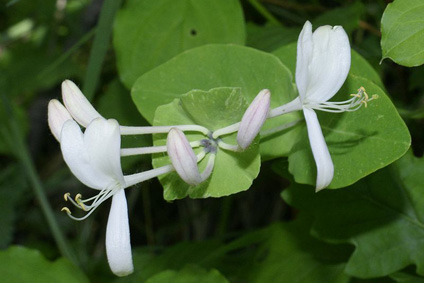
Honeysuckle refers to any of about 180 shrubs and vines from the genus Lonicera.
Native to the Northern Hemisphere, honeysuckles feature oval leaves and sweet, strongly scented, bell-shaped flowers. The sweet smell is not confined to the flowers, but also infuses the leaves and twigs of the plant, which releases a fragrance if crushed or broken. The flowers come in a variety of colors — from white to yellow, orange, red or pink and have edible nectar that is irresistible to butterflies and hummingbirds.
Though some species of honeysuckle are native to North America, many others were imported here and are now considered invasive species. In Britain, honeysuckle is popularly known as “woodbine” or “woodbind.”
According to the secret language of flowers employed during the Victorian era, honeysuckle represents devotion and unity in love. One old belief surrounding honeysuckle was that if the plant were brought into a house, a wedding would shortly follow.
Traditionally, honeysuckle was used to treat fevers, colds, asthma, dysentery, and diarrhea, and it is still an ingredient in herbal cold remedies.
 ukhomeschool