
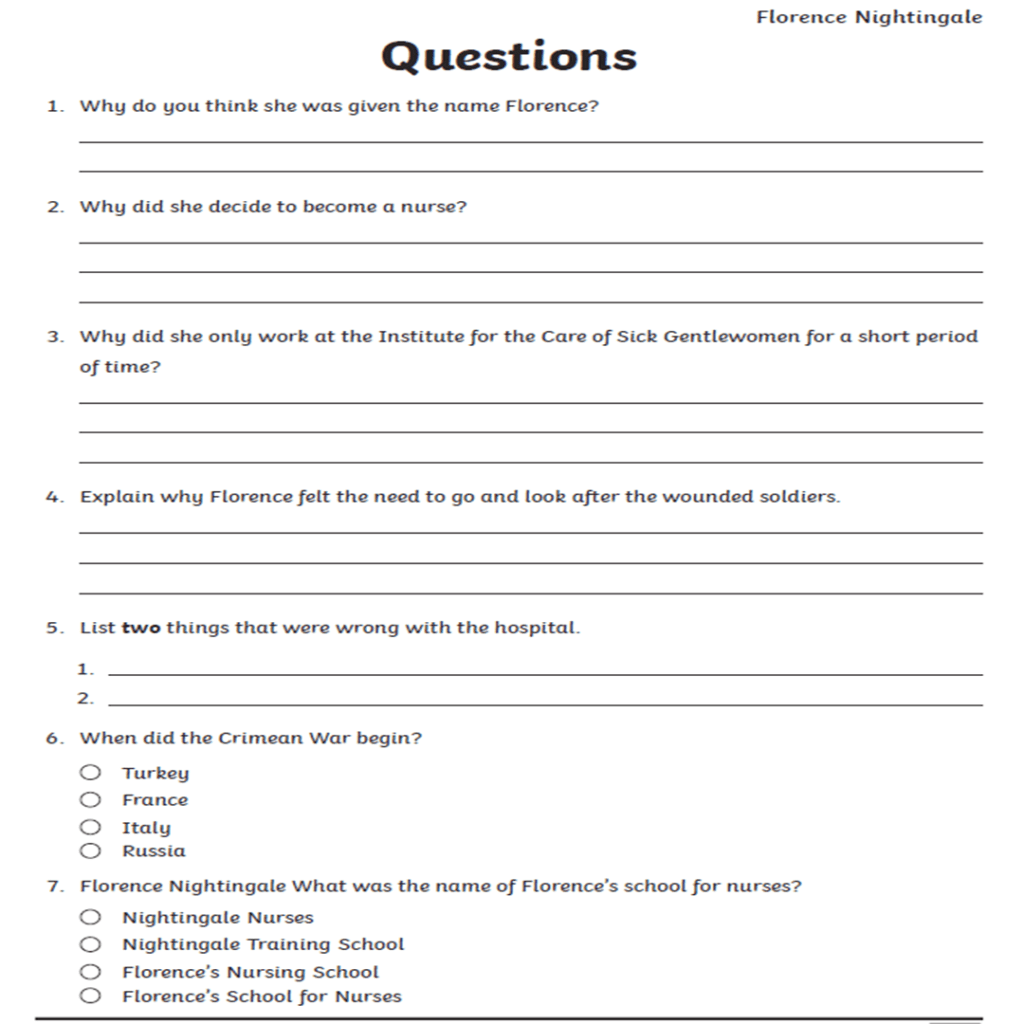
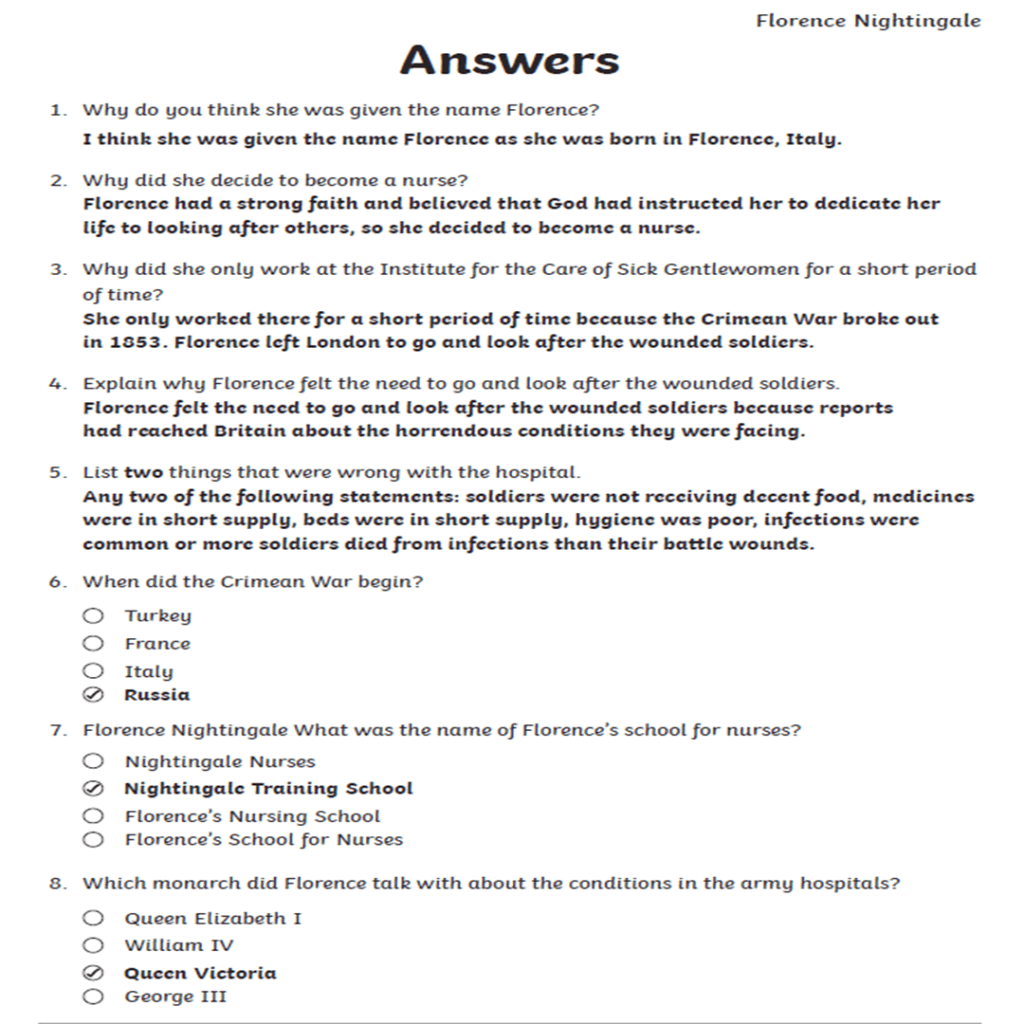
Florence Nightingale was born on 12th May 1820 in Florence, Italy. She was named after the city of her birth.
Although born in Italy, Florence Nightingale’s family were British and Florence was raised in England.
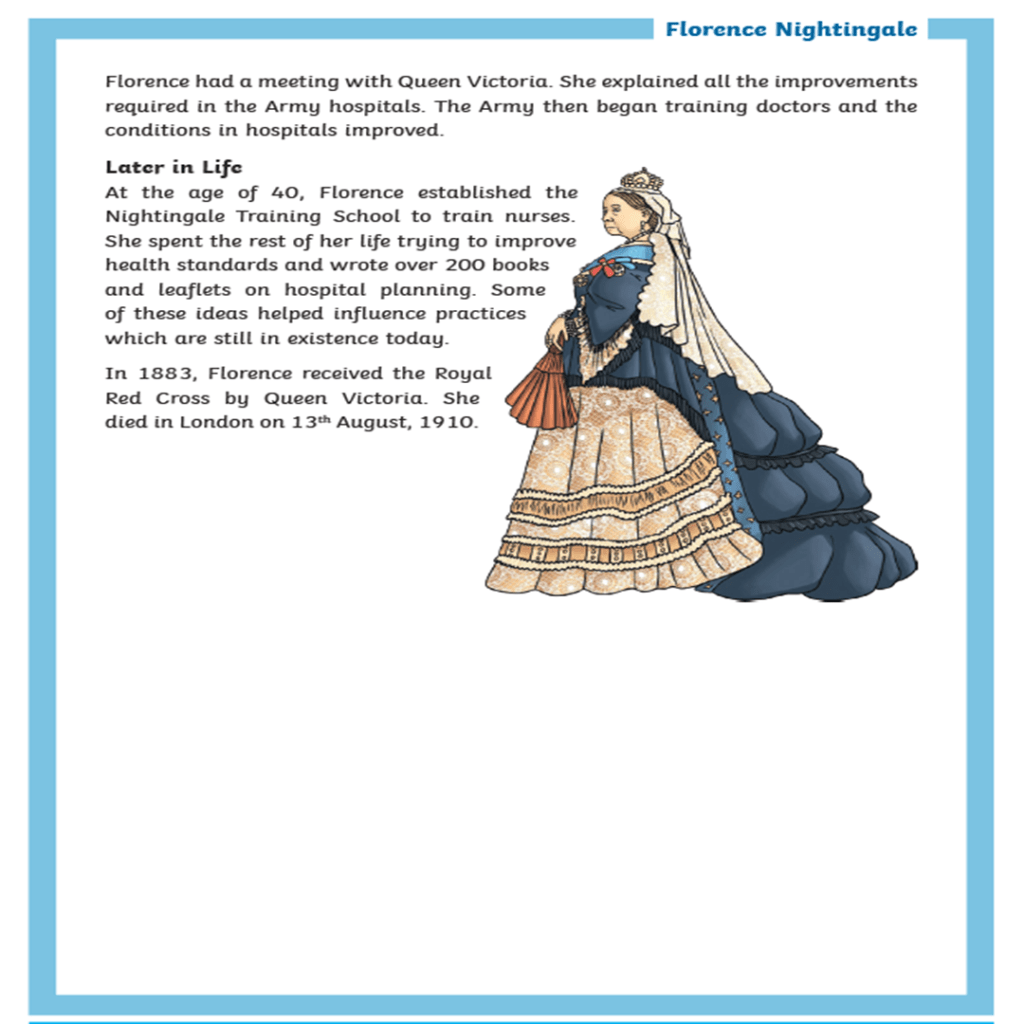
Florence Nightingale believed that God had destined her for a life devoted to others. In 1844 she decided to become a nurse, against the wishes of her family and contrary to expectations of women in society being only wives and mothers.
During the Crimean War, Nightingale trained a number of female volunteer nurses and successfully urged the British Government to improve medical facilities for those wounded in battle.
Florence Nightingale implemented handwashing and other hygienic practices to improve care and reduce the suffering of the wounded soldiers.
After returning to Britain, Nightingale worked to improve sanitary conditions in hospitals and living conditions for the poor.
Why was Florence Nightingale called the Lady of the Lamp?
Bringing much needed comfort to soldiers injured far from home, Florence Nightingale worked tirelessly making constant rounds of the patients, even at night, when she could be seen carrying a lamp around to visit patients.
When other doctors and nurses had retired for the night, Florence Nightingale continued her rounds by the light of her lamp. She then became known as the Lady with the Lamp.
What is National Nurse’s Week?
An annual event to celebrate the great and vital work of nurses, National Nurse’s Week always culminates on May 12th, Florence Nightingale’s birthday, in order to commemorate her pioneering work training nurses.
BBC Teach ‘Florence Nightingale’ from Chris Boorman on Vimeo.

 ukhomeschool