
January 4, 2022
What is Braille?
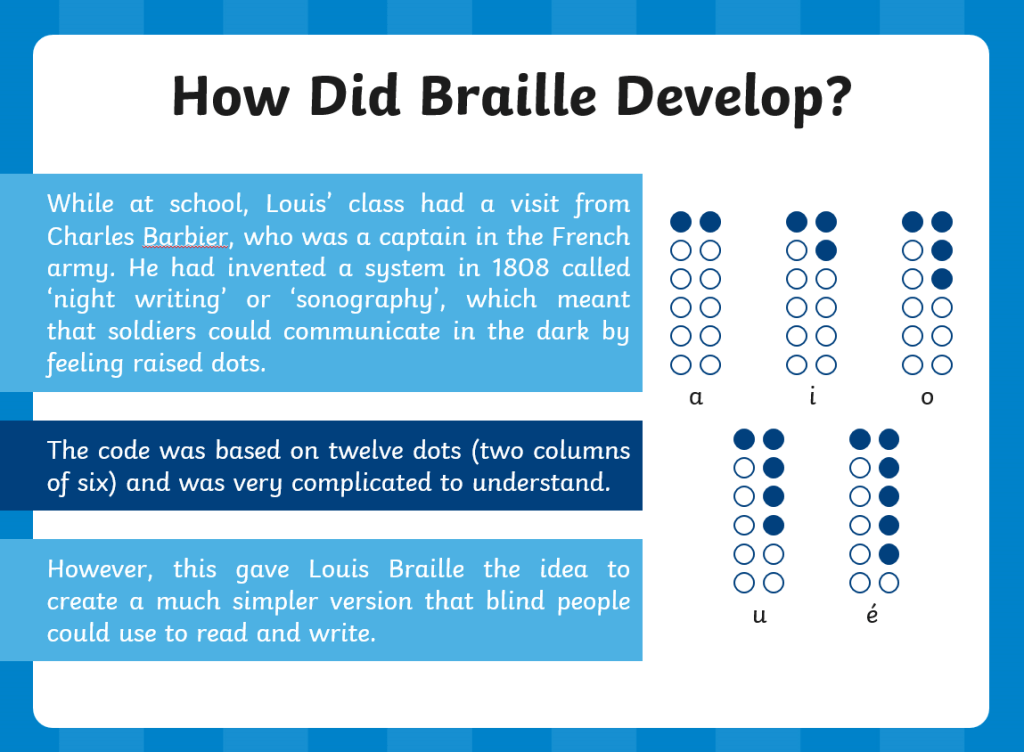
Braille is a tactile way of writing that’s used by people who have sight impairments. It’s a special code made from six raised dots on a grid. There are 63 different combinations of these dots, which means braille can be translated into different languages. Those who are visually impaired can read these dots using their fingertips to feel the patterns.
Why do we celebrate World Braille Day?
World Braille Day is a chance to raise awareness of the issues impacting those who are visually impaired. The invention of braille has transformed the lives of those with visual impairments, and it promotes equal opportunities. It’s hoped that, by highlighting the methods we can use to support those who are blind, the world will make greater attempts to promote inclusion.
Why is World Braille Day celebrated on the 4th of January?
World Braille Day is celebrated on the 4th of January because it’s the birthday of Louis Braille. Louis was born in France in 1809, and he was blinded in a childhood accident. However, he was determined to overcome this setback, and, inspired by Charles Barbier’s night reading system, he invented what we now know as braille. What’s more, he did all of this at the age of 15!
It wasn’t until 1854 that the Braille system became more widely used. It was initially introduced at the school where Louis studied, but it was quickly adopted by other French schools. Eventually, the system became used worldwide! Different countries have gone onto to modify braille. In 2015, the UK introduced a modified version of Unified English Braille (UEB) to help bring consistency to those using English-language material throughout the world.
Why is it important for children to celebrate World Braille Day?
World Braille Day is all about inclusion and diversity. It’s important that children are aware of other’s differences, and gain an awareness of varying needs and requirements. By celebrating World Braille Day, it helps children to think about important questions relating to additional needs, and expands their knowledge of others in our society. It’s also a good way of raising money to help charities that support the blind and visually impaired.
https://sightscotland.org.uk/articles/information-and-advice/who-was-louis-braille




 ukhomeschool