
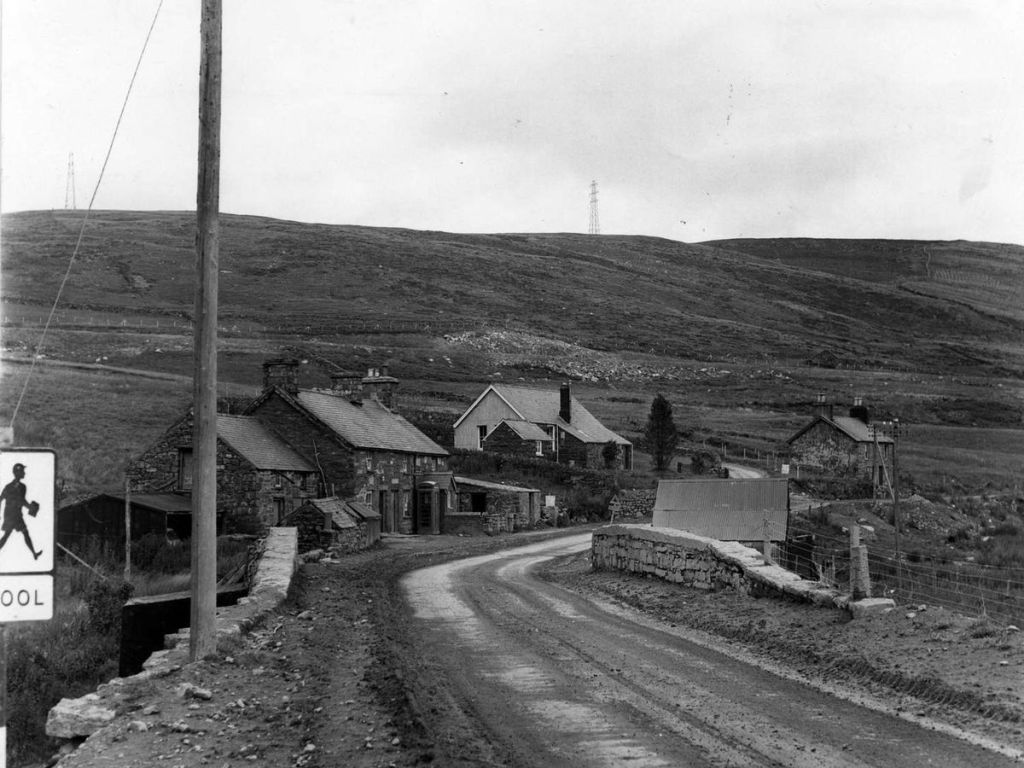
Capel Celyn village in the Bala area in 1965. This village and the surrounding valley was drowned by Liverpool City Council in order to construct the Tryweryn reservoir despite widespread protests in Wales at the time. Before drowning Capel Celyn, the buildings were bulldozed
https://www.bbc.co.uk/programmes/p01rrc1g
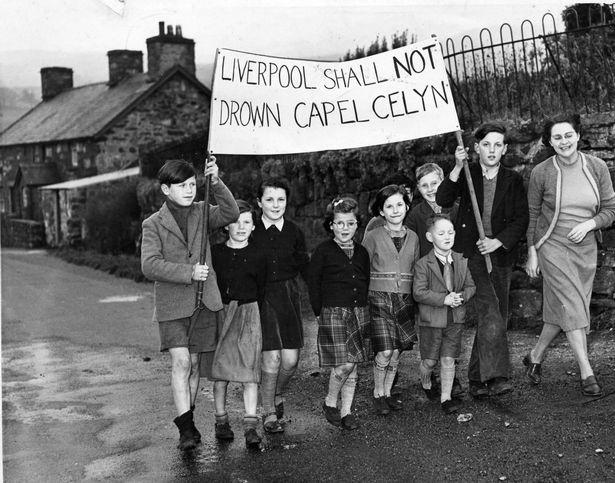
Capel Celyn was flooded to create a fresh water reserve for Liverpool in 1965, becoming Llyn Celyn.
The forcible eviction of 48 inhabitants and subsequent flooding of their homes and village will never be forgiven by many.
The village was a rural community in the Tryweryn Valley, between Bala and Blaenau Ffestiniog, and Welsh was the dominant language.
As well as 12 homes, farms, a post office, church, cemetery, and a school were lost.
The decision incensed the nation, and ill feeling still remains. For 50 years, the iconic monument “Cofiwch Drywern” has stood as a memorial to the lost village and as a homage to a Welsh-speaking community that was not so much thrown under the bus as thrown under the water.
When that monument — an instantly recognisable painting on a wall in Ceredigion — was vandalised earlier this year, not only did people gather to repair it but more than 50 other walls were painted across Wales in the weeks that followed.
The Manic Street Preachers song Ready For Drowning was also inspired by the story.
Capel Celyn may be the most famous instance of a Welsh community dismantled for English gain, but it was not the first.
Llanwddyn was a small village at the head of Vyrnwy Valley and it too was submerged to create a reservoir for Liverpool.
Three inns, two chapels, 10 farmhouses and a large estate were lost after a dam was built and the area flooded in 1888.
Its population was moved about two miles away.
The reservoir, renamed Lake Vyrnwy, is today a popular nature reserve with tourists.
During drought conditions, the remains and foundations of the old village can still be seen.
 ukhomeschool