
Who was Emperor Nero
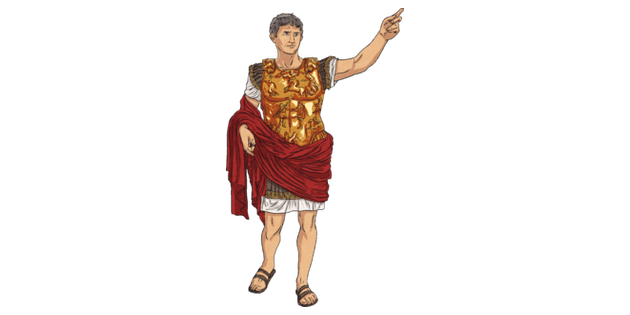
Emperor Nero was called Lucius Domitius Ahenobarbus when he was born – what a mouthful! He became the fifth and final emperor of the Julio-Claudian dynasty. These were all emperors related to Julius Caesar.
Nero became emperor when his grand-uncle Claudius died, on 13 October 54 AD. The Roman emperor was the ruler of the Roman Empire. This means that Emperor Nero was a very powerful and important man.
What was the Roman Empire?
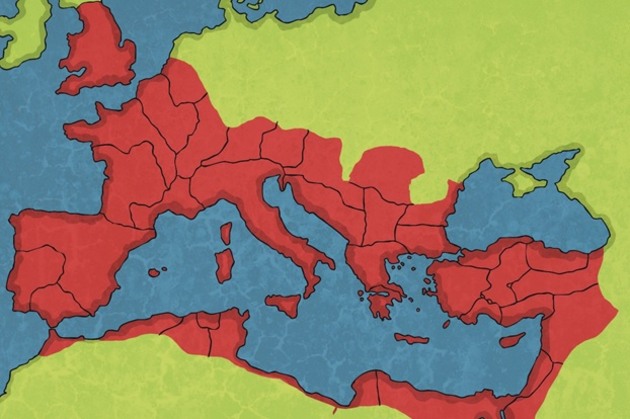
The Roman Empire was one of the biggest empires in world history. An empire is a big group of places and people that are ruled over by a single person. For example, Britain once had an empire, and so did the Inca Civilisation.
The Roman Empire began in the city of Rome, in Italy, and spread across a large area of Africa, Europe, and Asia. It was founded in 27 BC and Caesar Augustus became the first Roman emperor in 31 BC. During the period when the Roman Empire was powerful, there were 70 Roman emperors.
The Romans had advanced architecture and public health, and spread lots of wealth and ideas across the empire. Some of these are things we still use today, like straight roads, central heating, and concrete. Can you imagine what life would be like if we didn’t have these things?
What was Emperor Nero like?
Emperor Nero was brought up by his mother Agrippina, who wanted her son to succeed in life. He became emperor in 54 AD and began as a very good ruler. He reduced taxes and introduced rules that meant enslaved people could complain about poor treatment.
He also promoted competitions for poetry, theatre, and athletics. He enjoyed the arts and could play the lyre. He acted in plays in public and played a variety of roles. Many Romans believed that this was not how emperors should behave.
However, Emperor Nero now has a reputation for being bloodthirsty and power-hungry. This is because he is believed to have had his mother and his first wife killed. He also wasted a lot of money and didn’t pay enough attention to his responsibilities as emperor. Some historians have described him as unfair and cruel.
Emperor Nero is famous for “playing the fiddle while Rome burned” during the Great Fire of Rome in 64 AD. However, he was not even in the city when this happened and the violin hadn’t even been invented yet. Sometimes historical facts can become blurry over time with different accounts telling different stories. This confusion is partly why some people have a negative opinion of Nero.
Here are some facts about Emperor Nero
- Some historians believe that Nero was popular with most Romans during and after his reign. Sources suggest that he made some good decisions that helped Roman people in their daily lives.
- Lots of dramatic events happened during Nero’s rule. There was a war with the Parthian Empire, which included parts of Asia, a revolt in Britain, and the Great Fire of Rome.
- Many historians believe that Nero’s mother poisoned Emperor Claudius so that her son could be emperor. Nero became emperor when he was only 17.
- Nero was advised by the philosopher Seneca.
- During the year after Nero died, four different emperors ruled. That year is known as the “Year of the Four Emperors”.
The Roman Empire
The Roman Empire was one of the greatest empires in history, spanning across Europe and North Africa. Considered to be one of the most influential historical civilisations, the Roman Empire began in the city of Rome, Italy, and grew into a vast empire as the Romans conquered areas of Africa, Europe, and Asia.
The Roman Empire was founded in 27 BC, with Caesar Augustus establishing himself as Rome’s first emperor in 31 BC. But the history of the empire spans from the tiny kingdom of ancient Rome, to the fall of Rome in 476 AD. Between the 3rd Century BC and the 5th Century BC, the Roman Empire was at its most powerful. The Romans had advanced architecture and public health and were successful in spreading wealth and new ideas across the empire. Augustus established a line of succession that allowed the Roman Empire to continue succeeding, Roman emperors belonging to his dynasty were:
- 14-27 AD: Tiberius
- 37-41 AD: Caligula
- 41-54 AD: Claudius
- 54-68 AD: Nero
Throughout the history of the Roman Empire, there were 70 Roman emperors in total, although Augustus’ dynasty, the Julio-Claudians, were just the first of many dynasties that would rise to power and rule over the Roman Empire.
There are different stories and legends as to how Rome was founded, but Roman legend suggests that it was founded by brothers and demigods Romulus and Remus, the sons of the God Mars. The story goes that in an argument over who would rule the city (or where the city would be located in another version), Romulus killed Remus and named the city after himself.
How did the Roman Empire start?
Although no-one really knows exactly how ancient Rome was founded, we do know that originally, Rome was just a small kingdom that was made up of a single city-state. However, in509 BC, the Roman people rose up in revolt against the twelfth and final King of Rome,Lucius Tarquinius Superbus, and overthrew their monarchy. Unwilling to submit themselves to another absolute ruler who could exploit the people without consequences, the Roman people formed a Republic that was ruled by a Senate of powerful politicians elected by the people.
Even though a small number of powerful families (called gentes) monopolised the most important positions, the Roman Republic is generally considered one of the earliest examples of representative democracy, where the people elect officials to fill important government positions. Roman institutions underwent considerable changes throughout the Republican era to adapt to the difficulties it faced, such as the creation of pro-magistracies to rule its conquered provinces, or the composition of the senate.
The Republic was almost constantly at war with its neighbours, and it was during this period that Rome began to expand massively, rising from a single city and its immediate surroundings to dominate the Mediterranean and most of southern Europe, defeating their Italian rivals, the Etruscans, and many Gaulish tribes from across Europe. However, the defining enemies of the Roman Republic were the Carthaginians, who came from what is now Tunisia in North Africa.
After 3 brutal wars against the Carthaginians, including the celebrated general Hannibal Barca, who came close to destroying Rome itself after marching a massive army complete with elephants over the Alps, Rome gradually became the dominant power in the Mediterranean, conquering Greece, large parts of the Middle East, Spain, Gaul, and finally Egypt in 30 BC.
However, as the Republic expanded, it became increasingly unstable, and political corruption and internal rebellions became a massive problem. Eventually, things came to a head when Julius Caesar, fresh from conquering Gaulish territory in what’s now France and Belgium, declared war on the Republic. After he defeated their armies and general, he declared himself dictator, but a group of senators, fearing the return of the monarchy, killed him shortly after he declared himself dictator for life in 44 BC.
The chaos of Caesar’s death led to another Civil War between Mark Anthony, his former second-in-command, and his heir, Octavian. Finally, Octavian proved the victor and Octavian used the emergency powers that had been given to him by the Senate in 27 BC to formally declare himself the first Roman Emperor, renaming himself Caesar Augustus. Ironically, the desperate attempt to save the Republic only doomed it to end faster, although the new Roman Empire would be a period of unprecedented wealth and prosperity for the Romans.
Originally, Rome’s culture was a cultural mix of Latin and Etruscan societies, as well as of Sabine, Oscan, and Greek cultural elements, as it gradually expanded outwards, absorbing the other small city-states and Greek colonies in Italy, but it gradually became more and more culturally diverse and cosmopolitan as new provinces and territories were added to the empire throughout the Republican period and onwards into the Roman Empire, which many older Romans were displeased by.
When Was Britain Invaded by the Romans?
The Romans came to Britain looking for land and slaves. But what they really wanted to find was iron, lead, zinc, copper, silver and gold.
It took the Romans three attempts to conquer Britain. Julius Caesar first invaded in 55 BC, but the army he brought wasn’t large enough, and they had to retreat from battles with Celtic tribes. They tried again a year later with a larger army but still didn’t succeed.
In 43 AD, nearly 100 years later, Emperor Claudius invaded for a third time with four legions of men and another 20,000 auxiliaries. With such a big army, the Romans finally managed to gain control and conquer Britain, despite battles that continued for several years. Britain then remained part of the Roman Empire for almost 4 centuries, until 410 AD.
The Roman Army
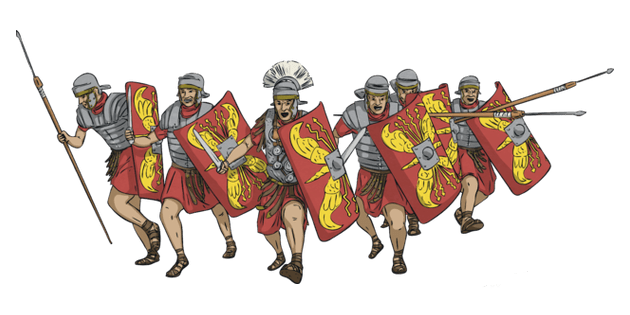
The Romans were able to conquer other countries thanks to their incredibly well-organised army. Their weapons and armour were more advanced than other armies at the time and Roman soldiers were tough and well-trained.
The army was split into legions of around 5,000 men, made up of 10 cohorts. Take a look at the breakdown of how the men were organised below:
- Tent: 8 men were put together to form a tent.
- Century: 10 tents created a century of 80 men.
- Cohort: Six centuries made a cohort of 480 men.
- Legion: Ten cohorts made a legion of 5000 men (the first cohort included 800 men).
Did you know…
The army had somewhere between 25 and 34 legions during the first three centuries of the empire.
What Did the Romans Eat?
Like us, Romans ate three meals a day:
- Ientaculum (breakfast): Bread dipped in wine, olive oil or honey, perhaps eaten with cheese and olives.
- Prandium (lunch—like the word ‘pranzo’ in Italian today): Eaten at noon, this was normally a piece of bread with cold meat, vegetables and fruit.
- Cena (evening meal): This was usually breads, salads, olives, cheeses and meats, occasionally served with hot dishes too.
Most of the population in Rome ate things that could be grown, reared or hunted. Bread was eaten a lot and was often baked in public bakeries.
Wealthy Romans enjoyed exotic food and often ate lying down and with their hands. They would have up to seven courses and eat things like roast parrot, peacock tongue and even flamingo. Dormice was another dinner option!
However, a poorer Roman diet consisted of vegetables and cereals such as wheat and barley mixed with chickpeas, lentils, turnips, leeks, cabbage and lettuce. Eggs would also have been on the menu and meat was an occasional treat when they could afford it.
Garam was also a popular condiment to add to savoury in Roman times. The catch: It was made from crushed and fermented fish intestines!
The Roman Empire – Religion
In ancient Rome, religion was heavily based on ethnicity. Romans defined themselves as a people by their religious beliefs: they followed the rule and religious practice of those in power in Rome and Italy, so you could be a Roman despite never having set foot in Italy.
They believed they were very religious and thought that their success in gaining power over much of the world was due to their collective belief in keeping good relationships with the gods.
The Romans were considered to honour a great number of gods, sharing many with the ancient Greeks, a fact that would later be mocked by Christians as they believed in only one God. The core Roman pantheon of gods is a fusion of the Greek pantheon of gods with the local Etruscan gods, which while in some cases, simply took a name-change, but in others, a bigger cultural shift – the Roman Venus was much less important than the Greek Aphrodite, for example.
The religion of the Romans was very practical and established based on the principle “I give that you might give”. It relied heavily on Romans knowing the correct way to pray, sacrifice, and complete rituals as opposed to ‘pure’ faith and unstructured prayer, since obeying the correct way to worship each god was seen as a way to demonstrate proper respect and reverence.
Rome’s intellectual elite, including Cicero, believed religion was a social order.
The Roman Empire began to expand and migrants who travelled to the capital of Rome brought local cults, one of which was Christianity. Initially, Christianity was just one of many cults and new gods for the Romans, along withIsis from Egypt, Cybele and Mithras from Asia Minor (modern-day Turkey), Epona, Taranis, and the Deae Matres from Britain and Gaul, and small regional deities, such as the god of a local river.
While in some cases, these foreign gods stayed as small cults, or were only worshipped by communities who had always worshipped them, in many cases they were integrated into Roman religious practices and were seen as variant forms of the Romans’ own gods, integrating both the new gods and new people into the larger society of the Empire.
Christianity stood out among these because it was a monotheistic faith – unlike the other faiths, Christians believed in only one god, rather than a pantheon that could be expanded to include extra gods. This is why many early Christians were persecuted: the Romans believed that their emperors were gods, so refusing to worship and honour the emperor as a god was a crime punishable by death. Christians believed that doing this would be sacriligeous and heretical, so they refused, and many were killed.
In 380, Christianity became the official religion of Rome.
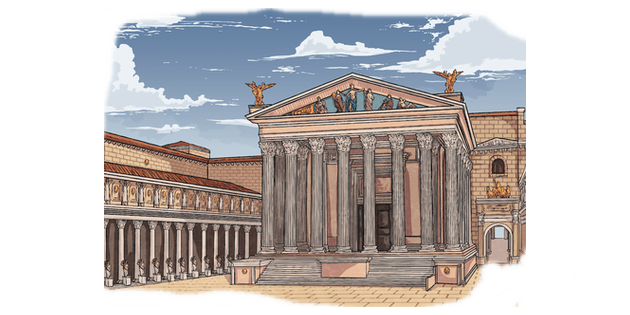
Religion for the Romans was a large part of their daily life. They had household shrines which they would pray to and leave sacrifices for God. The Roman calendar was structured to take into account religious activities. Roman temples were dedicated to the gods.
Before Christianity dominated Rome, women were able to conduct public rituals, and they formed a priesthood named the Vestals after the Goddess of the hearth. The Vestals were free of social obligations such as to bear children and marry a man.
The Roman Empire – Entertainment
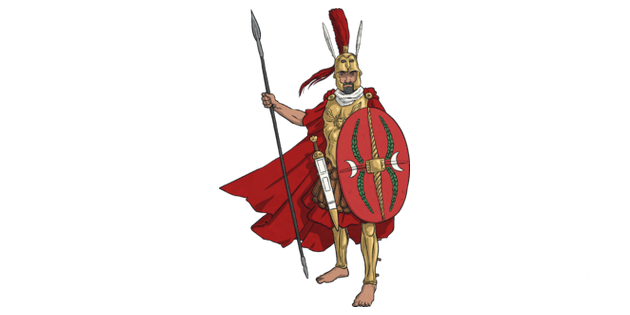
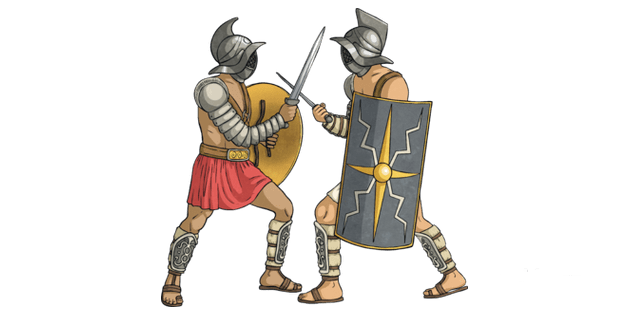
Gladiator fights were a popular form of entertainment in the Roman Empire. Gladiators were originally slaves or criminals who trained in schools called ludi to become professional warriors. However, some ordinary people volunteered to become gladiators too.
Gladiators had to fight to the death and were often injured or killed as they fought with real weapons. Unfortunately, their armour was only designed to look good and didn’t offer much protection. Those lucky enough to survive for long enough were freed from the arena to live normal lives. The most successful even became celebrities.
Did you know…
‘Gladiator’ comes from the Latin work ‘gladius’ which means ‘sword’.
Roman Inventions
The Romans were responsible for many of the important things we still use today. As the Roman Empire spread, they established things such as:
- Straight roads: Romans built 55,000 miles (88,000 km) of roads to move all their soldiers and equipment around the countries they invaded. They built them so well, that many modern roads can be found in the same place. Roads were straight, so they could travel as quickly as possible without the risk of robbers and bandits hiding around any bends, ready to jump out.
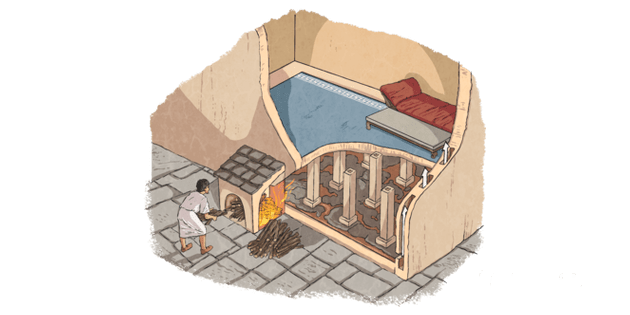
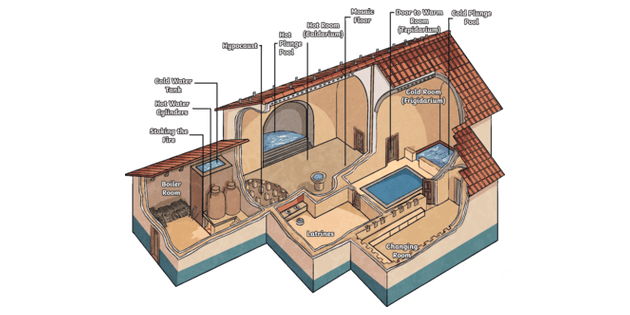
- Central heating: The Romans invented the forerunner of modern central heating. They created an underfloor heating system called a hypocaust that warmed the floors and the walls of a building.
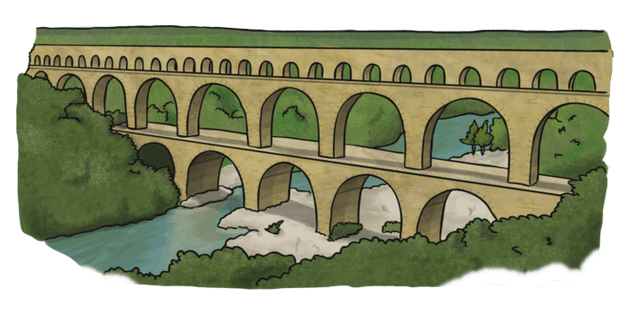
- Aqueducts: Aqueducts were not a new idea, but the Romans were masters of engineering and constructed vast networks of pipes, channels and bridges to transport fresh water to highly populated areas. Many of the above-ground structures can still be seen today. The Romans were the first to understand the link between dirt and disease, so understood the importance of clean water.
- Concrete: The Romans invented concrete, made from a mix of volcanic ash, lime and seawater, to make buildings stronger and construction easier. This material is the reason why many famous Roman buildings are still standing, more than 1500 years after the empire ended.
What Else Did the Romans Give Us?
There was more to the Romans than just construction. They also created journalism, but not quite how we know it today. In around 131 BC, the Romans invented the first newspaper called the Acta Diurna (daily acts). These weren’t ‘papers’ at all, but rather pieces of metal or stone that were available in public spaces for people to read.
The Romans were also responsible for creating the Julian calendar which was split into 12 months, like the calendar that we use today. It based on the movement of the Earth around the sun and the months were named after Roman Gods and rulers.
The Romans also began the practice of taking a census to keep track of everybody who was living in their empire. Today in the UK, a census is held every ten years.
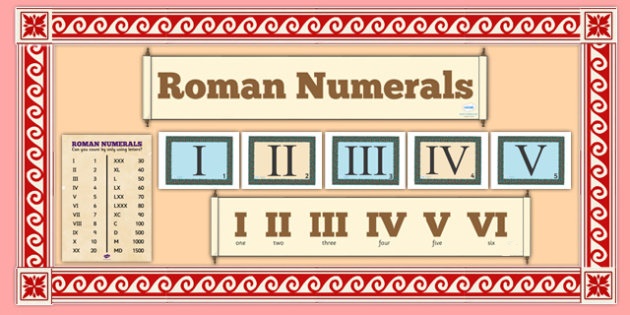
The Roman number system, Roman numerals, are still used today in many forms.
Why Did the Roman Empire Fall?
The Roman Empire began to decline around 200 AD and finally met its end after 500 years of ruling and conquering. There are several reasons for this. By this time, the empire was so large, it was becoming difficult to govern. Communication was also a problem.
Other reasons for the downfall of the Romans include:
- Rome’s rulers and politicians became more and more corrupt.
- Civil wars began within the empire itself.
- Attacks were made by barbarian tribes such as the Huns and the army gradually became weaker.
In 476 AD, Romulus Augustulus (the last Roman Emperor) was forced to give up his crown by Germanic Barbarian Odoacer who then became King of Italy. This is considered by historians to be the end of the Romans and the beginning of the Dark Ages.
At the time, lots of poor people had to pay high levels of taxes and were starving to death, so they were happy to see the Roman Empire fall.
Roman Empire Facts for Children
The Roman Empire was a fascinating civilization. Take a look at some of our fun Roman facts for children below to learn all about the weird and wonderful aspects of Roman life.
- Greek and Latin were the official languages of the Roman Empire.
- At its largest, the Roman Empire covered nearly two million square miles.
- The Roman army could march as far as 40 km (nearly 29 miles) in a day, carrying weapons, tents and food.
- Roman people worshipped lots of different Gods and Goddesses. To give you an example, Venus was the goddess of love, Neptune was the god of the sea and Mars was the god of war.
- In Roman times, the Colosseum was sometimes flooded so a boat battle could take place.
- Tunics were the most common clothes in Rome. With openings for your arms and head, they were made from who pieces of woollen fabric sewn together at the sides. Rich Romans wore togas to show off their wealth.
- Roman people washed their clothes in urine. It sounds horrible, but this is because urine contains ammonia which is an excellent bleaching agent. Men used urinals on street corners and at the end of the day, the contents were collected and taken to laundries. They also used urine to whiten teeth!
- It was considered polite to burp and pass wind after a good meal.
- The Romans called London ‘Londinium’ and used the River Thames to transport goods between Britain and the European continent.
- Public toilets were such scary places that Roman people often used spells or asked the Gods for help when they used them.
Ancient Rome Information for Children:
- Between 107 and 110 AD, Emperor Trajan built what’s considered to be the world’s first shopping mall. It sold different goods and grocery items.
- The Roman Colosseum is one of the Seven Wonders of the World.
- Public baths were popular in Rome and people would go there to socialize.
- Ancient Rome was a hub of commerce, and traders would travel there to exchange animals, food and other goods.
- The population of Ancient Rome may have reached up to 1 million at its peak.
- There were no public schools in Ancient Rome, so boys were taught to read by their parents or educated slaves.
- The head of a family in Ancient Rome was usually the father, and he had power over other members of the family to make decisions on things like marriage, divorce and even selling children into slavery.
- Chariot Racing could gather as many as 250,000 spectators.
- Two-thirds of Rome was destroyed in The Great Fire of Rome in July, 64 AD.
Modern-Day Rome Information for Children:
- Rome is still home to the Pope, who resides in the Vatican City.
- Each year, almost 700,000 Euros are thrown into Rome’s Trevi Fountain. The money goes to a charity called Caritas who help those in poverty.
- Rome has been the capital of unified Italy since 1870.
- It’s located on the Tiber River and has a population of 2.8 million.
- The University of Rome, founded in 1303, is the biggest in Italy, and around 200,000 students study there.
- The city has a museum dedicated to pasta where you can learn all about the Italian dish.
- The law in Rome allows cats to live in the place they were born without disruption. The cat population is thought to be around 300,000 and many live in ancient ruins.
- There are 280 fountains and more than 900 churches in Rome.
- The current mascot of Rome is a she-wolf. Legend has it that the wolf took in Remus and Romulus when they were abandoned by their uncle.
- The Pantheon is the only ancient monument that’s still intact. It was built in 27 BC and holds King Vittorio Emanuele II and Umberto I.
 ukhomeschool