
Colchester, in Essex, claims to be the oldest recorded town in England. It was certainly the first Roman colonia, built on the site of an earlier fortress. And you can still see quite a bit of Roman Colchester, or Camulodunum, as it was once known.
History Of Roman Colchester
The Romans landed in Britain in 43 CE. They built a fortress in what is now Colchester and six years later they created a colonia (permanent settlement of army veterans) here. They called the new town Camulodunum, meaning “fort of Camulos” (the Celtic god of war).
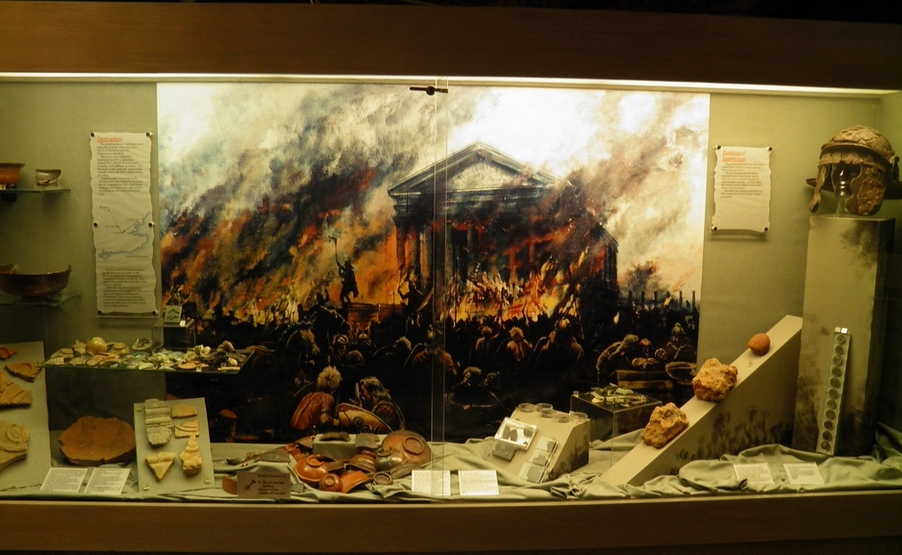
In 60 CE the town was attacked by the Iceni, a local tribe led by the Celtic queen Boudica. Although the rebellion was ultimately unsuccessful, large parts of Camulodunum were destroyed. The town was rebuilt and reinforced, and prospered as a Roman settlement for the next 300 years. Archaeological discoveries, including the only known Roman circus in Britain, suggest that it became an important town.
The Walls Of Camulodunum
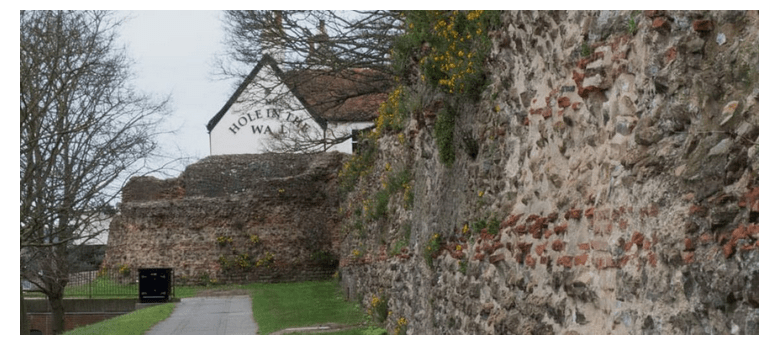
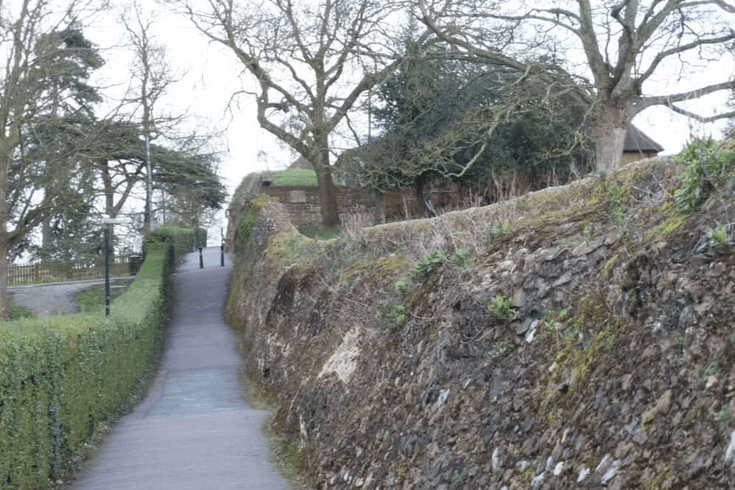
For the visitor the most impressive Roman structure in Colchester is the city walls. Built after the Boudican attack, the wall was almost 3 km long and 6 m high. It continued to protect the city for many centuries after the Romans departed. Bastions were added in the 15th century, and houses were later built into the fabric of the wall.

The Balkerne Gate
Today several long stretches of the wall remain, particularly along Balkerne Hill and behind the Castle Park. You can see fragments of two of the original five gateways: the Balkerne Gate and Duncan’s Gate. The Balkerne Gate was built as a monumental arch: it is now both the largest and the oldest surviving Roman gateway in Britain.
Other Roman Sites In Colchester
Colchester Castle
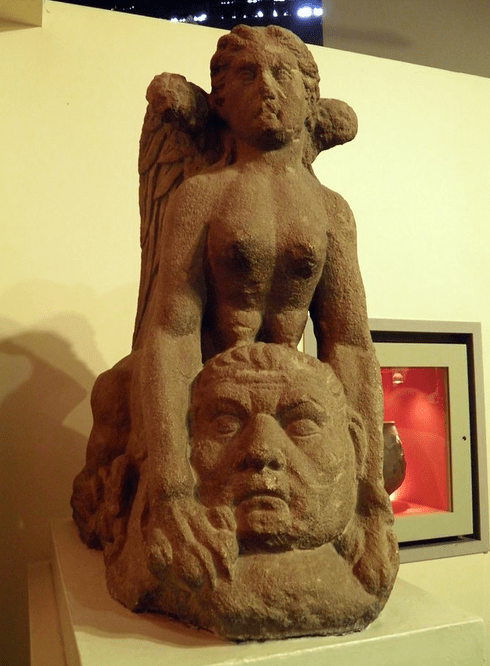
Although it is medieval rather than Roman, you might want to start your exploration at Colchester Castle. The castle was built on the ruins of the Temple of Claudius and if you take a guided tour you can actually walk through the foundations of the Roman temple and see how solid they were. Today the castle is a museum and the Roman Room displays artefacts from other sites in the city, including some particularly fine glassware. There are also mosaic floors and the Colchester Sphinx, a stone sculpture that once marked a grave.

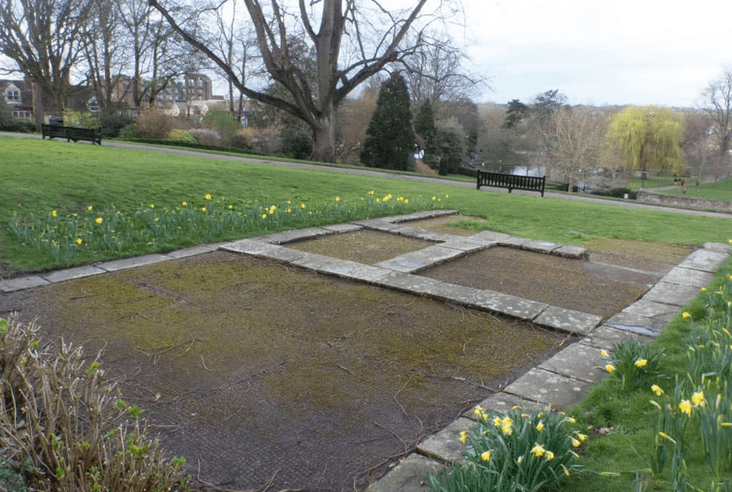
In the gardens behind the castle you can see the outline of a Roman town house. And nearby, on Maidenburgh Street, is the site of a Roman theatre (it wasn’t open when I visited but I could peer through the window, and outside on the pavement the extent of the theatre has been marked out in darker brick).
The Roman Circus
Just outside the city wall are two sites of interest. The first is the Roman Circus, the only such site known in Britain. It was a vast 450m circuit for chariot-racing, with seating for 8,000 spectators. Not much of it is visible today, but there is a visitor centre and you can see the starting blocks.
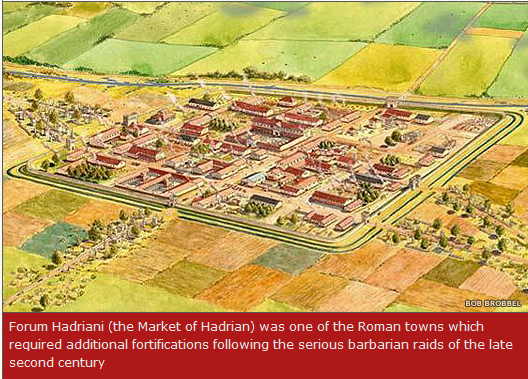
Not far from the Circus are the remains of a Roman church and cemeteries, built in the 4th century. This is one of the few known churches from Roman Britain.
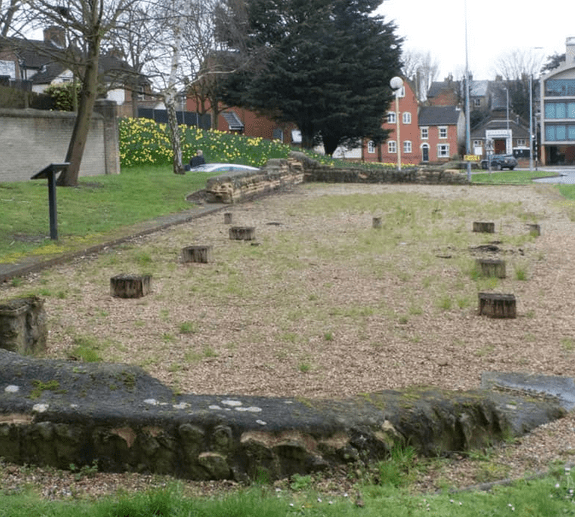
Roman church and cemetery
One mystery remains: where was the amphitheatre? It is very unlikely that a town of the size and importance of Camulodunum would not have had an amphitheatre, but its location has never been discovered.
As you walk look out for later buildings constructed from brick plundered from derelict Roman structures. A particularly good example is the 11th century St Botolph’s Priory. Another is St Helen’s Chapel, built on a corner of the Roman theatre, possibly on the site of a much earlier religious building. St Helen was the mother of the Emperor Constantine who introduced Christianity to the Roman empire. According to legend she was born in Colchester and she remains the patron saint of the city.
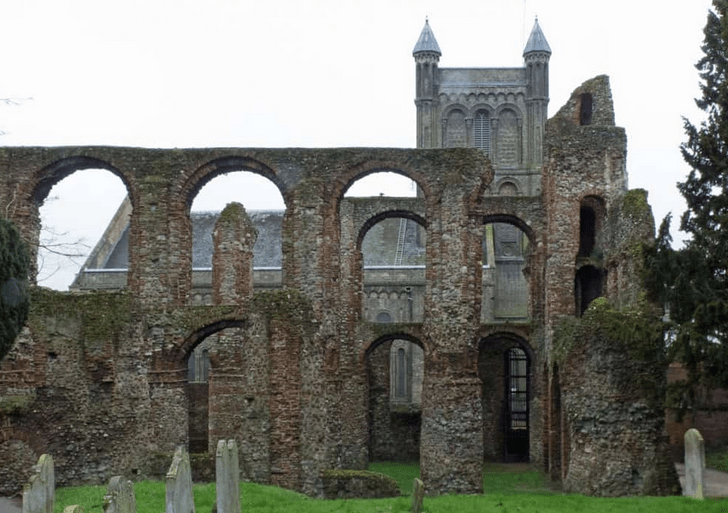
St Botolph’s Priory was built from Roman brick
further reading
https://www.camulos.com/gosbecks.htm#background
https://www.visitcolchester.com/blog/read/2021/04/walking-the-walls-b48
https://www.historyfiles.co.uk/KingListsBritain/BritainTrinovantes.htm
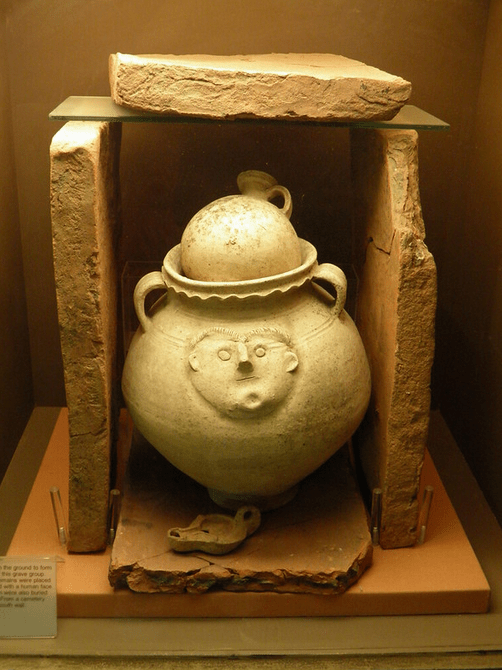
Cremation pot decorated with a human face, Colchester Castle Museum
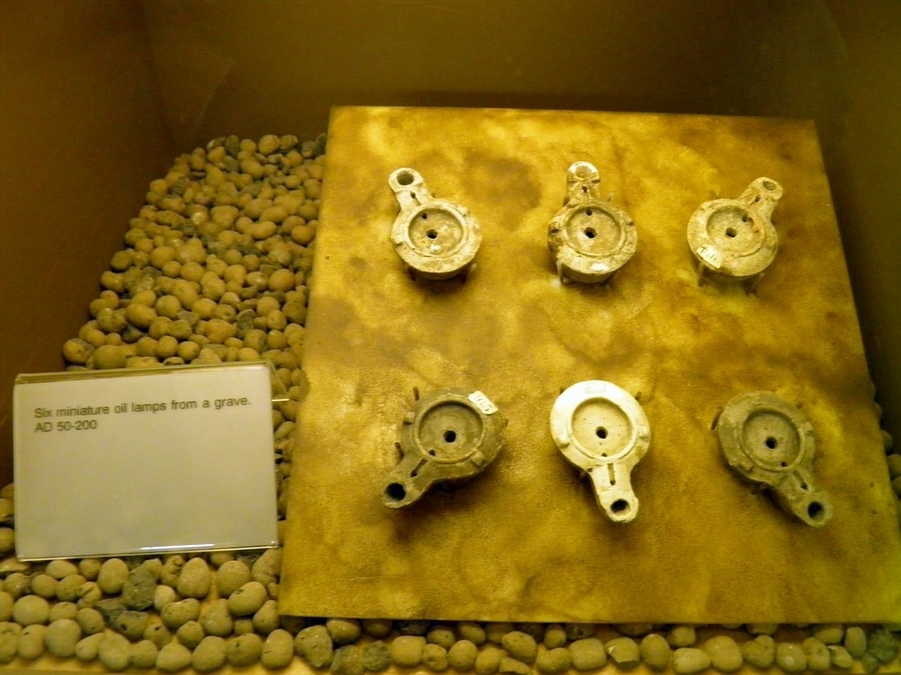
miniature oil lamp from a grave, AD 50-200, Colchester Castle Museum
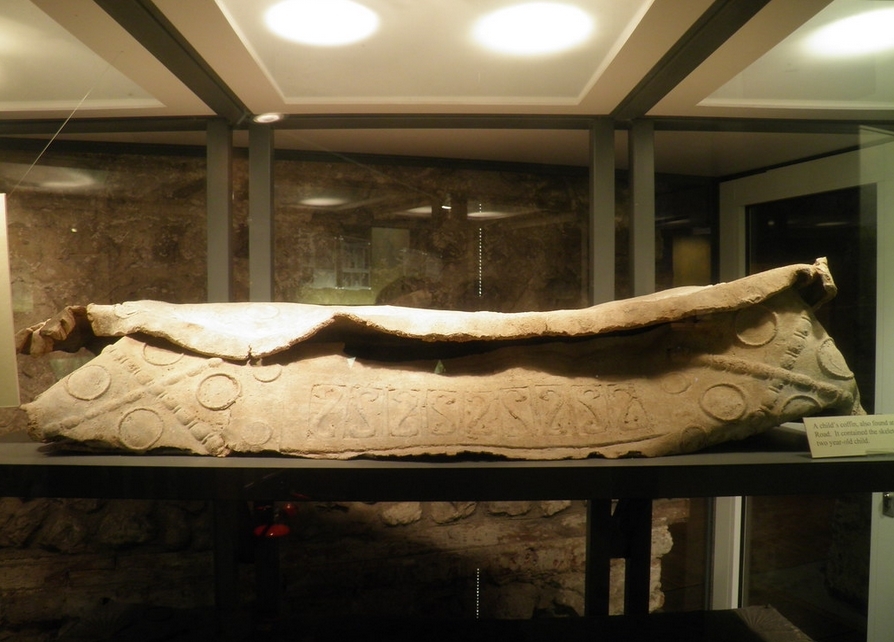
A child’s coffin found at Butt Road, Colchester Castle Museum
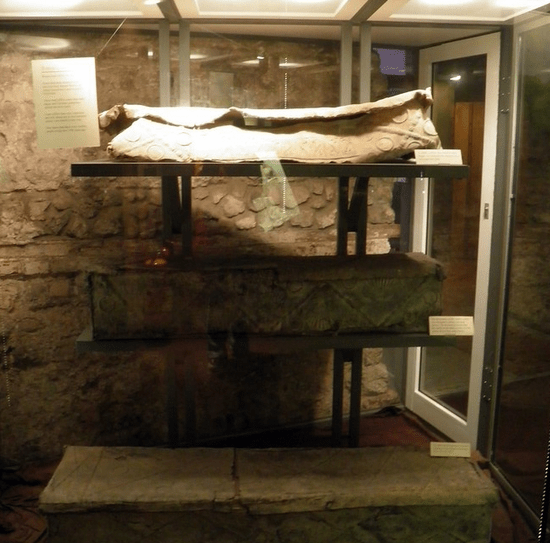
Roman Lead Coffins, Colchester Castle Museum
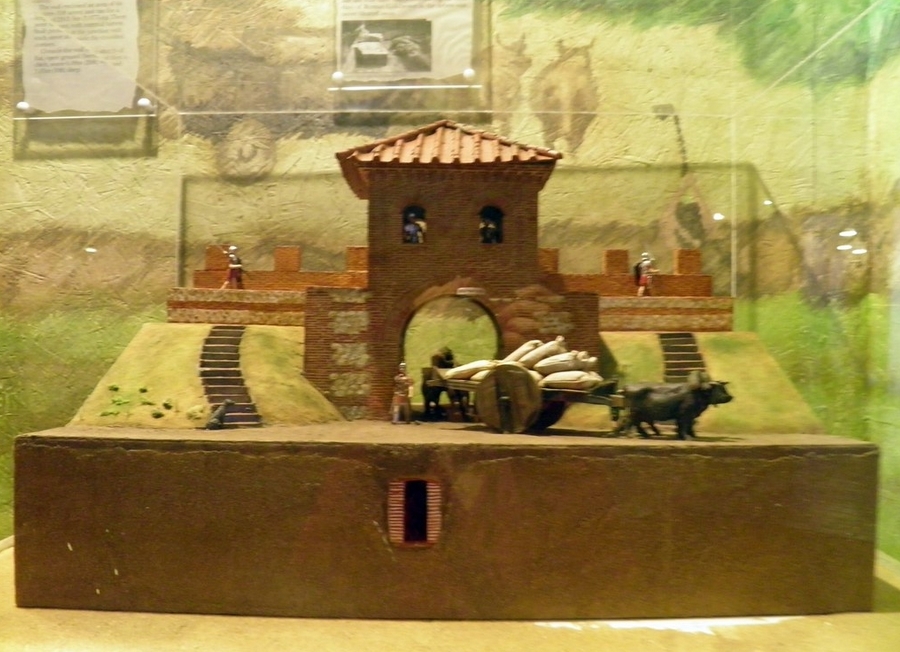
Model of Duncan’s Gate, Camulodunum (Roman Colchester)
The gate at the east end of the north wall was first excavated in 1853 by Dr PM Duncan – hence its modern name. The single passage way is 3.25m wide, the outer corners being rounded offf flush with the wall. Excavations revealed slots in the inner walls to take wooden gates The gateway was blocked sometime before AD 300. It was later re-opened and the road surface relaid. Archaeological evidence shows that the timber door of the gate was burnt down twice. The dates of these fires are not known precisely but the last fire may have happened during the final days of Roman Colchester as the debris was never cleared away.
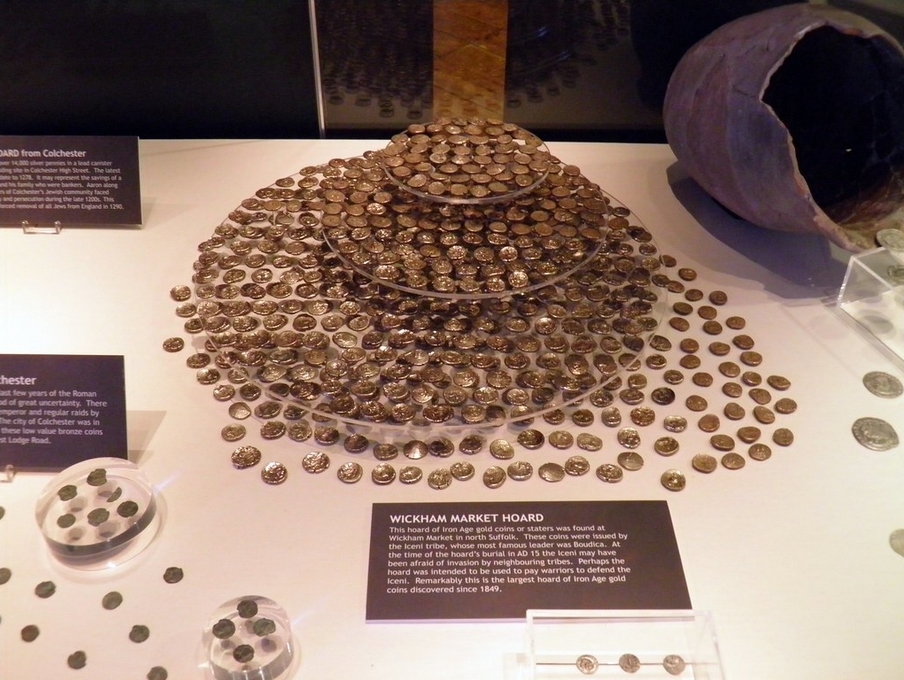
Wickham Market Hoard, Colchester Castle Museum, Camulodunum (Roman Colchester)
The Wickham Market Hoard is a hoard of 840 Iron Age gold staters found in a field at Dallinghoo near Wickham Market, Suffolk, England in March 2008 by car mechanic, Michael Dark using a metal detector. After excavation of the site, a total of 825 coins were found, and by the time the hoard was declared treasure trove, 840 coins had been discovered. The hoard was described as “the largest hoard of British Iron Age gold coins to be studied in its entirety”, and was also significant in providing “a lot of new information about the Iron Age, and particularly East Anglia in the late Iron Age”. It was the largest hoard of staters to be found since the Whaddon Chase Iron Age hoard in 1849. The coins dated from 40 BC–15 AD and, at the time, would have been worth between £500,000–£1,000,000 to the Iceni tribes who inhabited the area. In June 2011, the hoard was purchased by Ipswich Museum for the sum of £316,000.
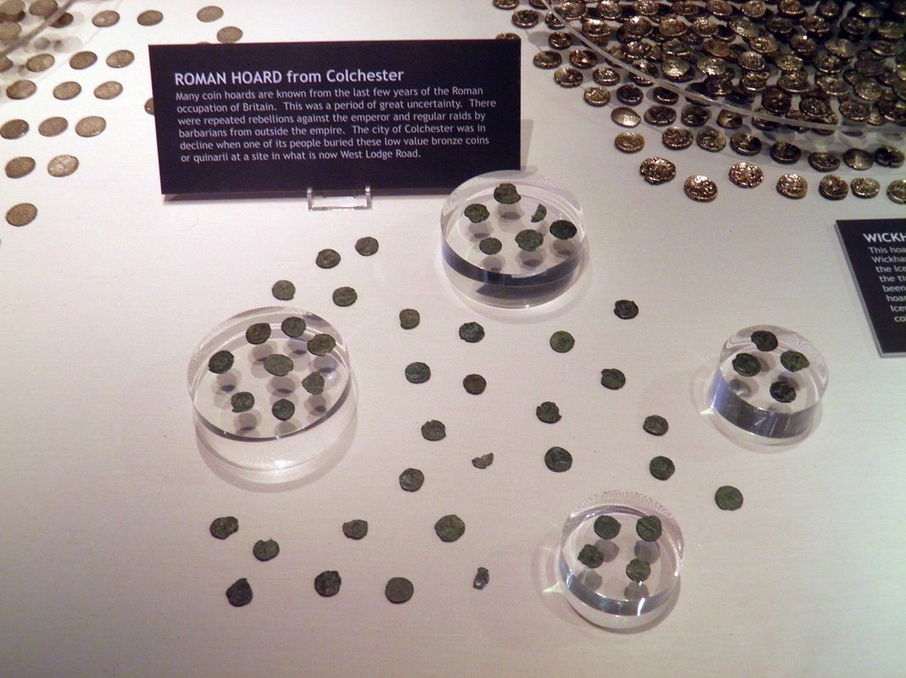
Roman Hoard from Colchester, Colchester Castle Museum
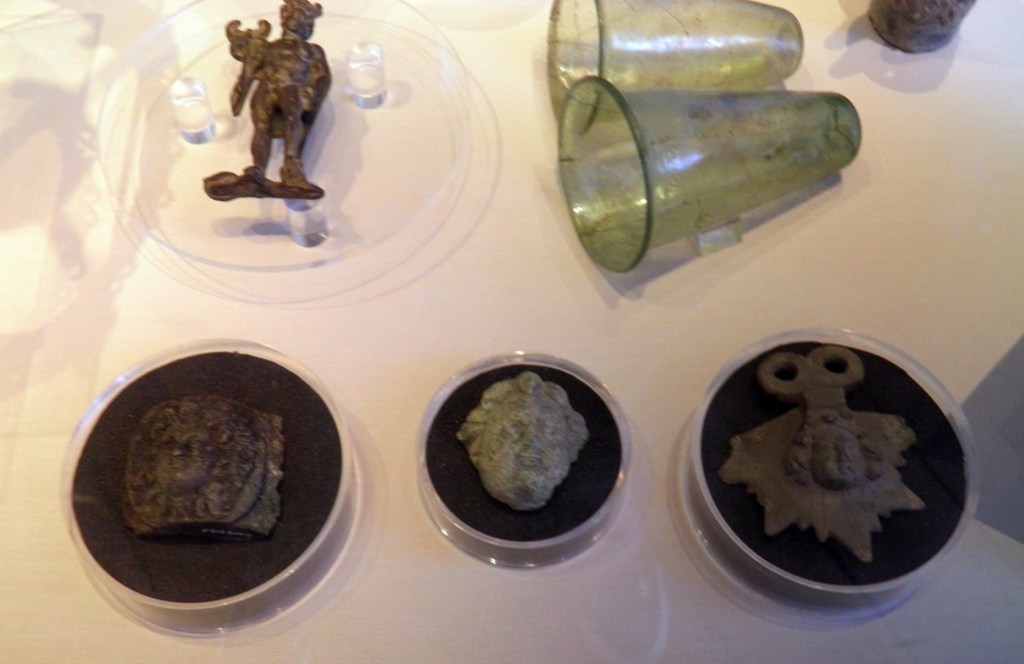
Roman finds from Hockwold, Colchester Castle Museum
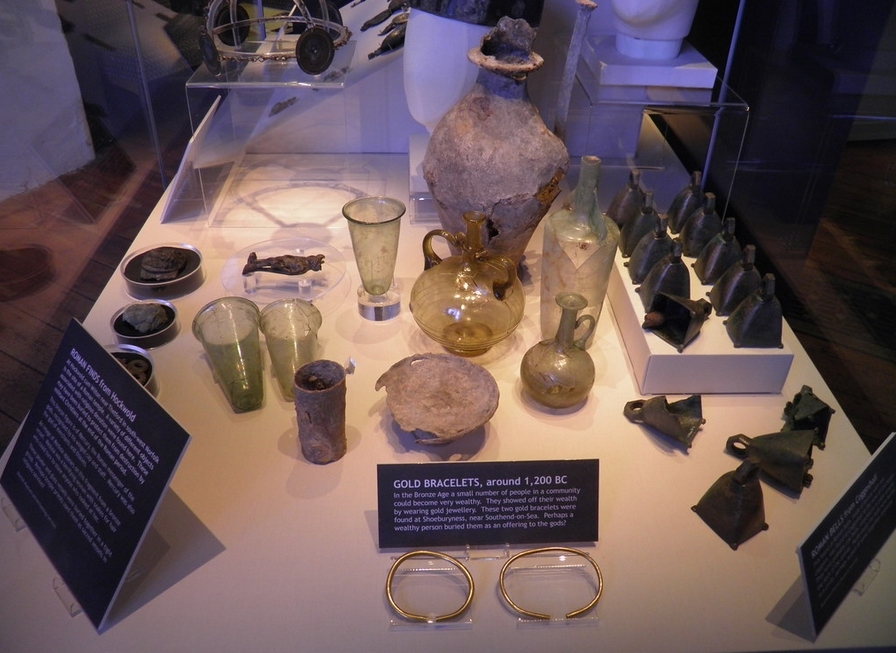
Roman finds from Hockwold, Colchester Castle Museum
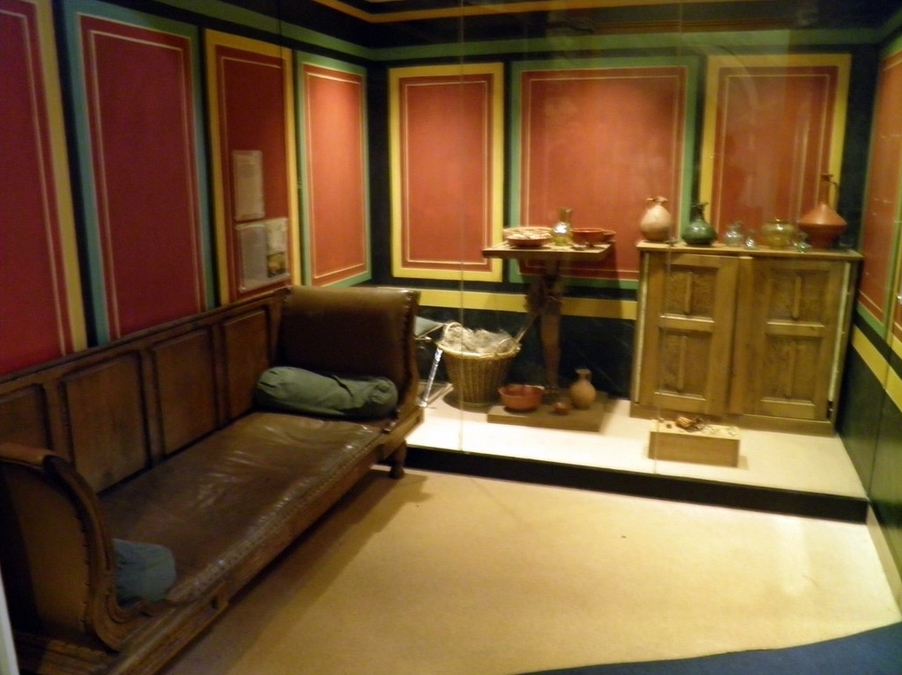
Reconstruction of a living room (tablinum) based on evidence for furniture and room decoration found in Britain, Colchester Castle Museum
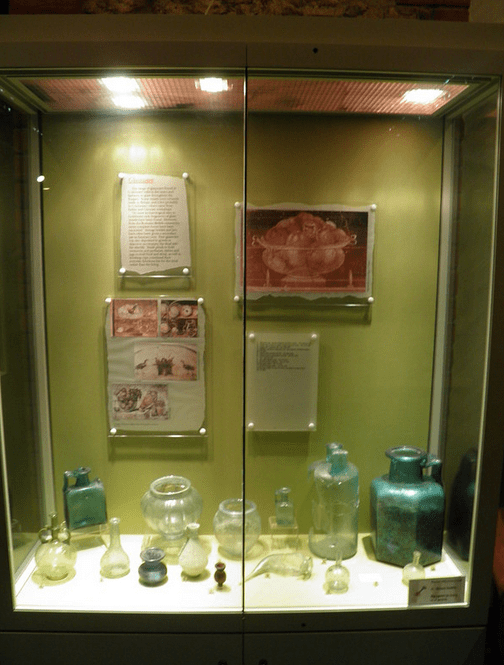
Roman Glassware, Colchester Castle Museum
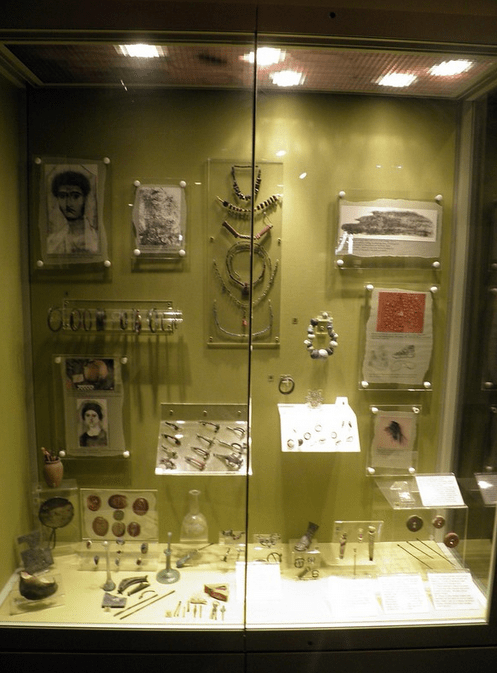
Jewellery finds from the Roman period, Colchester Castle Museum

Samian ware bowl made in Southern France, from Lexden, AD 50-60, Colchester Castle Museum
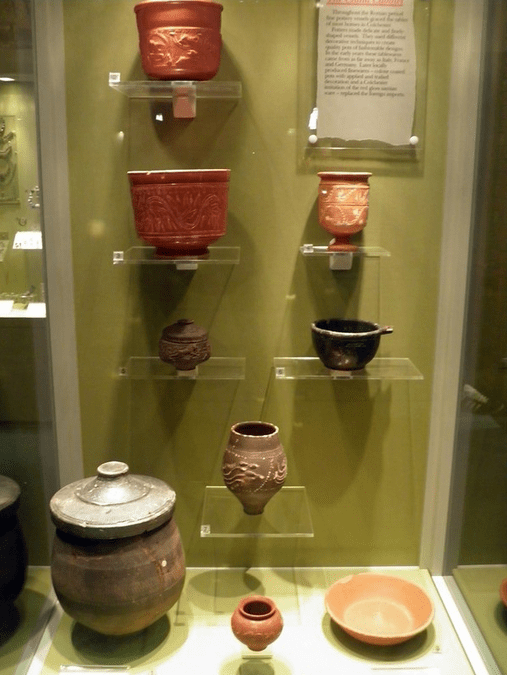
Pottery vessels, Colchester Castle Museum
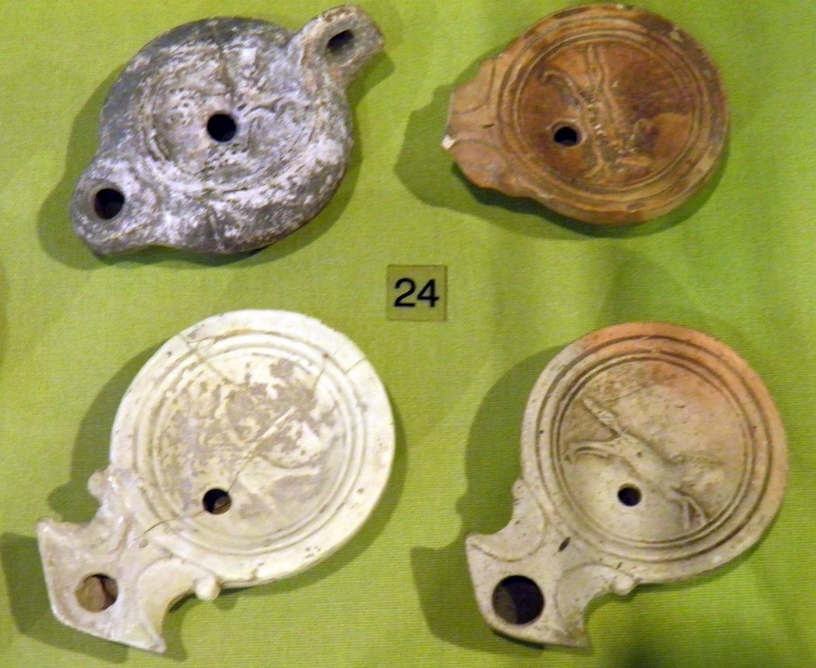
Pottery lamps with animal figures, Colchester Castle
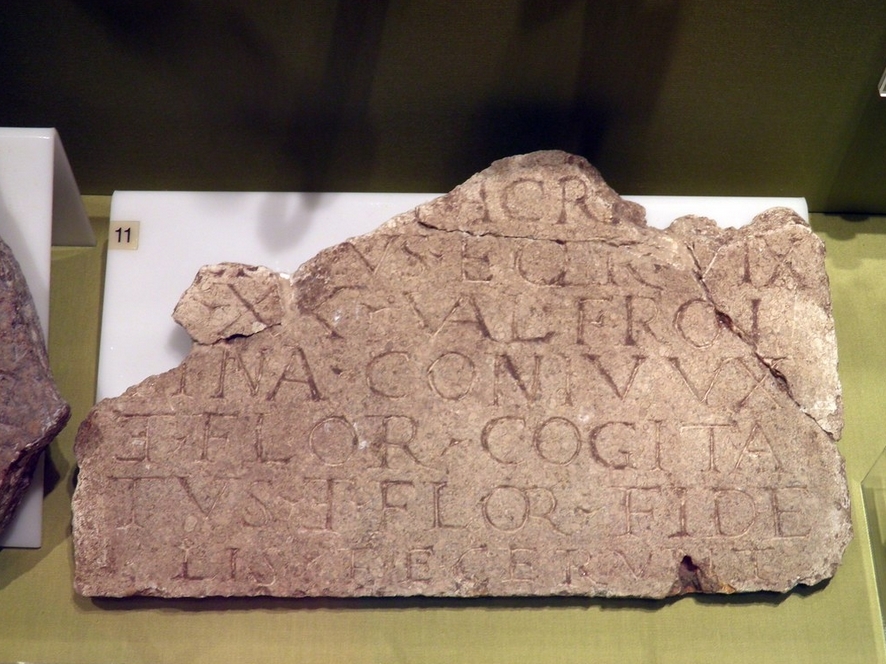
Fragment of a Purbeck marble tombstone dedicated by Valeria Frontina to her hunsband, a Roman knight – Eq(ues) R(omanus)
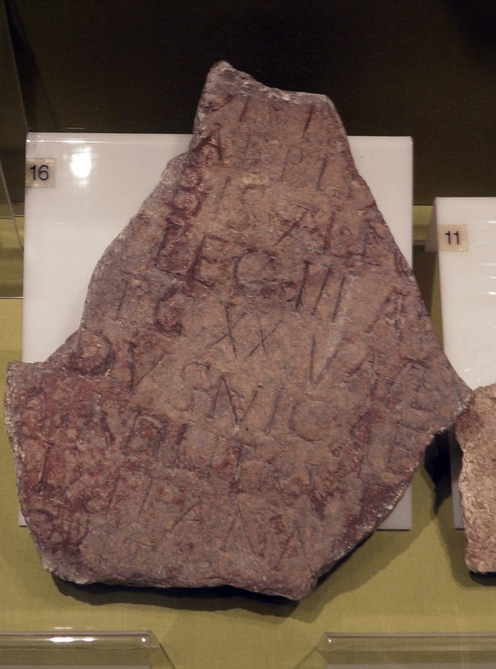
PartPart of the tombstone of a centurion who had served in many units including the Third Legion Augusta and the Twentieth Legion Valeria Victrix, Colchester Castle Museum, Camulodunum
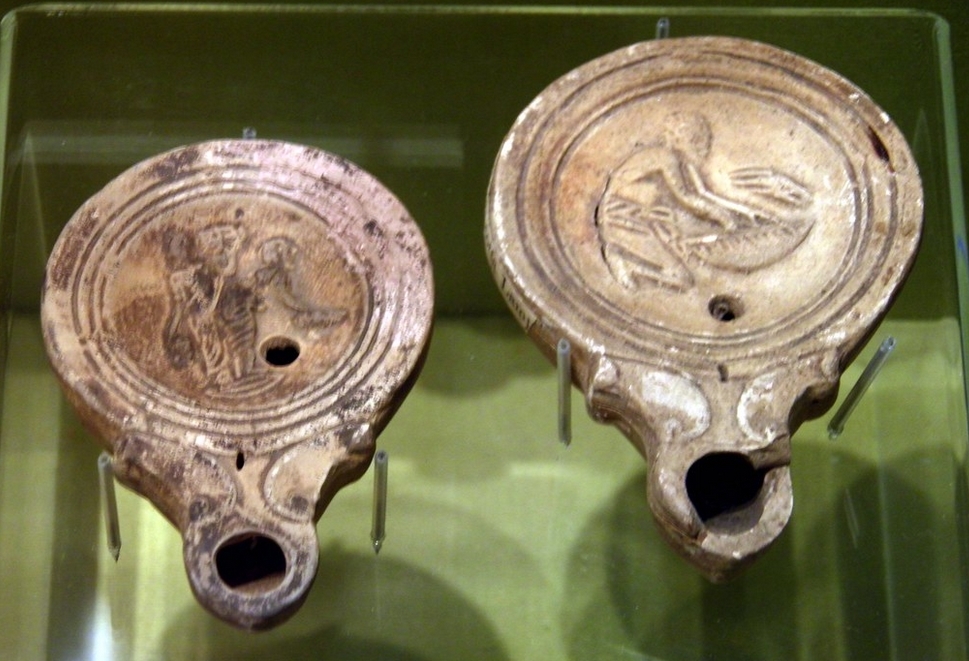
Slaves in Colchester, Pottery lamp with pictures of slave washing in a basin and carrying water
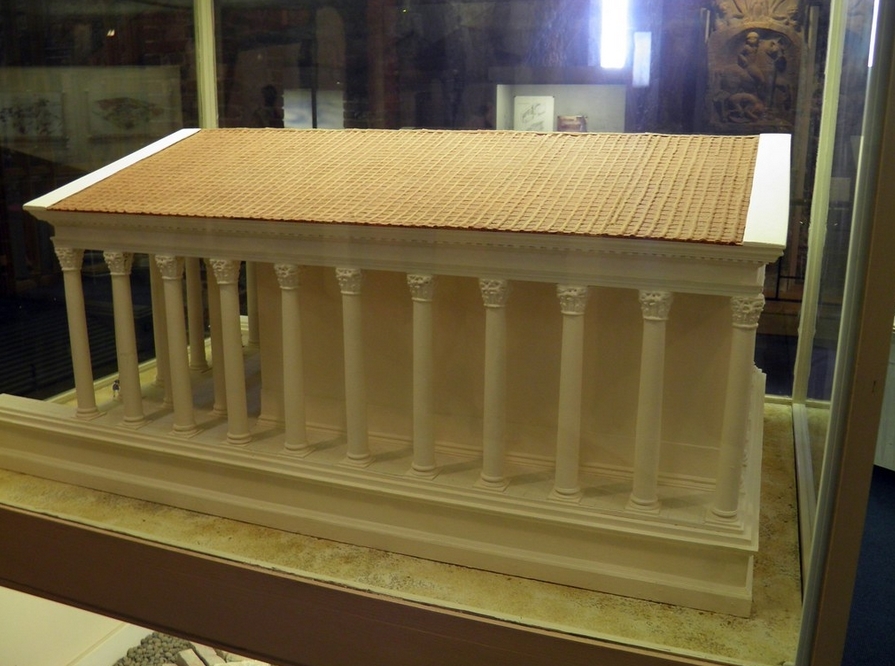
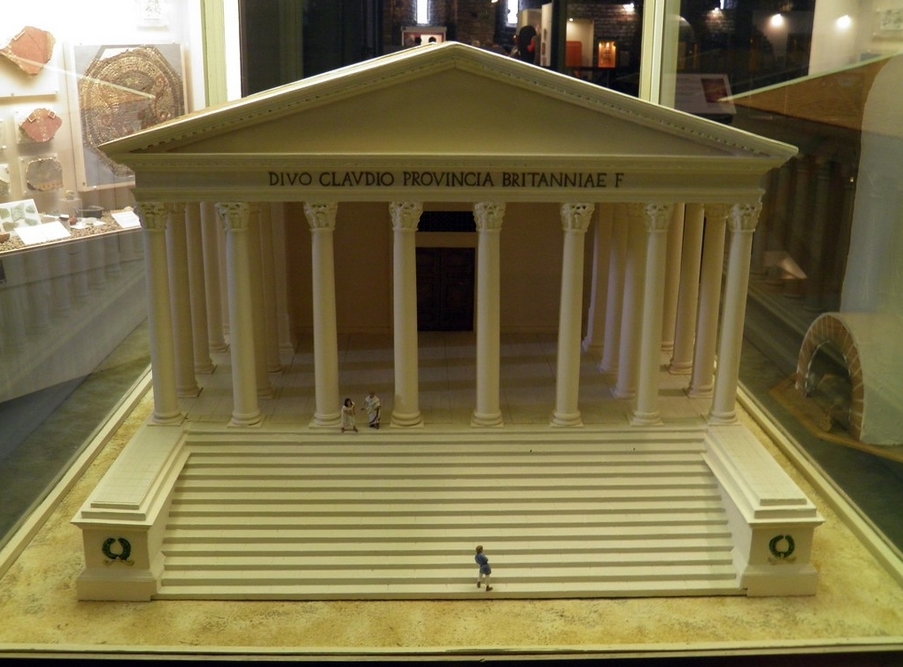
Model of the Temple of Claudius, Colchester Castle Museum
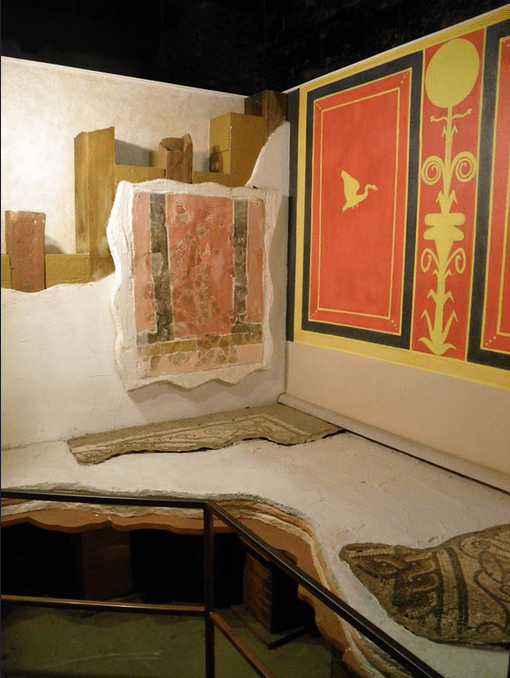

Roman painted wall
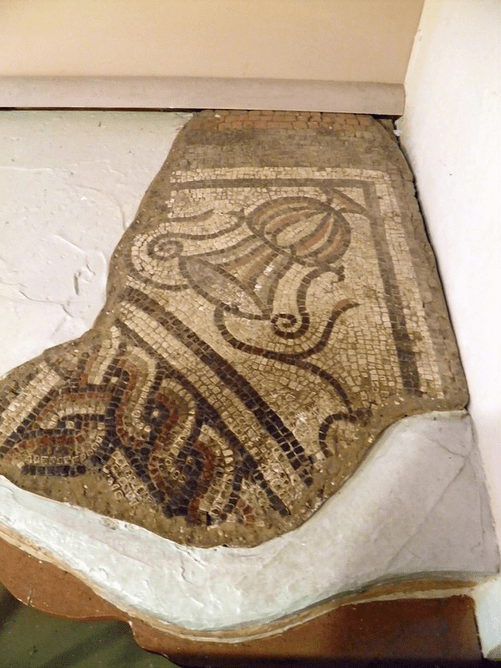
Mosaic fragment from the Middleborough house, Colchester Castle Museum
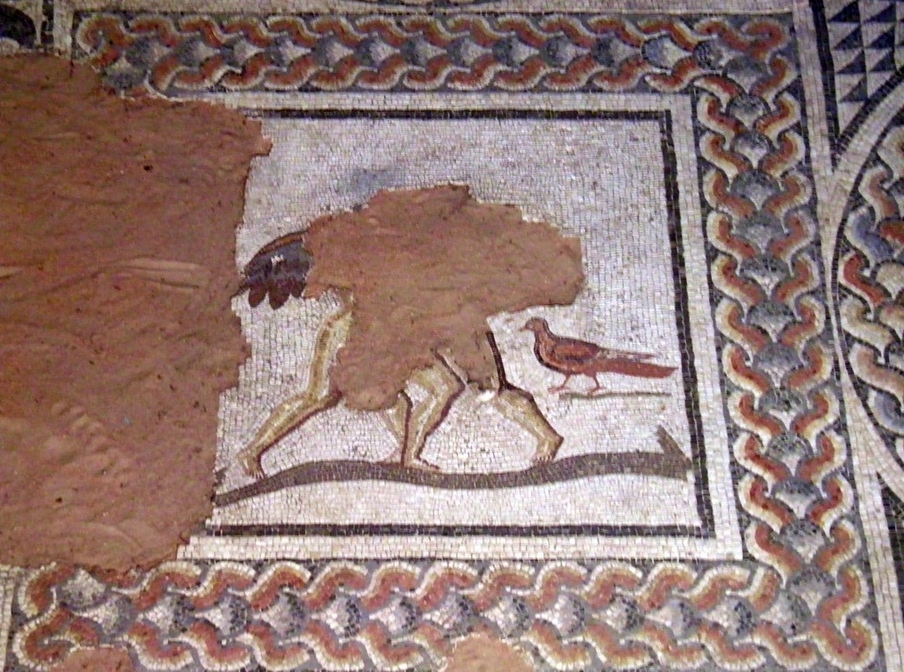
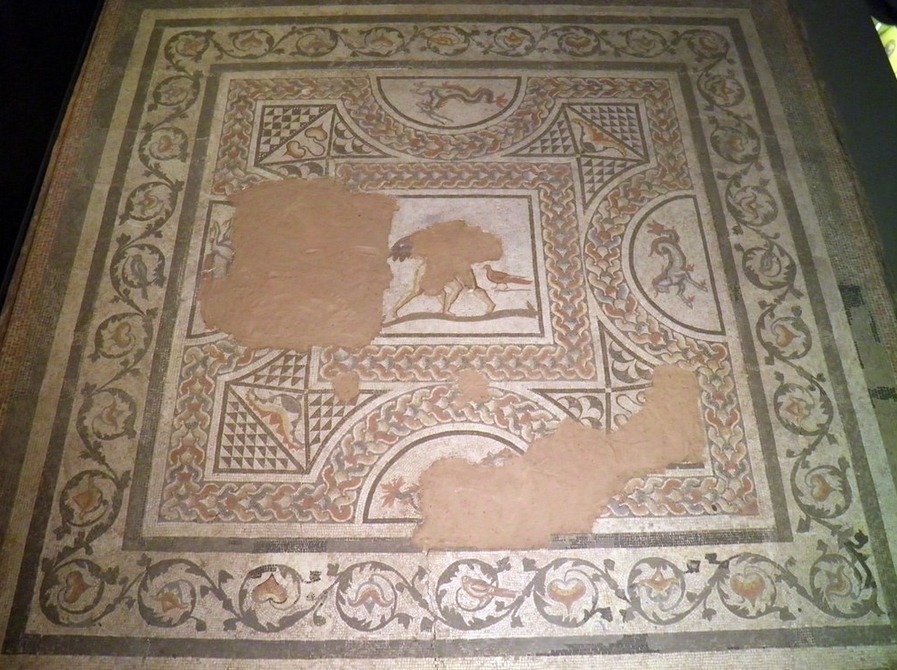
This fine mosaic was laid about AD 175 in a large Roman house just outside the town wall – where the London Insurance building now stands. The central panel shows two cupids wrestling. It is an outstanding example of Roman art in Britain and demonstrates the taste, wealth and vitality of Colchester in the heyday of the Roman Empire. The style of mosaic was developped in Colchester: the same craftsmen laid similar floors in Verulanium, modern St Albans.
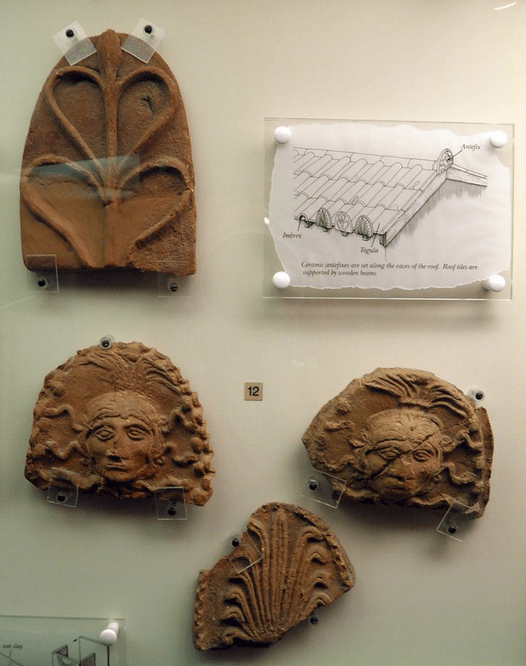
Antefixes with floral patterns and Medusa heads, Colchester Castle Museum
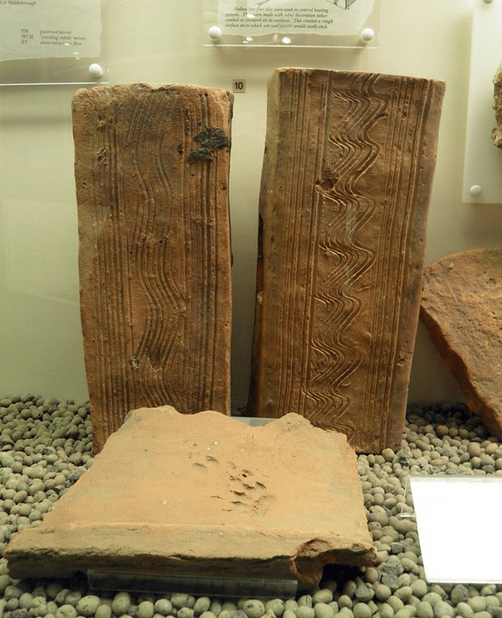
Box-flue tiles with patterned surfaces and tile fragment with paw print of a badger, Colchester Castle Museum

Fragment of painted wall plaster showing a floral spray against a red background
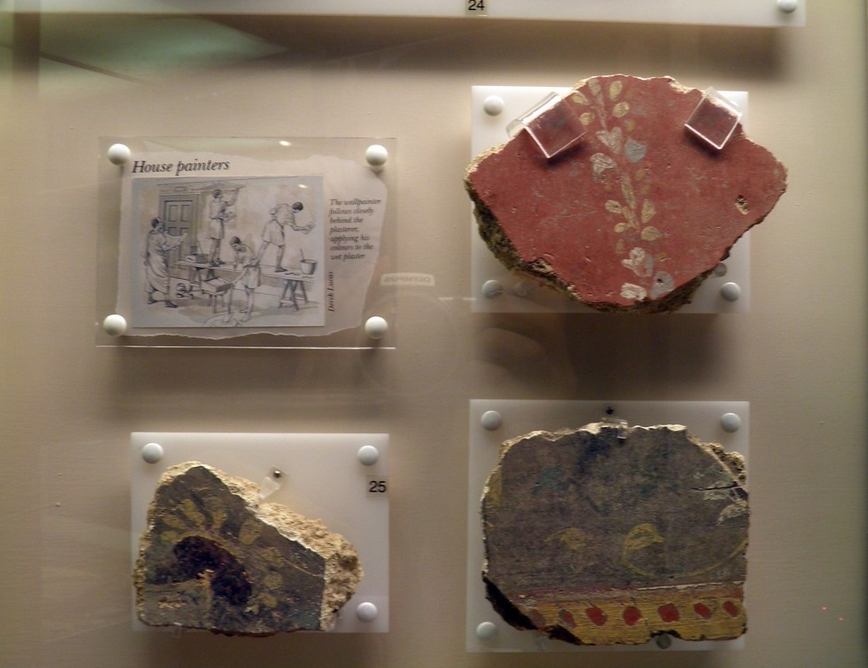
Fragment of painted wall plaster, Colchester Castle
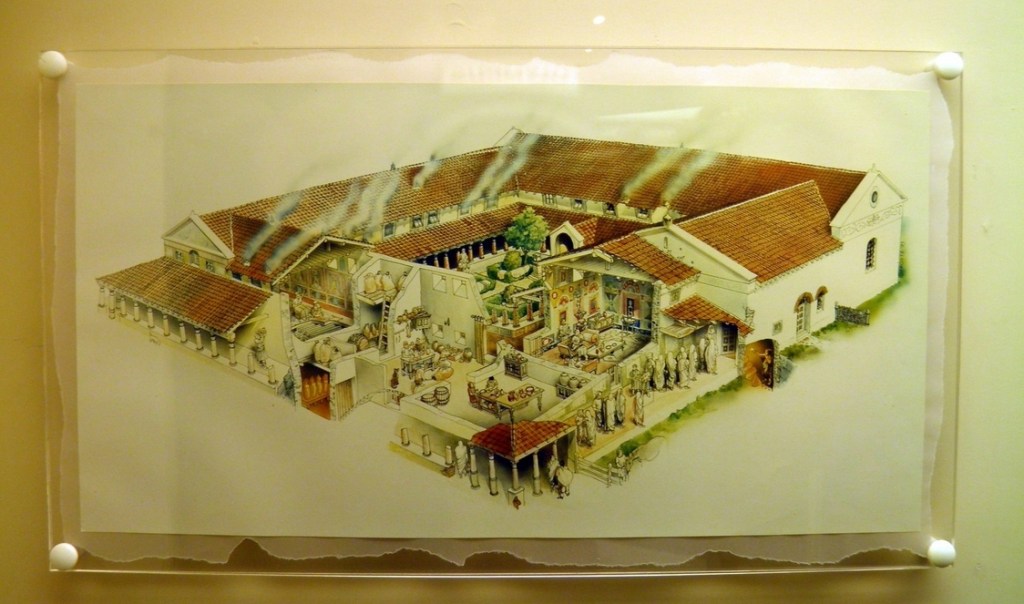
Artist’s reconstruction of a large, luxurius Roman house excavated at Culver Street, viewed from the south-east. It was built in the 2nd century AD and demolished about AD 300, Colchester Castle Museum
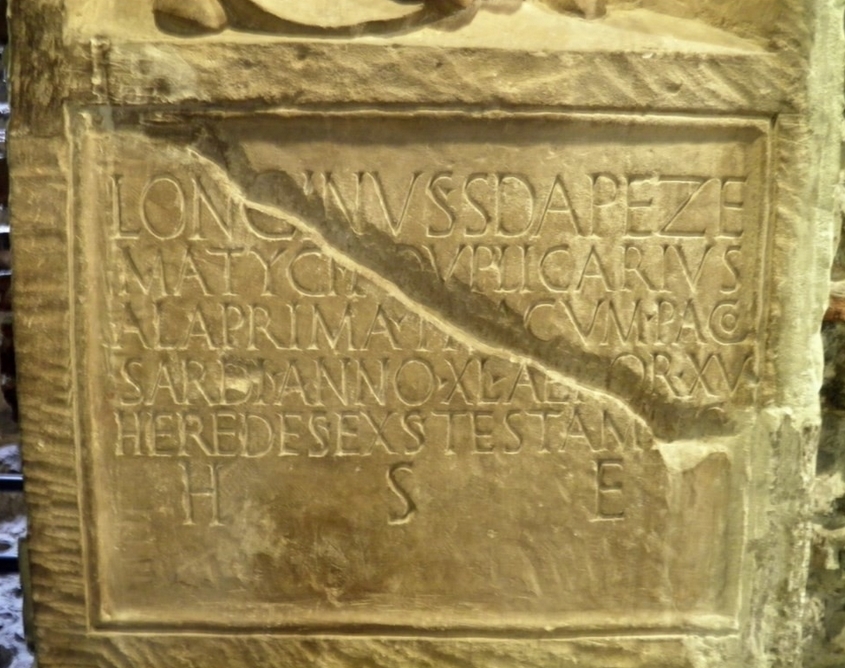
The tombstone of a auxiliary cavalrymen who served in alae (RIB 201), Colchester Castle Museum, Camulodunum (Roman Colchester)
Here is Longinus Sdapeze, a junior officer in a cavalry regiment. He is wearing a leather tunic with diamond-shaped plates of metal swen on. Longinus carried a spear in his right hand, but the spear is now missing. Longinus died between AD 43-49 while the Roman Army was stationed in Colchester.
LONGINVS SDAPEZEMATYGI F(ILIVS) DUPLICARIVSALA PRIMA TRACVM PAGOSARD(ICA) ANNO(RVM) XL AEROR(VM) XVHEREDES EX S(VO) TESTAM(ENTO)[F(ACIENDUM)] C(VRAVERUNT)H(IC) S(ITUS) E(ST)
TranslationLonginus son of (this comes from the filiation, see the word filius in the second line) Sdapezematygus, soldier on double pay of the first wing of Thracians (Ala I Thracum), from the district (pagus) of Sardica. 40 years of age, served 15 years, his heirs set this monument up in accordance with the terms of his will. He lies buried here.
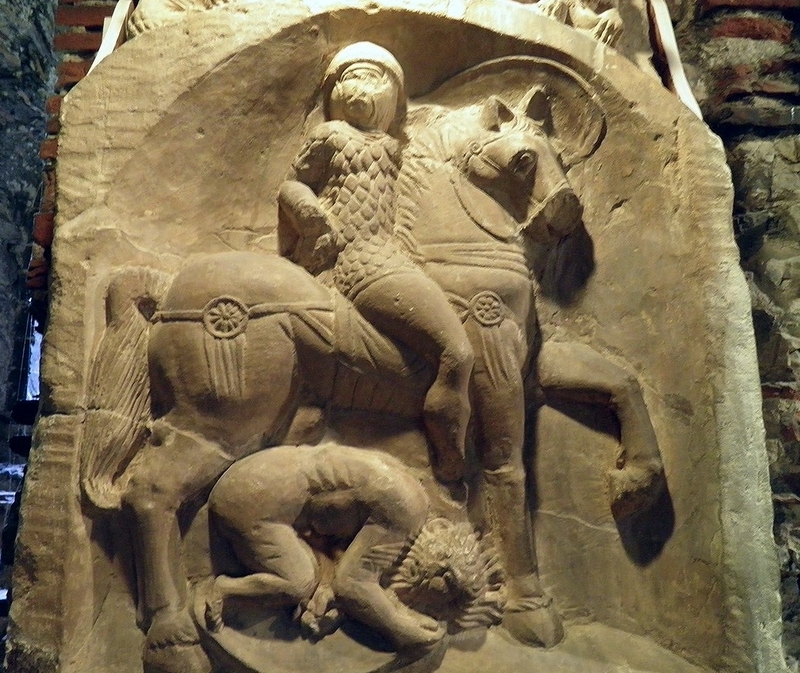
Tombstone of a Thracian Auxiliary Cavalryman by the name of Longinus Sdapeze, dated around AD60 , Colchester Castle Museum, Camulodunum (Roman Colchester)
Here is Longinus Sdapeze, a junior officer in a cavalry regiment. He is wearing a leather tunic with diamond-shaped plates of metal swen on. Longinus carried a spear in his right hand, but the spear is now missing. Longinus died between AD 43-49 while the Roman Army was stationed in Colchester.
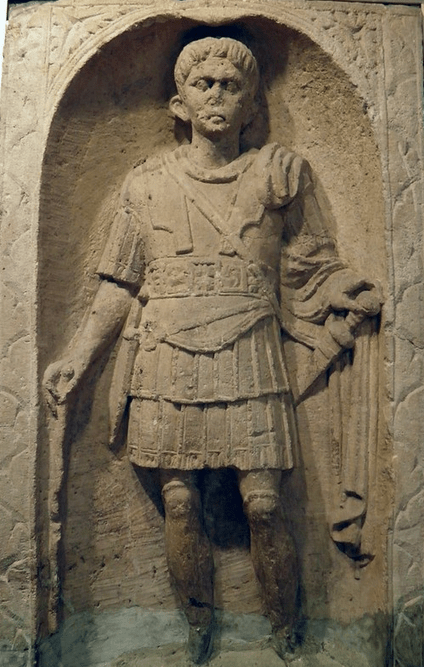
The tombstone of a centurion, Colchester Castle Museum, Camulodunum (Roman Colchester)
Here is Marcus Favonius Facilis (he has 3 names, tria nomina), a Roman army officer of Legion XX. Originally his tombstone would have been brightly painted. This tombstone is important because it shows clearly what a Roman centurion would have worn. He carries in his right hand a vinc stick, which tells us he was a centurion. (RIB 200)M(ARCVS) FAVONI(VS) M(ARCI) F(ILIVS) POL(LIA TRIBU) FACILIS C(ENTURIO) LEG(IONIS) XX VERECUNDVS ET NOVICIVS LIB(ERTI) POSUERUNT H(IC) S(ITUS) E(ST)
TranslationMarcus Favonius Facilis (note how this last name actually follows two other pieces of information), son of Marcus, of the Pollian voting tribe, centurion of the Twentieth Legion (Legio XX). Verecundus and Novicius his freedmen (liberti) set this up. He lies here.
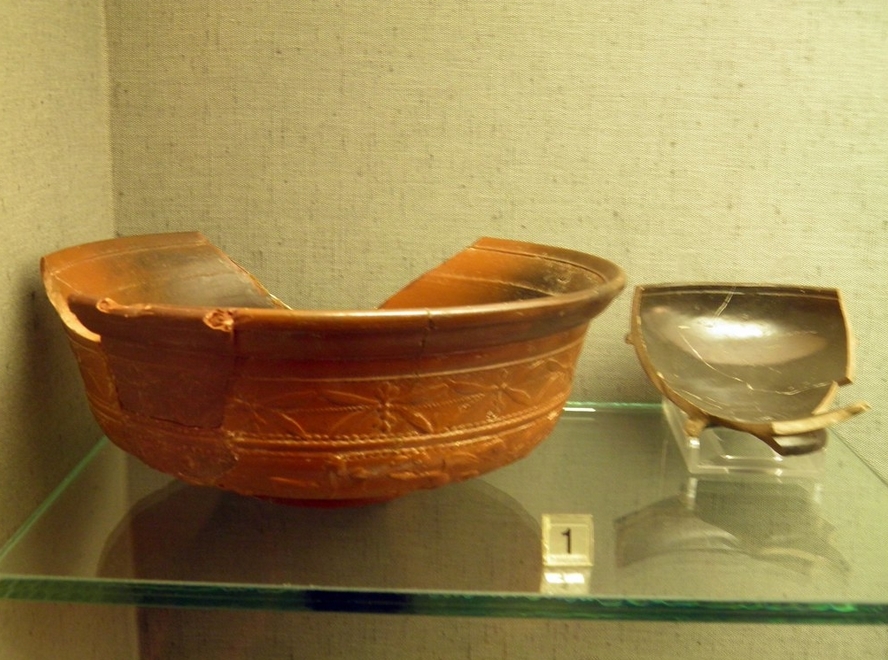
Burnt samian potter discovered in a shop destroyed by the Boudican rebels, found next to the Red Lion, High Street, Colchester
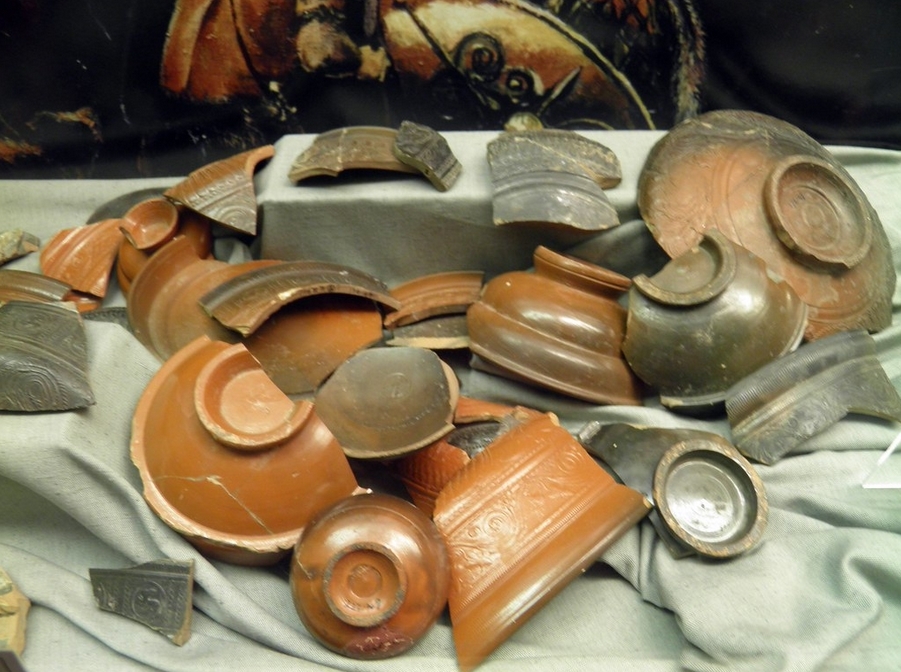
Burnt samian pottery, found buried under rubble of houses, Colchester Castle Museum
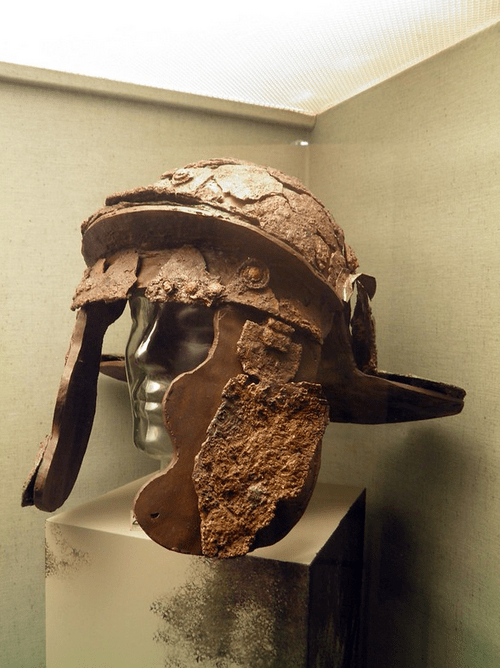
Reconstructed Roman Helmet, Colchester Castle
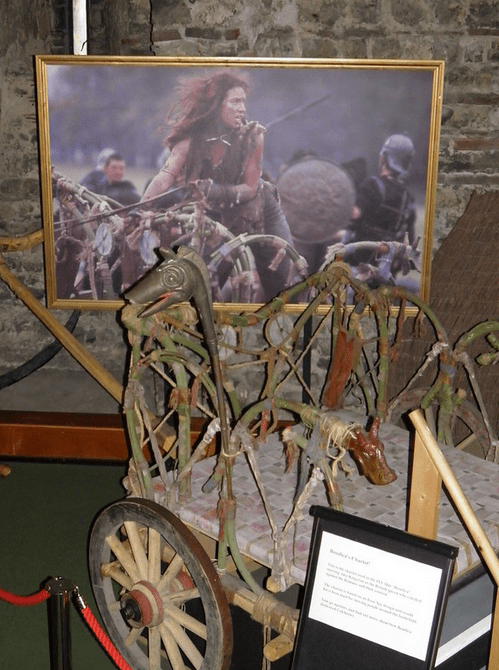
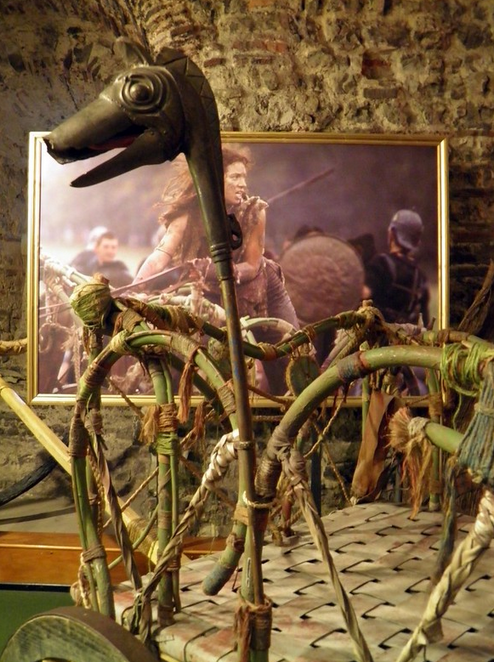
Boudica’s Chariot, Colchester Castle Museum, Camulodunum (Roman Colchester)
This is the chariot used in the ITV film “Boudica” starring Alex Kingston as the British queen who rebelled against the Romans and their control. The chariot is based on an Iron Age design and would have been used for moving people around the battefield.
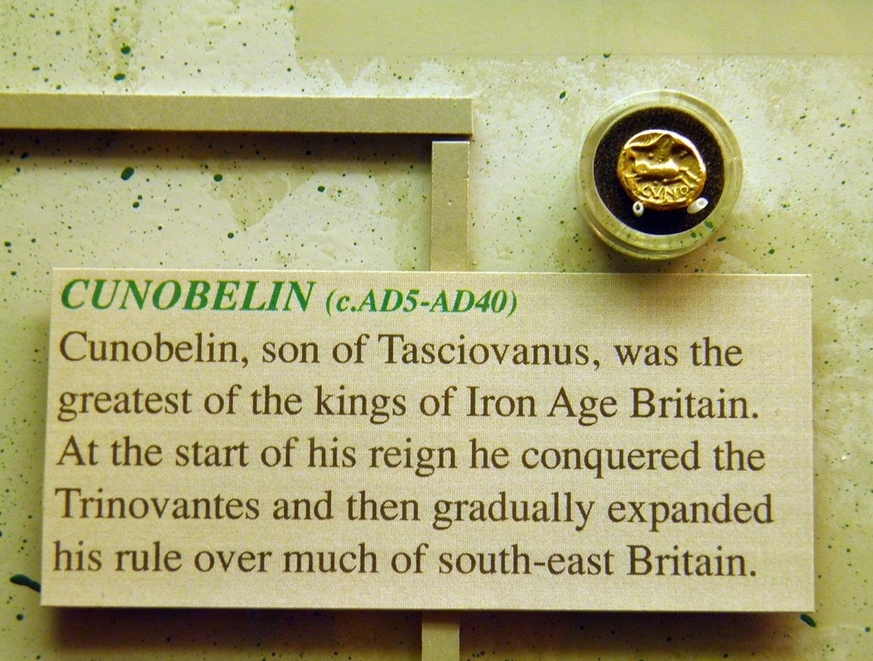
Cunobelin (c.AD5 – AD40), Colchester Castle Museum, Camulodunum (Roman Colchester)
Cunobeline or Cunobelinus (also written Kynobellinus, Κυνοβελλίνος in Greek and sometimes abbreviated to Cunobelin) (late 1st century BC – 40s AD) was a historical king in pre-Roman Britain, known from passing mentions by classical historians Suetonius and Dio Cassius, and from his many inscribed coins. He appears to have controlled a substantial portion of south-eastern England, and is called “Britannorum rex” (“king of the Britons”) by Suetonius. He also appears in British legend as Cynfelyn (Welsh), Kymbelinus (Medieval Brito-Latin) or Cymbeline (Shakespeare, et al.), in which form he is the subject of a play by William Shakespeare. His name is a compound made up of cuno- “hound” and “Belenos” (the god) Belenus”.
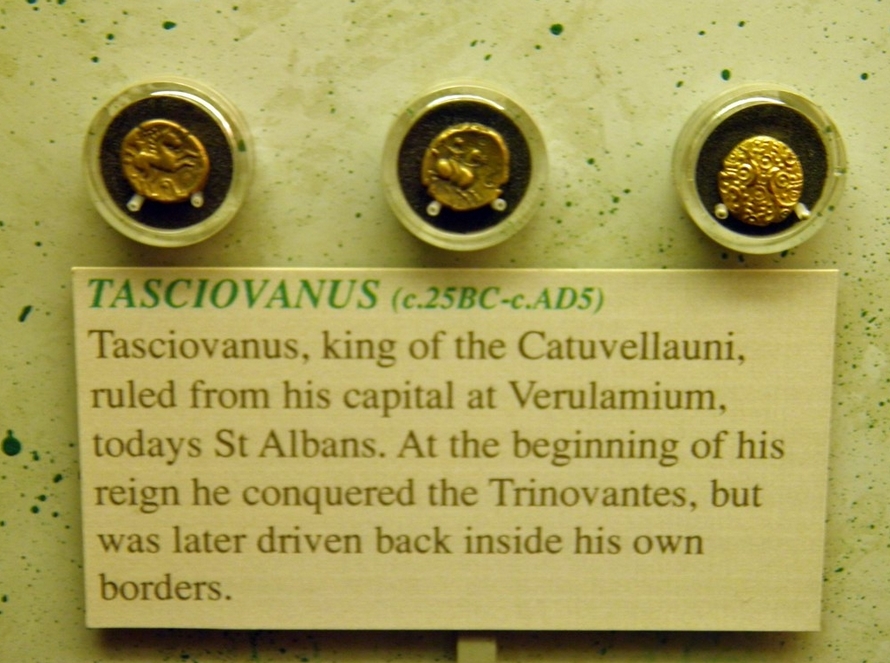

Dubnovellaunus (c.15BC – AD5), Colchester Castle Museum, Camulodunum (Roman Colchester)
Dubnovellaunus or Dumnovellaunus was the name of at least one, and possibly several kings of south-eastern Britain in the late 1st century BC/early 1st century AD, known from coin legends and from a mention in the Res Gestae Divi Augusti. Dubnovellaunus is the name of a king who, based on coin distribution, appears to have ruled over Kent east of the River Medway. He was the first king of the Cantiaci to issue inscribed coins: some of his coins appear to date from as early as 40-30 BC. Towards the end of the 1st century BC he seems to have been succeeded by a king called Vodenos or Vosenios, although it is possible the two kings’ reigns were contemporary or overlapped.
A king called Dubnovellaunus succeeded his father Addedomarus as king of the Trinovantes ca. 10-5 BC and ruled for several years before being supplanted by Cunobelinus of the Catuvellauni. In the Res Gestae Divi Augusti, a British king called Dumnovellaunus appears, alongside Tincomarus of the Atrebates, as a supplicant to Augustus around AD 7. Another Dumnovellaunus appears on coins of the Corieltauvi, dating ca. 45 AD. He appears to have been a subordinate king to Volisios, probably the overall king of the territory. Given the chronology it is possible, but not certain, that Dubnovellaunus of the Cantiaci is the same individual as Dubnovellaunus of the Trinovantes; and the Trinovantian Dubnovellaunus is most likely to be the Dumnovellaunus who presented himself to Augustus.
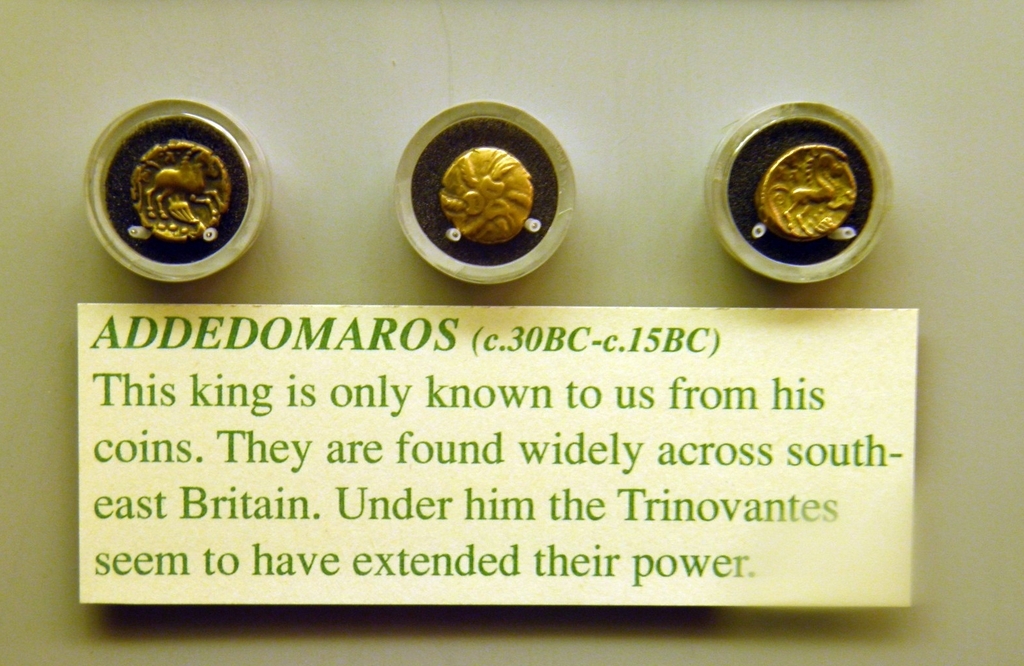
Addedomaros (c.30BC – c.15BC), Colchester Castle Museum, Camulodunum (Roman Colchester)
Addedomarus (sometimes written Aθθedomarus on coins) was a king of south-eastern Britain in the late 1st century BC. His name is known only from his inscribed coins, the distribution of which seem to indicate that he was the ruler of the Trinovantes. He was the first king to produce inscribed coins north of the Thames, perhaps as early as 35 BC, although some estimates are as late as 15 BC.
He seems to have moved the Trinovantian capital from Braughing in Hertfordshire to Camulodunum (Colchester, Essex). For a brief period (ca. 15-10 BC) he seems to have been supplanted by Tasciovanus of the Catuvellauni, who issued coins from Camulodunum at that time. Addedomarus then appears to have regained power and reigned until 10-5 BC, when he was succeeded by Dubnovellaunus. Addedomarus appears in later, post-Roman and medieval British Celtic genealogies and legends as Aedd Mawr (Addedo the Great). The Welsh Triads recall Aedd Mawr as one of the founders of Britain.

Cassivellaunus (?-54BC-?), Colchester Castle Museum, Camulodunum (Roman Colchester)
Cassivellaunus was an historical British chieftain who led the defence against Julius Caesar’s second expedition to Britain in 54 BC. The first British person whose name is recorded, Cassivellaunus led an alliance of tribes against Roman forces, but eventually surrendered after his location was revealed to Caesar by defeated Britons. Cassivellaunus made an impact on the British consciousness.
He appears in British legend as Cassibelanus, one of Geoffrey of Monmouth’s kings of Britain, and in the Mabinogion, the Brut y Brenhinedd and the Welsh Triads as Caswallawn, son of Beli Mawr. His name in Brythonic *Kađđiwellaunos, from *kađđi- “passion, love, hate” + *welnā- “to lead” + -aunos “one who”, translates as either “leader of the Cassi [tribe]”, and therefore may be more of a title rather than his actual given name (although the two need not be mututally exclusive), or as “The Passionate Leader”
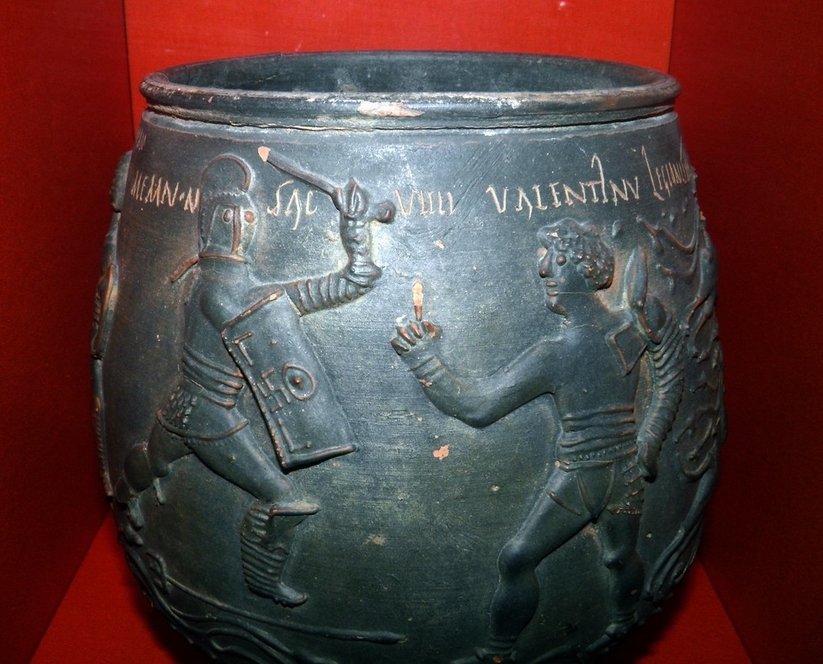
The Colchester Vase, around 175 AD, Colchester Castle Museum, Camulodunum (Roman Colchester)
In 1848 this beautifully decorated pot was discovered in a Roman grave at West Lodge in Colchester. It dates from around AD 175 and was probably made in Colchester. Four gladiators can be seen on the base. Above them are inscribed the names Secundus, Mario, Memnon and Valentinus. It is one of the finest examples of ceramic art know from Roman Britain.
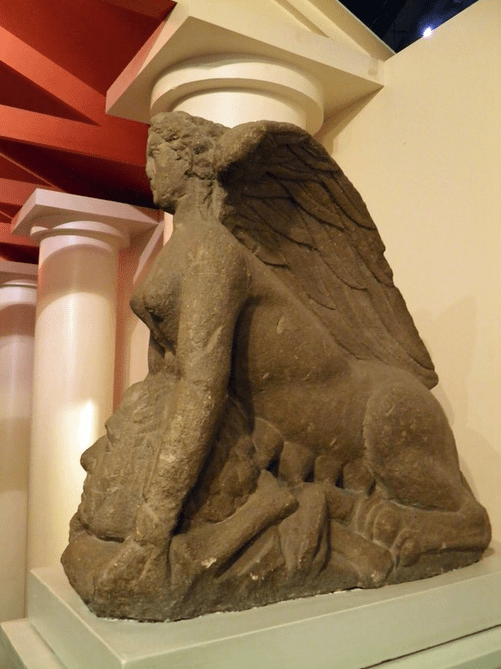
The Colchester Sphinx, Colchester Castle Museum, Camulodunum (Roman Colchester)
The Colchester Sphinx is a Roman sculpture that marked the site of a grave alongside the main road from Colchester to London, where the Country Hospital on Lexden Road stands nowadays. A sphinx was a mythological creature associated with death,
part woman and part winged lion. Here she is shown as a relentless dealer in death as she clutches the distressed head of the deceased in her paws. As such, it is one of the most powerful statement about death from Roman Britain. The sculpture was carved from a stone imported from France in the early Roman period, AD 43 – 55.
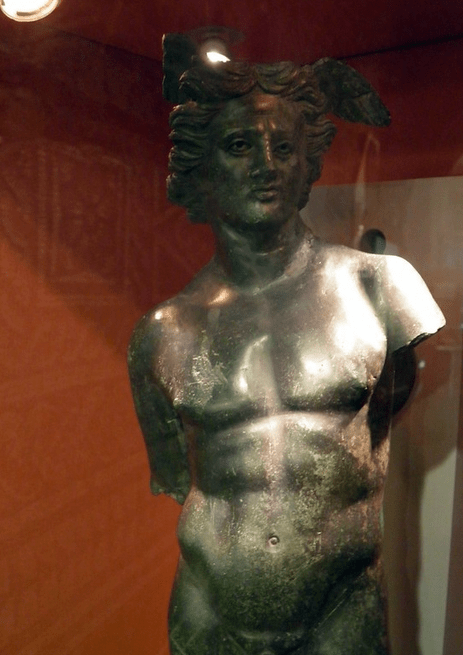
The Gosbecks Mercury, Colchester Castle Museum, Camulodunum (Roman Colchester)
In 1945, Albert Beales, while ploughing, found this Roman bronze statue. This was at Gosbecks, on the south west edge of Colchester.
This figure is Mercury, the Roman god of travellers and Merchants.This is one of the finest Roman bronzes so far discovered in Britain.
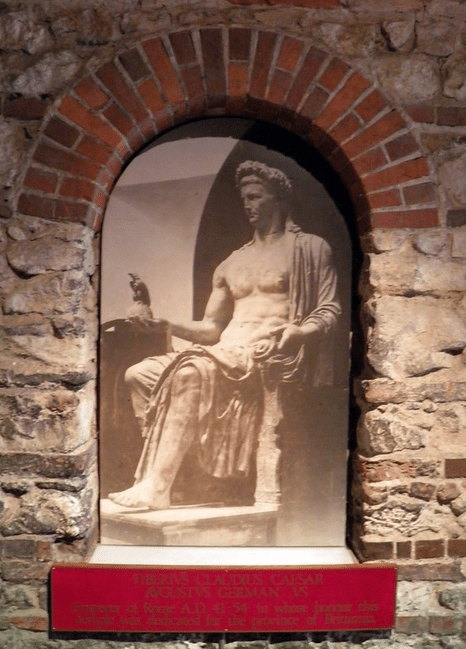
Tiberius Claudius Caesar Augustus Germanicus, Roman Emperor AD 41 – 54, Colchester Castle Museum, Camulodunum (Roman Colchester)
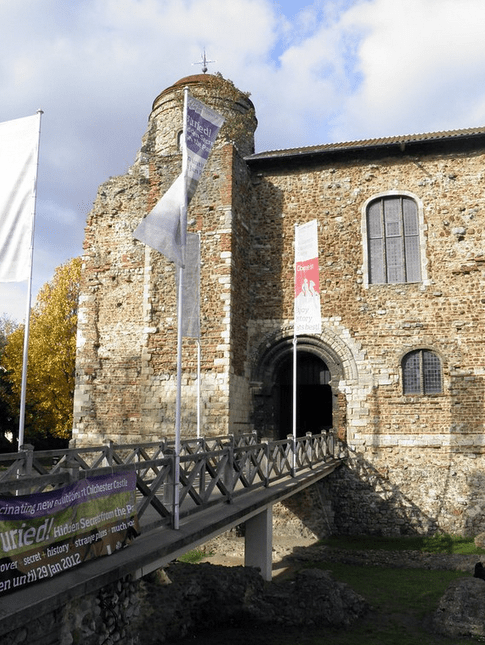
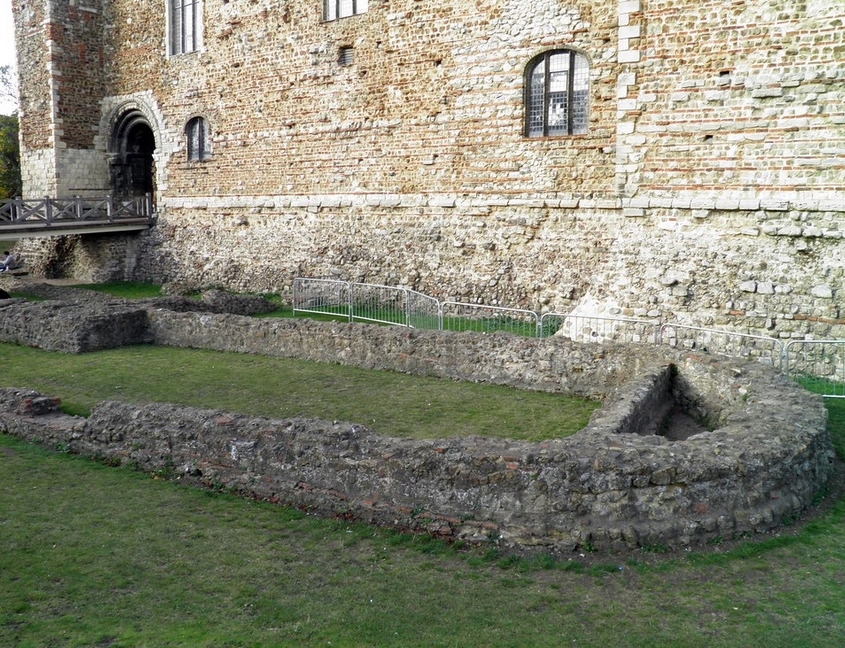
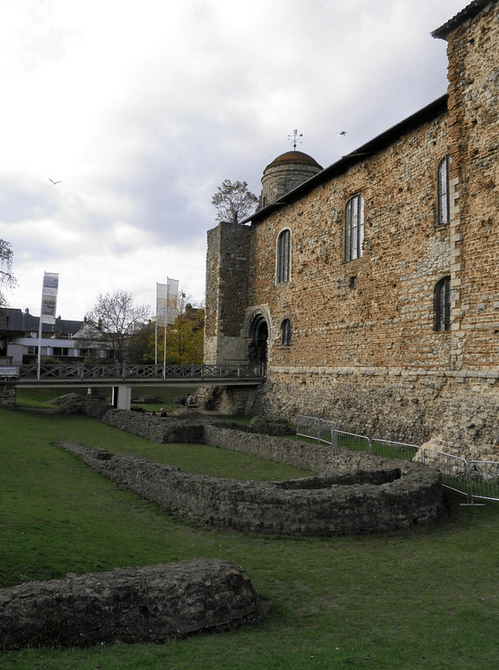
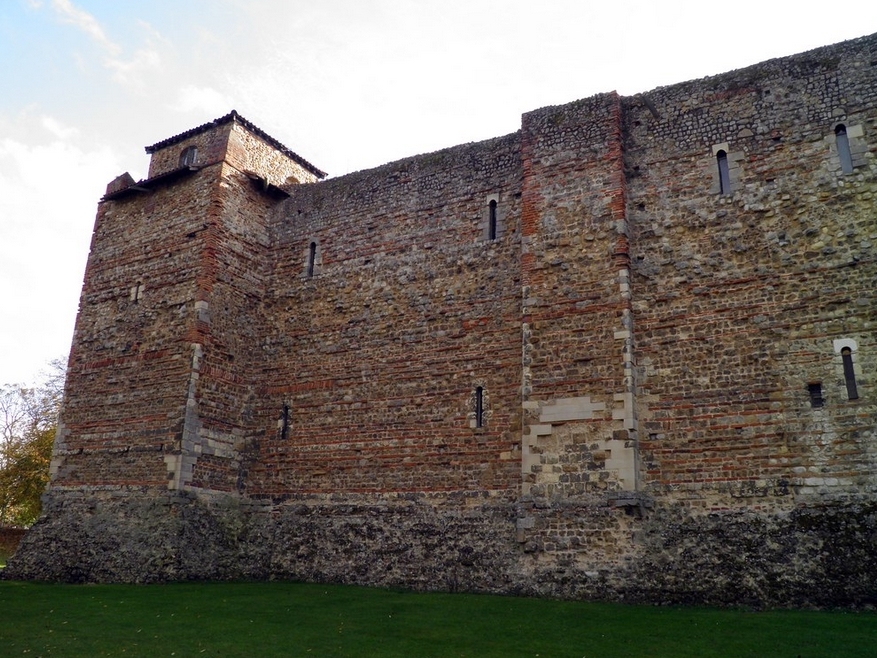
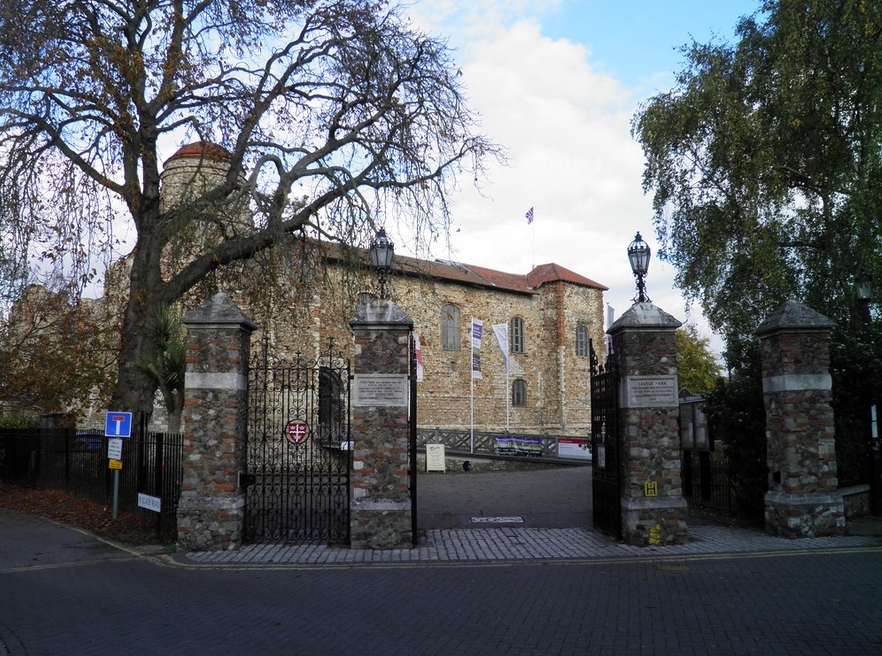
Colchester Castle, Camulodunum (Roman Colchester)
Colchester Castle was built by the Normans (from Normandy in France) from around 1076, as part of their defence system, following their invasion of England in 1066. It is an impressive structure, indeed the largest Norman keep ever built and the first to be built by William the Conqueror in England. His steward (or dapifer) Eudo de Rie, carried out the initial building work. The castle is built almost entirely from reclaimed Roman materials,
roof tiles being in abundance and heavily used in the walls. The large windows in the above view are not original but put in by Charles Gray in the 18th century, to give more light, replacing the smaller Norman slit windows that would once have been there. The originals can be seen elsewhere on the building faces.
More of this later. The present day foot bridge leading into the castle keep spans these older foundations and takes the visitor through a typically magnificent Norman archway. Opinion is divided as to when this door was added and what form it took, whether it would have had a drawbridge, portcullis,
etc. Note the cupola and tree at the top, both late additions to the original. More of which later! Upon their arrival, the Normans soon discovered that Essex was devoid of any natural building stone. The Romans had found the same thing some 1000 years earlier and had used a material called septaria which had to be brought from the coast, and the naturally occurring red earth, from which they made their tiles.

The east side of the North Gate, Camulodunum (Roman Colchester)
Just a small witness to the wall, squashed between two buildings. The wall was originally approximately 2.4 metres thick, so a considerable amount of the wall is missing here.
All evidence of the Roman North Gate has disappeared as a road widening exercise. This is all that is left of what once have been an impressive structure, perhaps equally as impressive as Balkerne Gate.
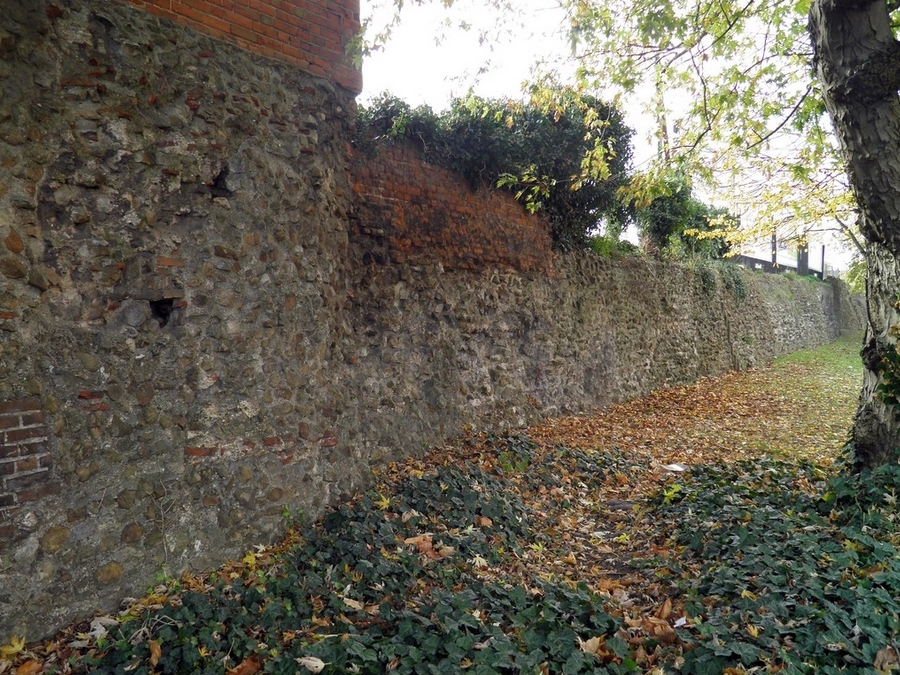
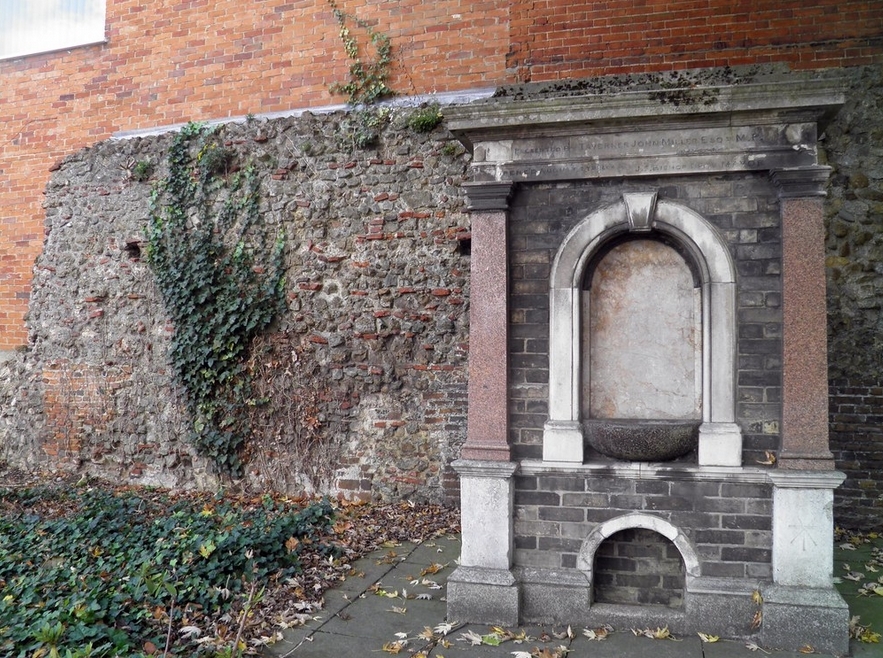
North Gate, Roman Wall, Camulodunum (Roman Colchester)
 ukhomeschool