
https://en.wikipedia.org/wiki/Lucy_(Australopithecus)



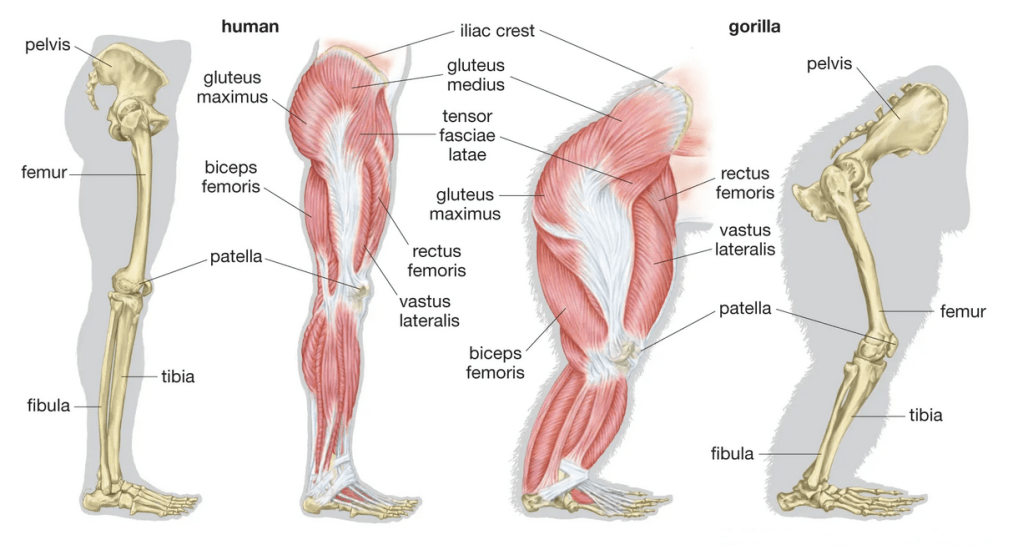
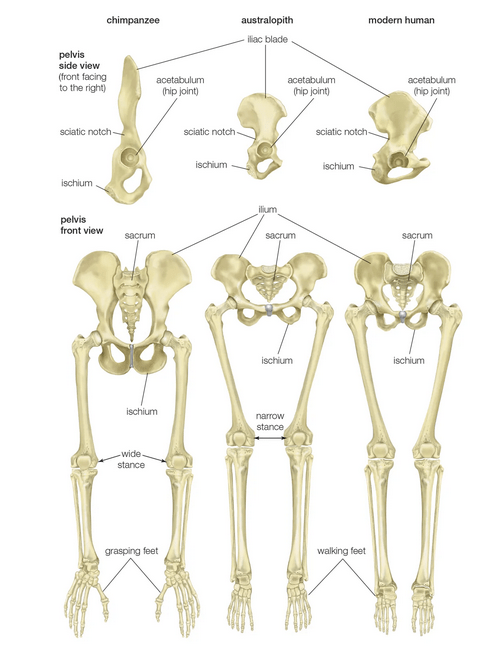
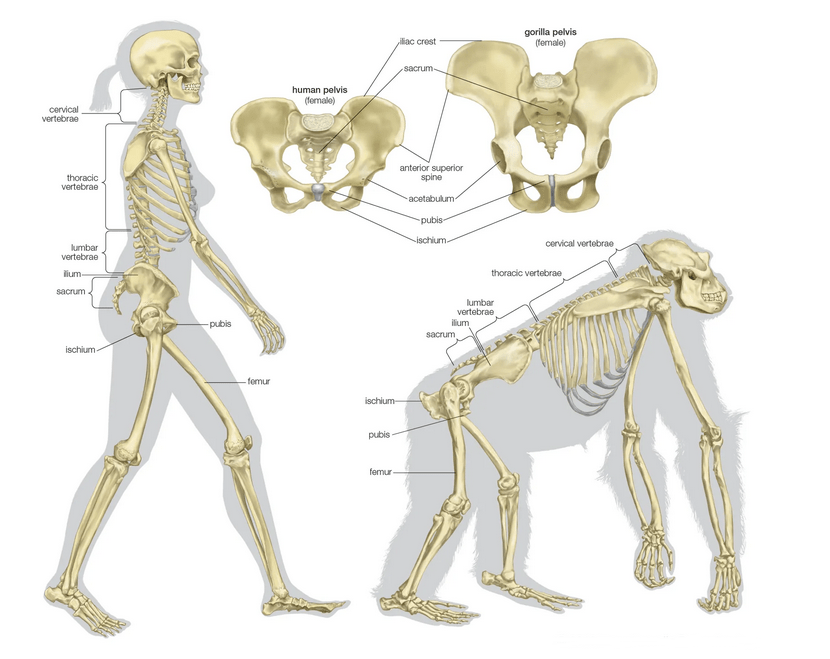
skeletons of humans and gorillas compared
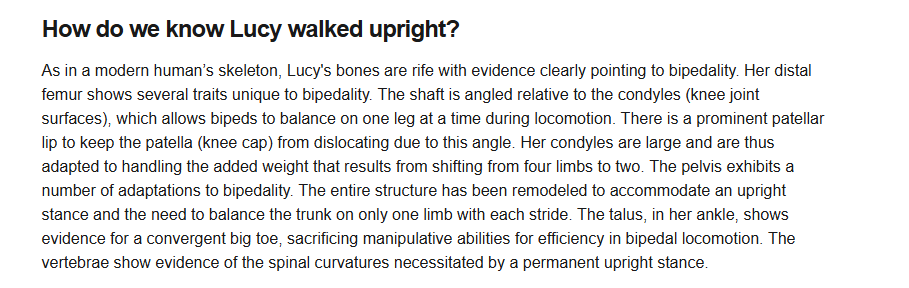
The skeletal structure of a human being (left) and of a gorilla (right). Several differences allow the human to walk erect on two legs with a striding gait rather than move in a knuckle-walking fashion like the gorilla. In the pelvis these differences include shorter ischia, a broader sacrum, and broader, curved-in ilia with a lower iliac crest. In the legs the femurs (thighbones) are relatively long and are set farther apart at the hips than they are at the knees.
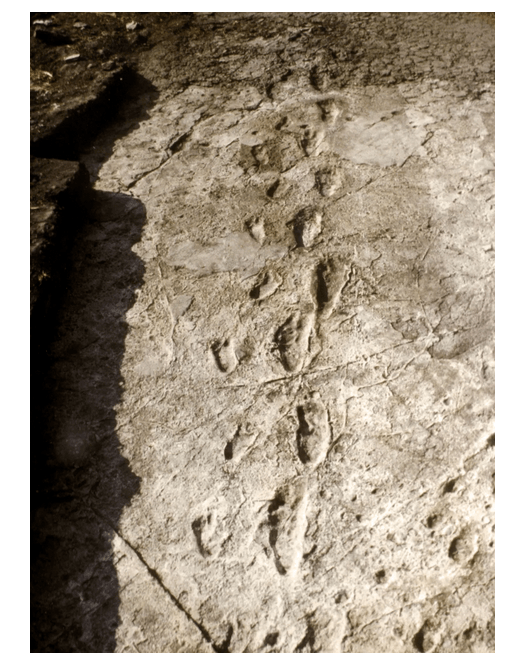
A trail of footprints, probably left by Australopithecus afarensis individuals some 3.5 million years ago, at Laetoli, northern Tanzania.
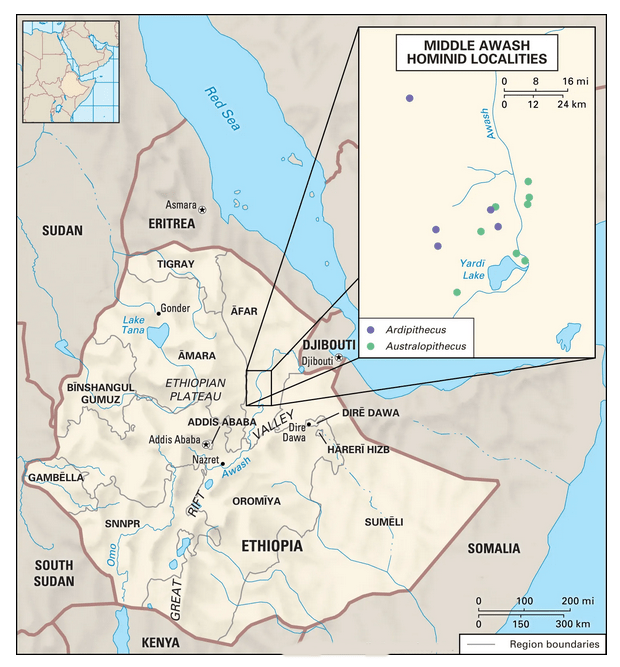
Hominin fossil sites of the Awash River basin, Ethiopia.
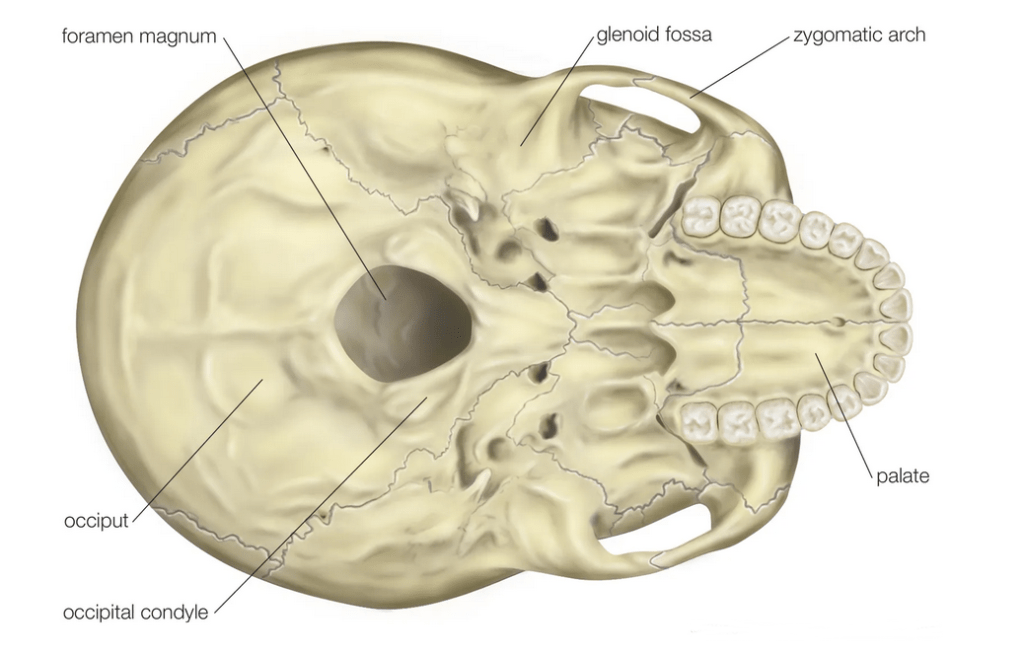
View of the base of the human skull, showing the central location of the foramen magnum.
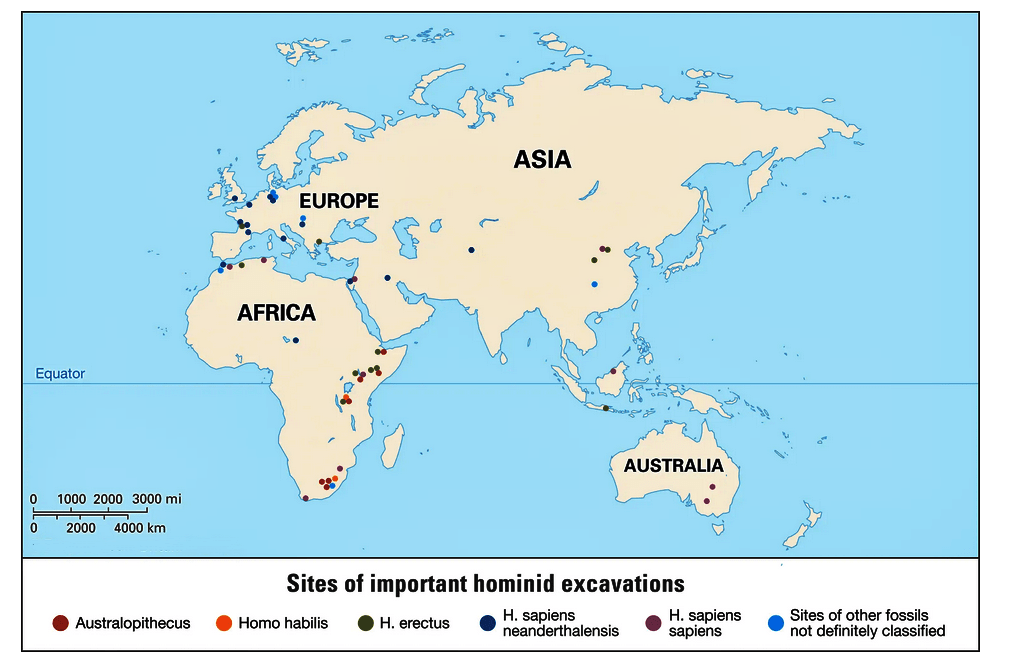
The earliest fossils of human ancestors have been found in Africa.
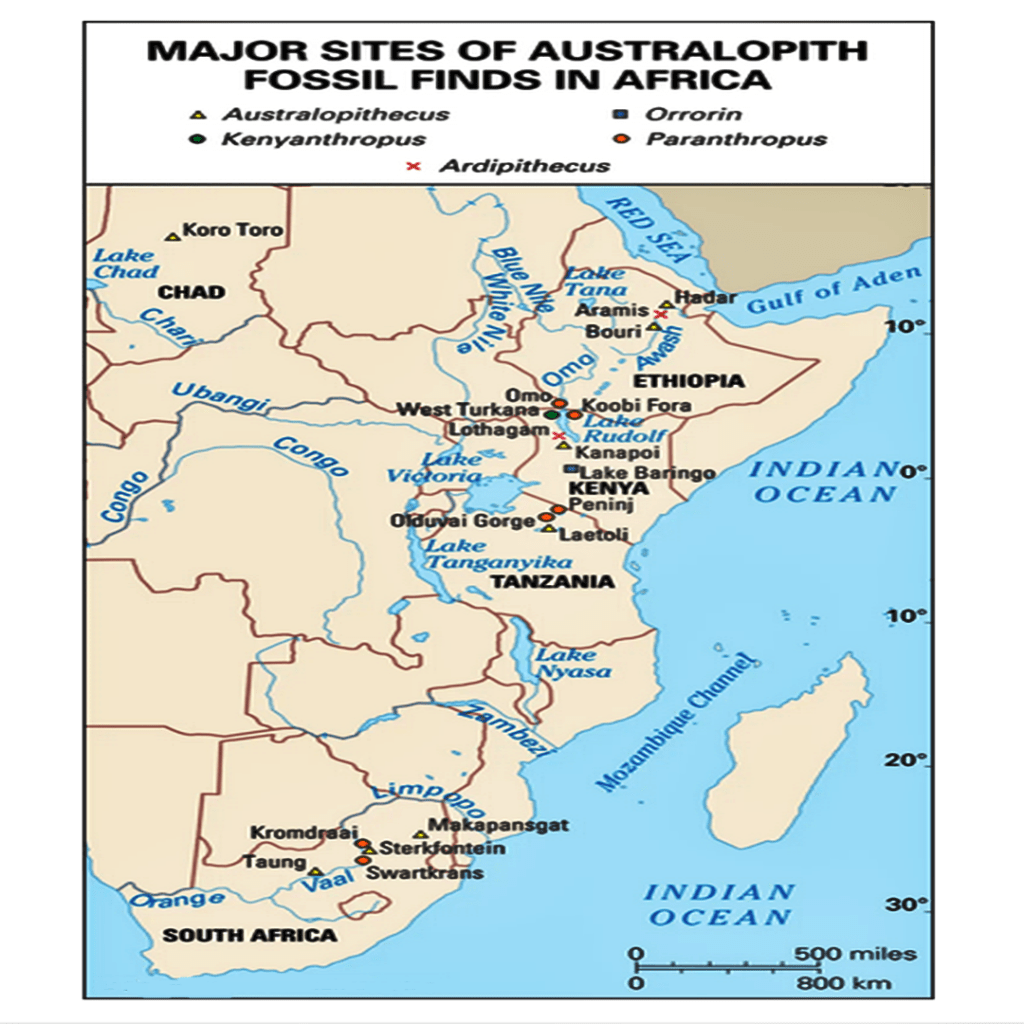
A selection of locations in sub-Saharan Africa where hominid fossils have been found.
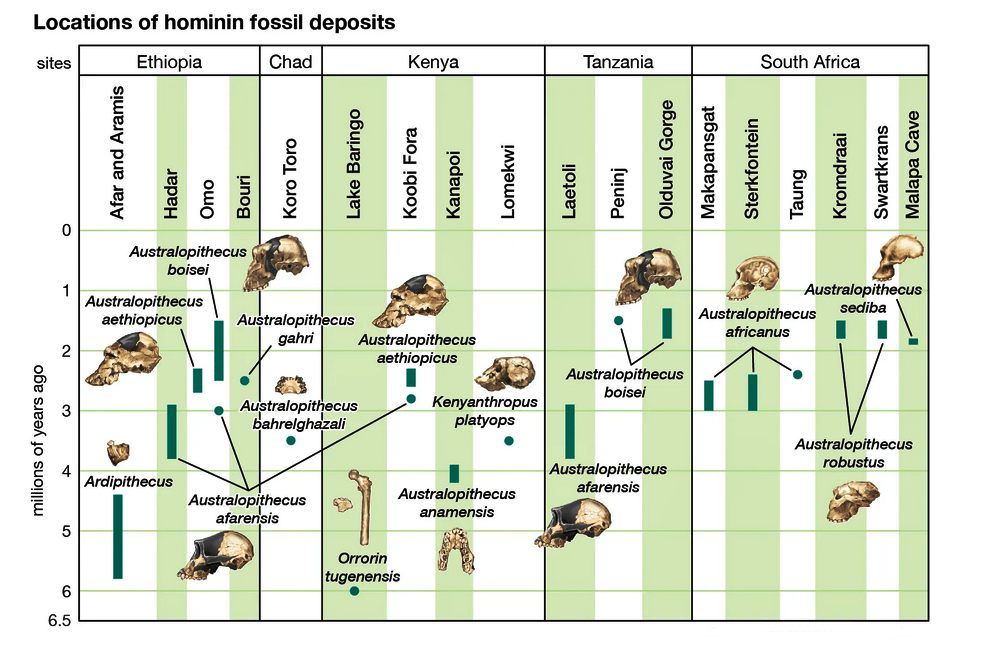
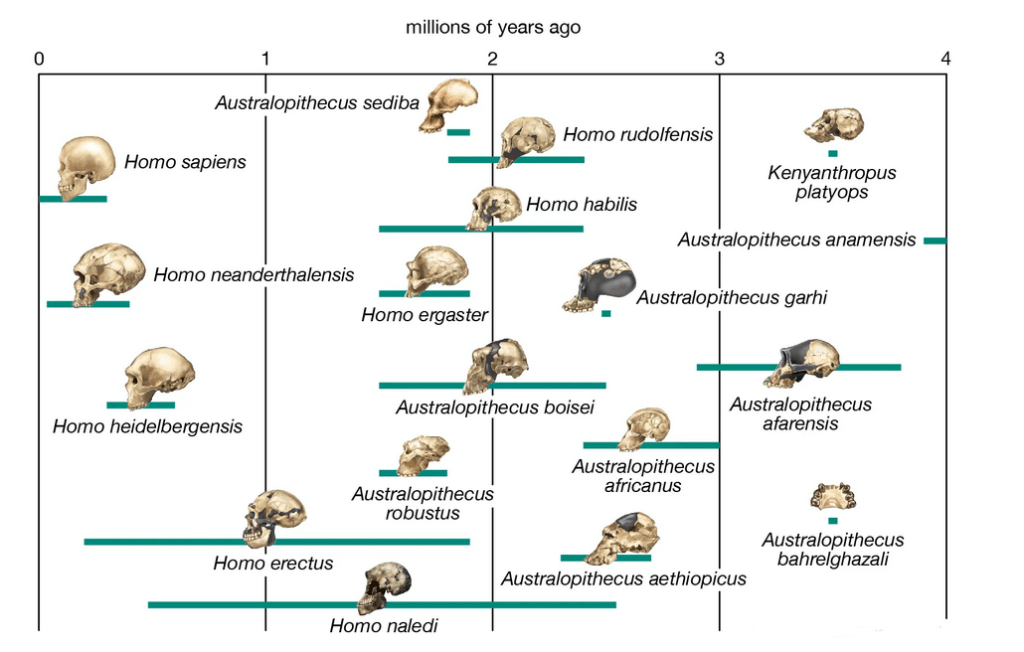
Approximate time ranges of sites yielding australopith fossils.
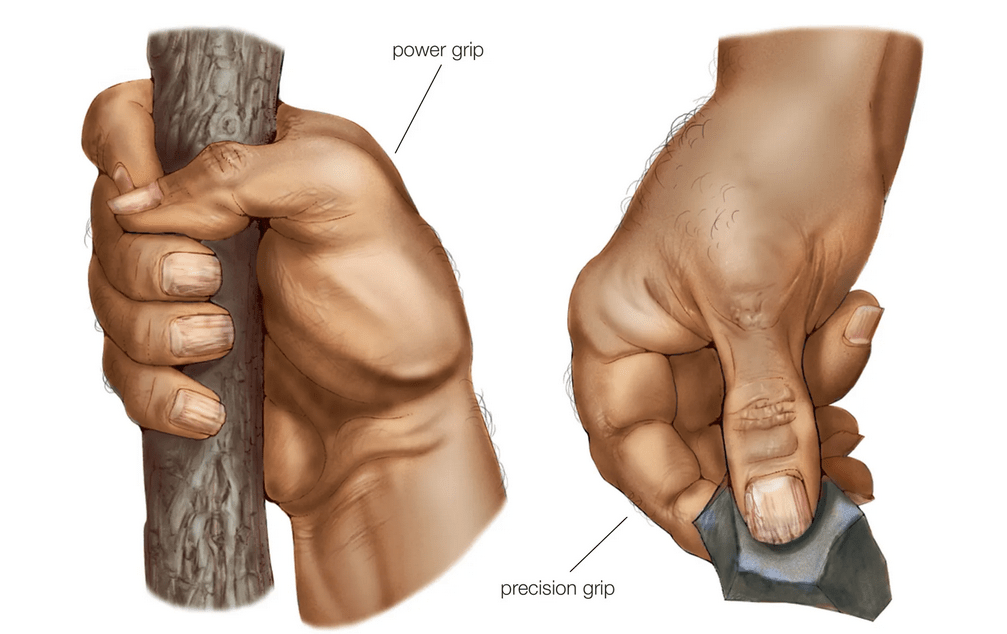
A fully opposable thumb gives the human hand its unique power grip (left) and precision grip (right).
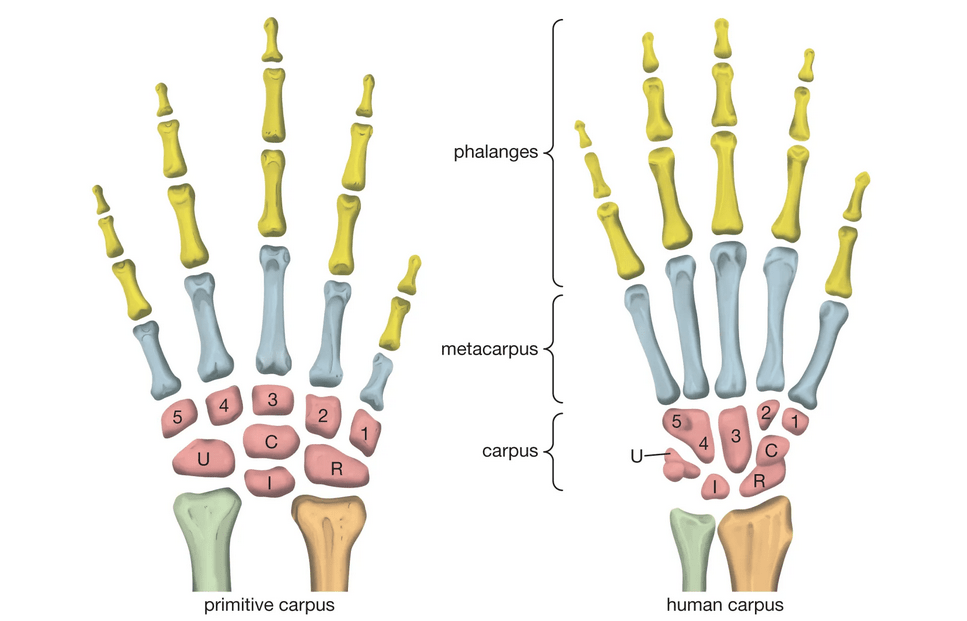
Carpal bones of a primitive humanoid and a human.
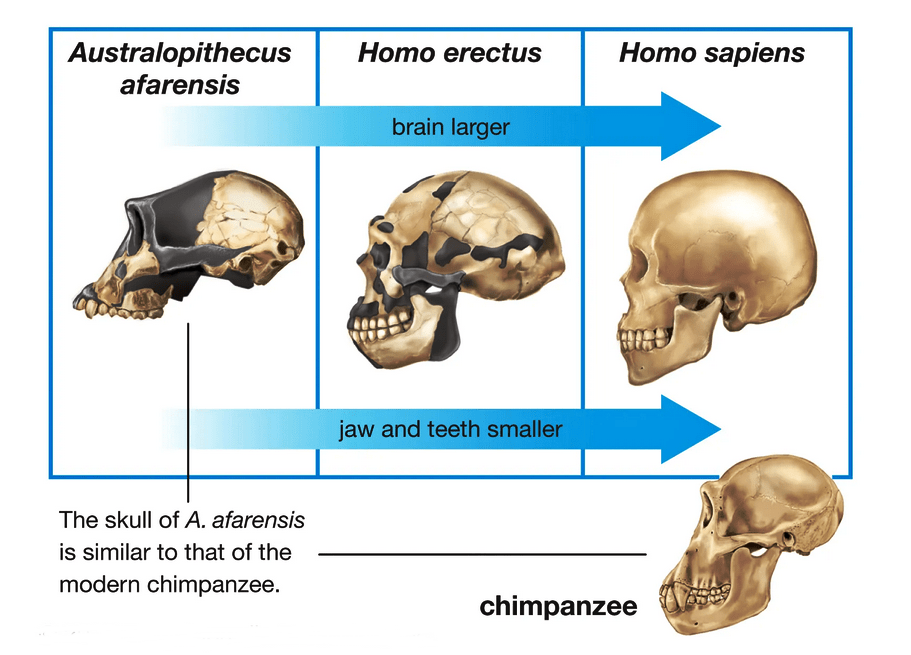
The evolution of relative cranial capacity and dentition patterns in selected hominins.
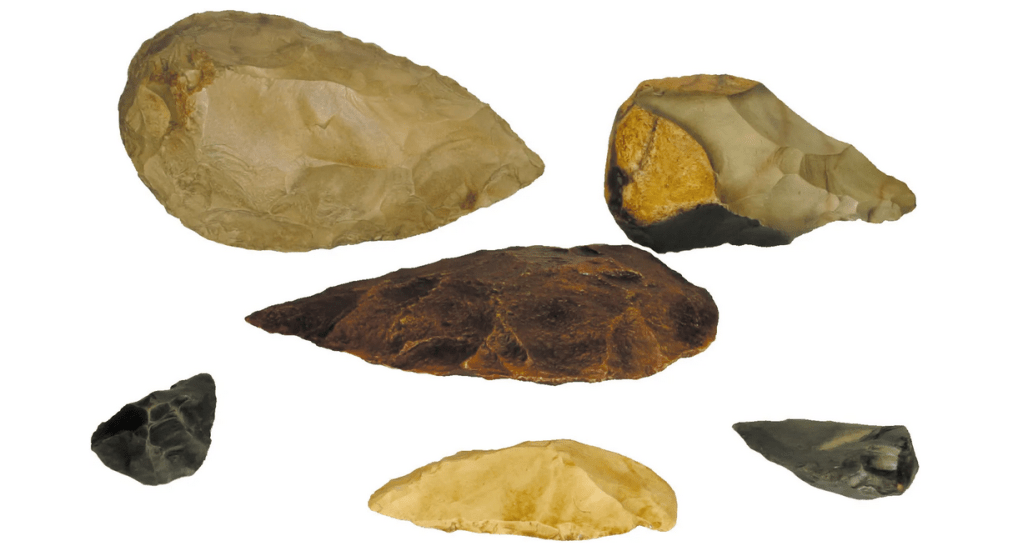
Replica stone tools of the Acheulean industry, used by Homo erectus and early modern humans, and of the Mousterian industry, used by Neanderthals. (Top, left to right) Mid-Acheulean bifacial hand ax and Acheulean banded-flint hand ax. (Centre) Acheulean hand tool. (Bottom, left to right) Mousterian bifacial hand ax, scraper, and bifacial point.
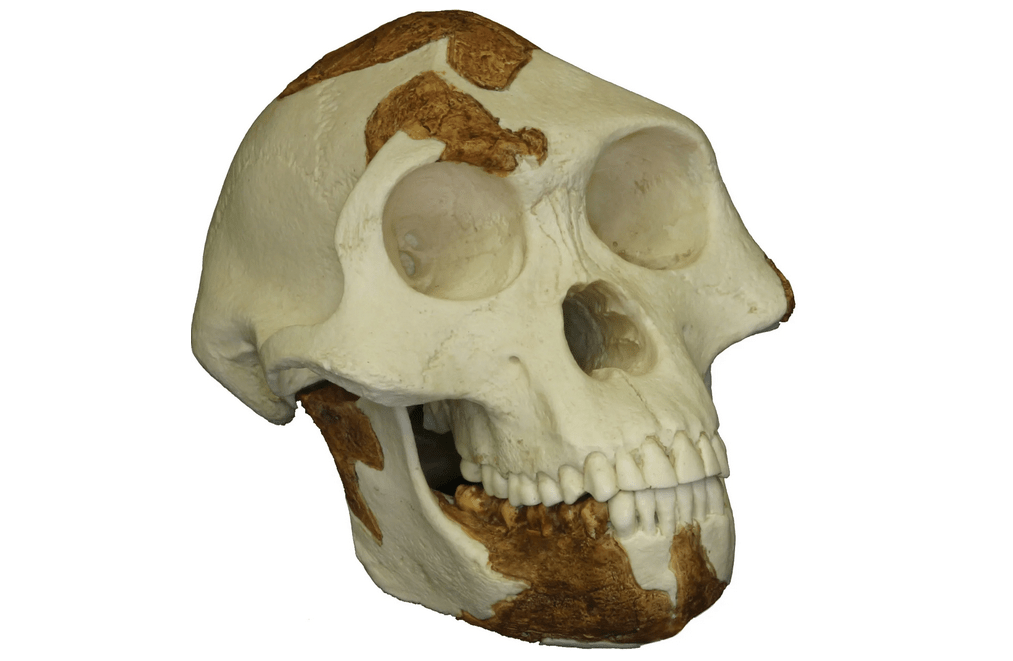
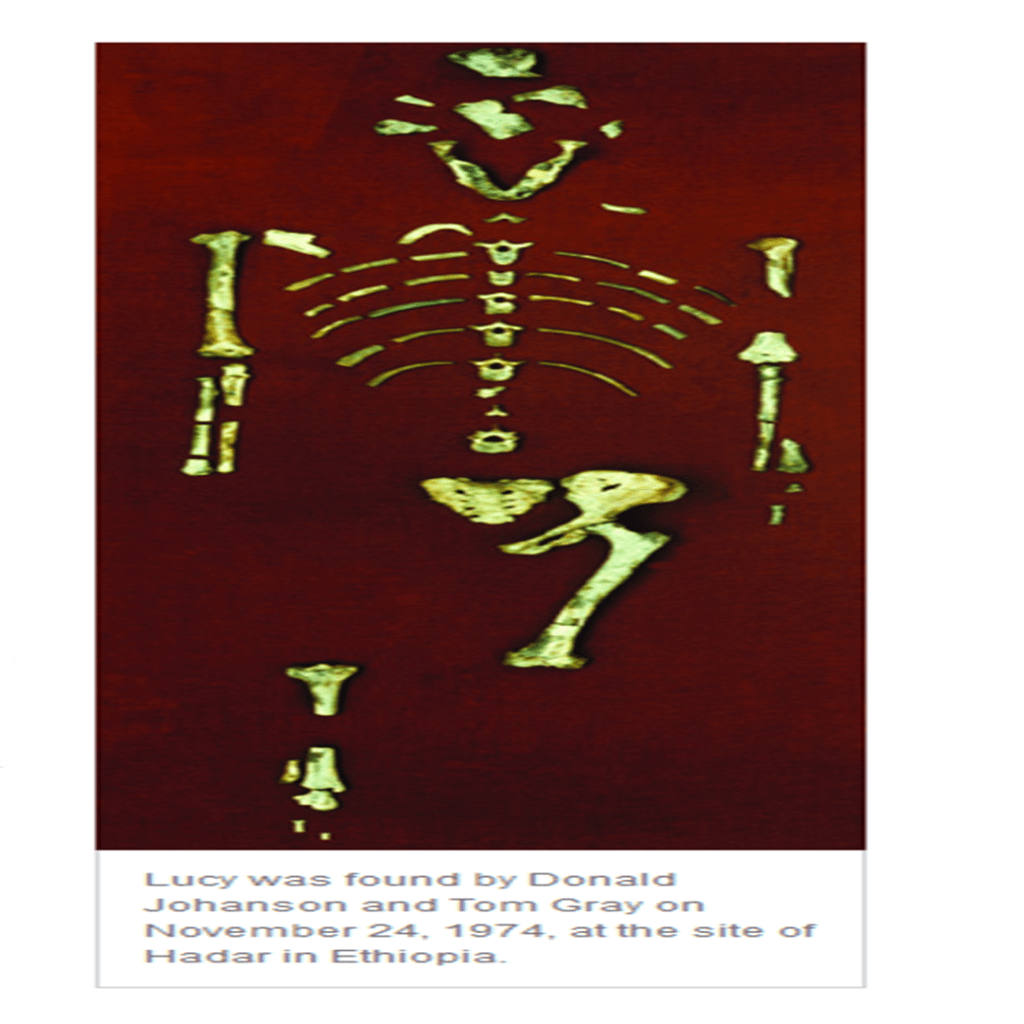
Reconstructed replica of the skull of “Lucy,” a 3.2-million-year-old Australopithecus afarensis found by anthropologist Donald Johanson in 1974 at Hadar, Ethiopia.
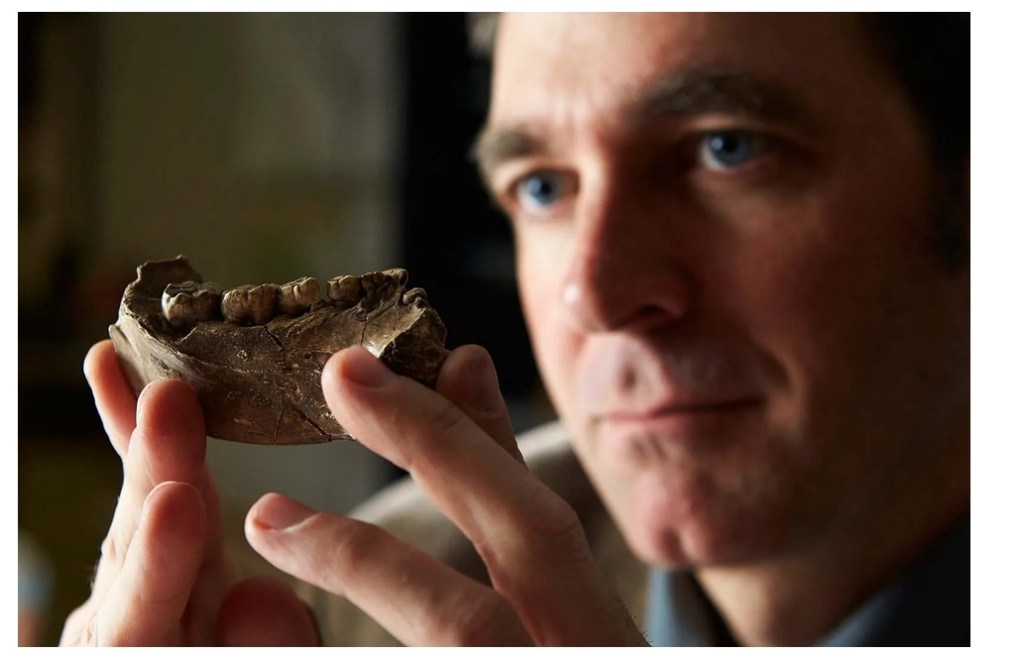
American anthropologist Brian A. Villmoare holding a replica of the Ledi-Geraru jawbone. The actual mandible, found in Ethiopia and dated to 2.8 million–2.75 million years ago, is the oldest fossil associated with the genus Homo.
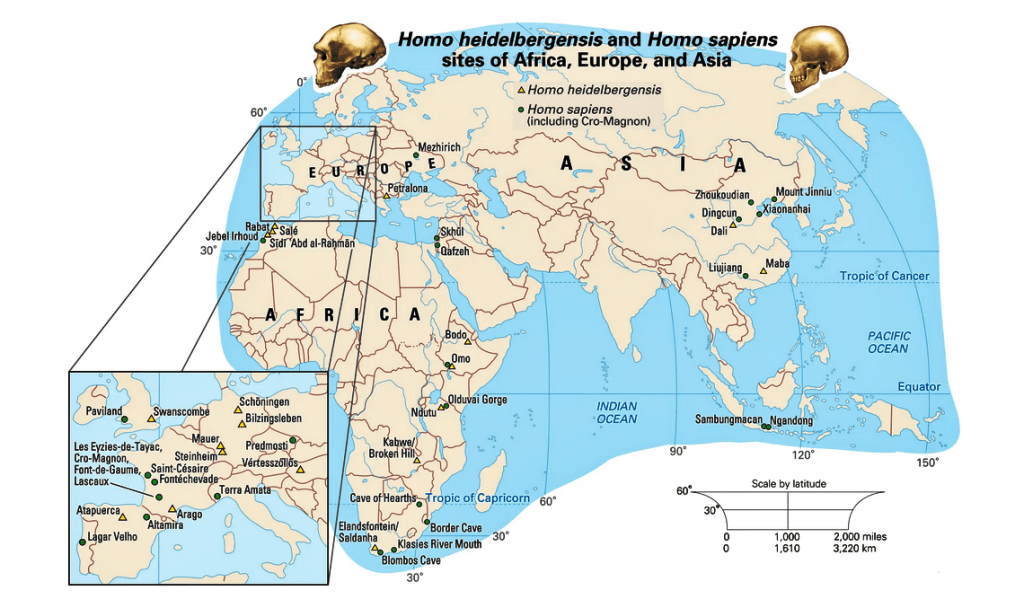
Sites of Homo heidelbergensis and Homo sapiens remains in Africa, Europe, and Asia.
https://www.archaeologyuk.org/get-involved/pathways-into-archaeology/children-and-teens.html
 ukhomeschool