
Medusa is a figure from Greek mythology, usually depicted as a human woman with a writhing mass of snakes instead of hair.
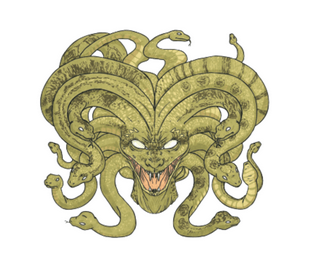
According to the legends, Medusa is a Gorgon, and in some stories she is one of three sisters. As a Gorgon, Medusa has several magical powers, including the ability to turn anyone who looks into her eyes into stone. Medusa lived on an island called Sarpedon, hiding in a cave. Any mortals who entered the cave were doomed to be turned to stone when they looked upon Medusa’s face.
The mythical figure of Medusa represents terror, fear and malevolence in the Ancient Greek myths, but over time Medusa has been reinterpreted many times. Classical artists depicted Medusa not as a monster, but as a beautiful woman who is cursed to have snakes for hair. Modern feminist thinkers have also interpreted Medusa as a symbol of female anger and rage.
What did Medusa look like?
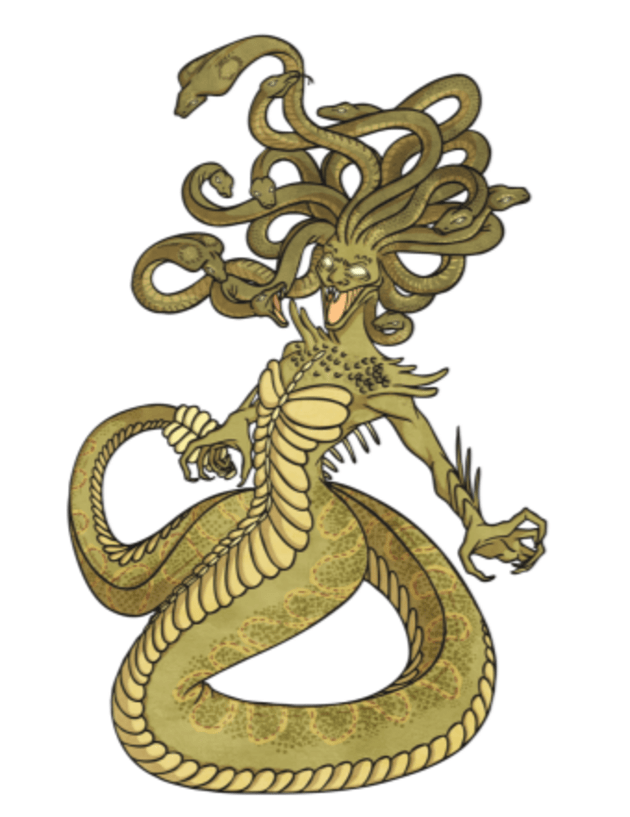 Because she is a mythological figure, there is no single ‘true’ description of what Medusa looks like, because her appearance and sometimes even her magical powers change based on the story or piece of art that includes her. Some Greek artists depicted Medusa as having a beautiful human face with green snakes for hair, while others represent Medusa as a hideous monster with a reptilian body.
In many interpretations of Medusa, she has a link with the colour green. Many paintings of Medusa show her snakes as being bright green. In modern film adaptations of Ancient Greek legends that feature Medusa, she is usually shown wearing green clothes.
Where did Medusa come from?
In early Greek myths and legends, Medusa is the daughter of Phorcys and Ceto, both sea gods of the ancient Greek myths. According to this account of Medusa’s origins, Medusa is one of three sisters, all of which are Gorgons, and like her sisters Medusa has monstrous wings as well as snakes for hair.
However, some other Greek myths and legends have a different origin story for Medusa. The author Hyginus writes that Medusa is the daughter of Gorgon and Ceto. Later myths change Medusa’s origin story completely.
In the later version of the story, instead of being born with snakes for hair, Medusa was once a beautiful mortal woman who was punished by Athena for having a relationship with Poseidon. Athena curses Medusa, turning her beautiful hair into angry snakes, and also cursing her to turn anyone she sees into stone.
What happened to Medusa?
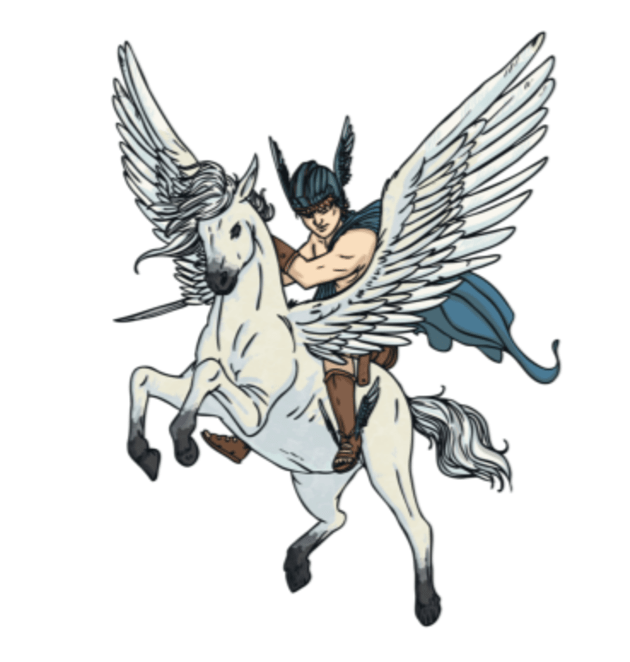 In the legend, Medusa is killed by the Greek hero Perseus. Perseus was sent to recover the head of Medusa by King Polydectes of Seriphus. To help Perseus, the gods send him gifts, including a mirrored shield from Athena, sandals with gold wings from Hermes, an invisibility cap from Hades, and a sword from Hephaestus.
Using the mirrored shield gifted to him by Athena, Perseus was able to look upon Medusa without being turned to stone. Perseus is able to defeat Medusa and takes her head, and according to the legend once Medusa was killed a winged horse called Pegasus and a giant called Chrysaor sprung from her body.
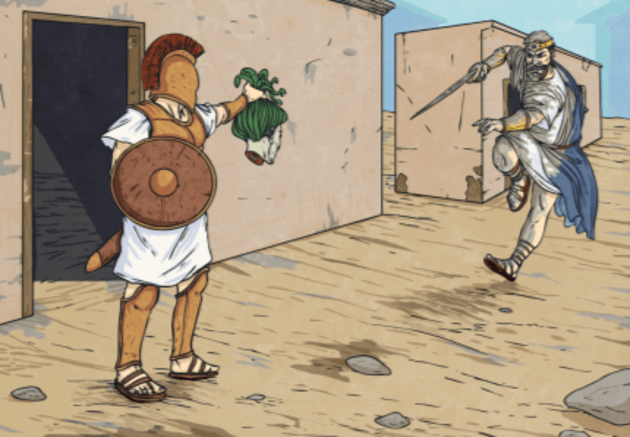
Even after Medusa’s death, she still plays an important role in later legends about Perseus, as her ability to turn others who look upon her face into stone does not disappear when she dies, so Perseus is able to use her head as a weapon to rescue the princess Andromeda.
Perseus is able to use the head of Medusa to turn Polydectes to stone, saving his mother from an unhappy marriage to the king. Perseus eventually gives Medusa’s head to Athena, who mounts it on her shield.
Medusa in Greek Poetry
 Medusa is featured in many Greek poems, including Homer’s Iliad and Hesiod’s Theogony. Although she is not mentioned by name, a Gorgon much like Medusa also appears in Homer’s Odyssey. Medusa is one of the most ubiquitous ‘characters’ in the ancient Greek canon, as she appears in many legends, myths and stories spanning a period of hundreds of years.
It is mostly from her varied appearances in Greek poetry that we get the description of Medusa that is well-known today, in that she is wicked and embittered and will use her powers against anyone who opposes her. In the Greek poems, Medusa is described as being terrifying, and the act of slaying Medusa is considered a brave and heroic act for Perseus.
Medusa in Greek Art
 Medusa is a recognisable figure in Greek art, as her recognisably human face contrasted with a mass of snakes for hair makes her easy to point out among ancient Greek artistic depictions of ancient myths and legends. Paintings, drawings and carvings of Medusa can be found on Ancient Greek pottery, architecture, and many other forms of art media.
The head of Medusa was a common motif on Ancient Greek bronze cups, but also on earrings, pendants and rings. It is believed that the image of Medusa was used by the Ancient Greeks to ward off evil, as an image of an evil creature such as Medusa would prevent other evils.
The form of Medusa, usually the head and face, became a popular decorative motif in many forms of Greek art, and it even has its own name: gorgoneion. Many temples built during the Archaic period (700-480 BC) contain gorgoneion that depict Medusa as a monstrous figure with a huge mouth, a beard, sharp teeth and terrifying eyes.
Later depictions of Medusa would use her more human, feminine appearance, depicting her as having a beautiful face, but she is often shown to have a confrontational, almost malevolent look, and the snakes that she has for hair are often shown to be writhing and hissing.
Did the Ancient Greeks believe in Medusa?
The Ancient Greeks regarded their myths and legends as being stories rooted in real-life truths, so like all Greek mythical figures Medusa was believed to be a real entity. It is a testament to the widespread popularity of the Medusa myth that there are still legends related to her that are retold to this day, such as the myth that the corals of the Red Sea were formed by Medusa’s blood spilling onto seaweed, or that the vipers of the Sahara desert were once part of Medusa.
In modern times, we know that the monster Medusa was not real. However, the story has become one of the most popular and well-known examples of an Ancient Greek myth. We also understand that, although Medusa herself may not have been real, the cultural and artistic influences that she had on many poets, craftsmen and architects makes Medusa one of the most important characters in Greek mythology.
Was Medusa Greek or Roman?
 Medusa originated from Ancient Greek myths, but she was also a popular figure in Ancient Roman myths. In fact, the name ‘Medusa’ actually originated from a Roman version of the myth. The Romans were also the source of the later origin story for Medusa, writing her as a once-beautiful maiden who was cursed to become a monster.
Why is Medusa important in the modern day?
There have been many modern interpretations of the character of Medusa that stem from different schools of thought. Feminists in the 20th and 21st centuries interpret Medusa as a symbol of female anger, but also of female empowerment. In this interpretation, Medusa is female fury personified, and given a monstrous form by the Greek myths. The symbol of Medusa’s head as a source of protection has also been used many times, most notably as a symbol of liberty after the French Revolution.
Fascinating Facts about Medusa
Who is Medusa? Find out with these interesting facts about Medusa.
- In one version of Medusa’s origin story, Medusa was originally a priestess of Athena.
- In another version of Medusa’s origin story, she is the only one of her three Gorgon sisters who is mortal.
- Medusa’s power to petrify living things by turning them to stone with a single look has become a well-known trait used for several other mythical monsters in cultures around the world.
- Medusa’s son Chrysaor is often described as a giant, but is sometimes depicted as a winged boar.
- The snakes that make up Medusa’s hair are usually described as being vipers.
 ukhomeschool