
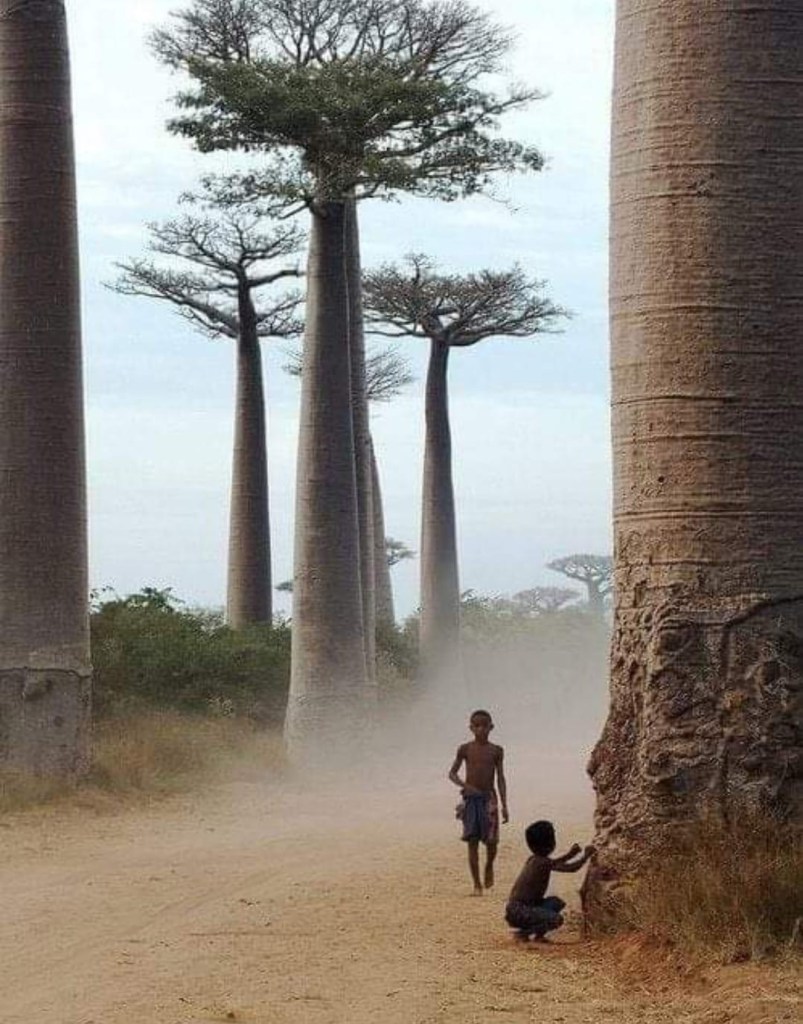
A fascinating and ancient species, the Baobab tree is known for its unique appearance and incredible longevity. These trees can live for thousands of years and are found in various regions across Africa, Madagascar, and Australia.
The history of the Baobab tree is closely intertwined with the cultures and traditions of the regions where it grows. In Africa, for example, the Baobab tree has been revered for centuries for its medicinal properties, as well as its ability to provide food, shelter, and water during times of drought. The tree’s bark, leaves, and fruit are all used for various purposes in traditional African medicine.
In Madagascar, the Baobab tree is known as the “tree of life” and has played a significant role in the island’s culture and folklore. The tree’s massive trunks and unique shape have inspired countless legends and stories over the years.
Even in more recent history, the Baobab tree has played a role in the economies of the regions where it grows. The tree’s fruit, which is high in vitamin C and other nutrients, has become increasingly popular in Western countries as a superfood, leading to increased demand and cultivation of Baobab trees in many areas.
Baobab trees are known for their long lifespans. Estimates suggest that baobabs can live up to 3,000 years or more. However, accurately determining the age of a baobab tree can be difficult as they do not produce annual growth rings like many other tree species. Instead, their age is often estimated by measuring their circumference or diameter at chest height and comparing it to known growth rates. In any case, baobab trees are known for their impressive longevity and are considered to be one of the longest-living tree species in the world. One of the oldest trees in the world is the Sunland Baobab in South Africa that is estimated to be 6,000 years old.
https://namibian.org/news/nature-and-environment/katima-baobab
 ukhomeschool