
Today 224 years ago on July, 15, 1799, the Rosetta Stone was found in Egypt by French Captain Pierre-Francois Bouchard, providing a crucial key to deciphering ancient Egyptian hieroglyphs.***
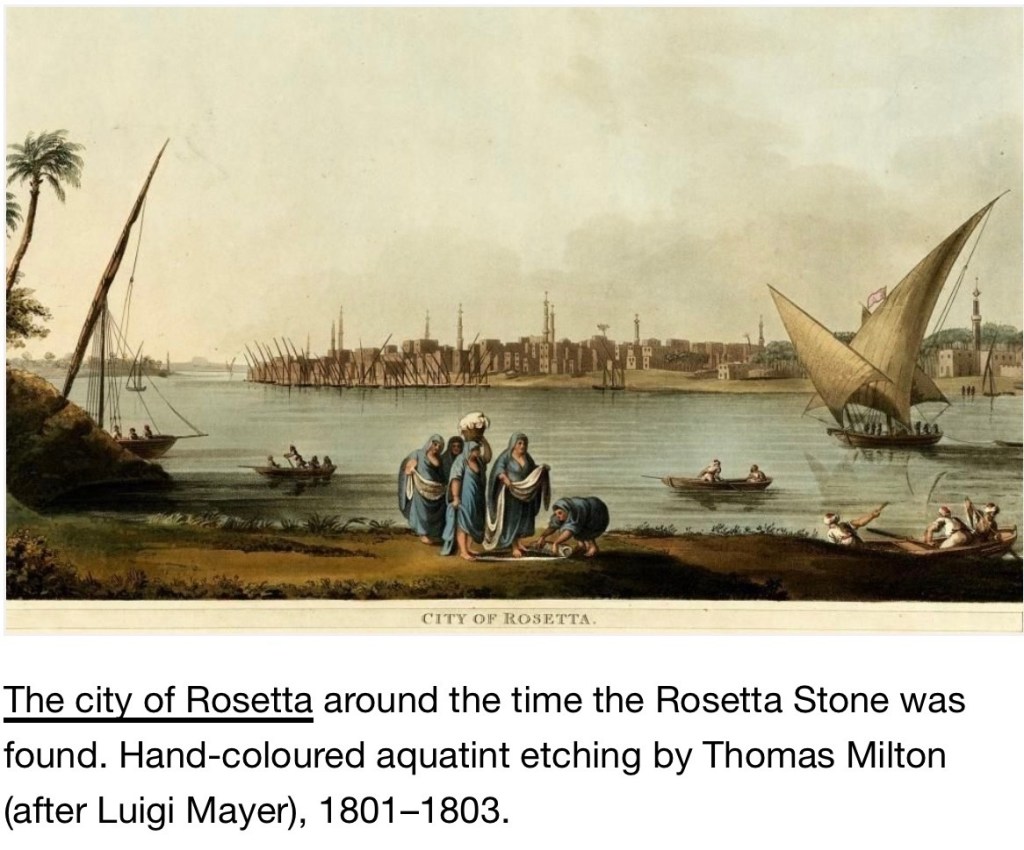
On July 15th, 1799, an important discovery was made in Egypt that would change the course of history. French Captain Pierre-Francois Bouchard, who was serving in Napoleon’s army at the time, stumbled upon a large stone slab while repairing a fort near the town of Rosetta.
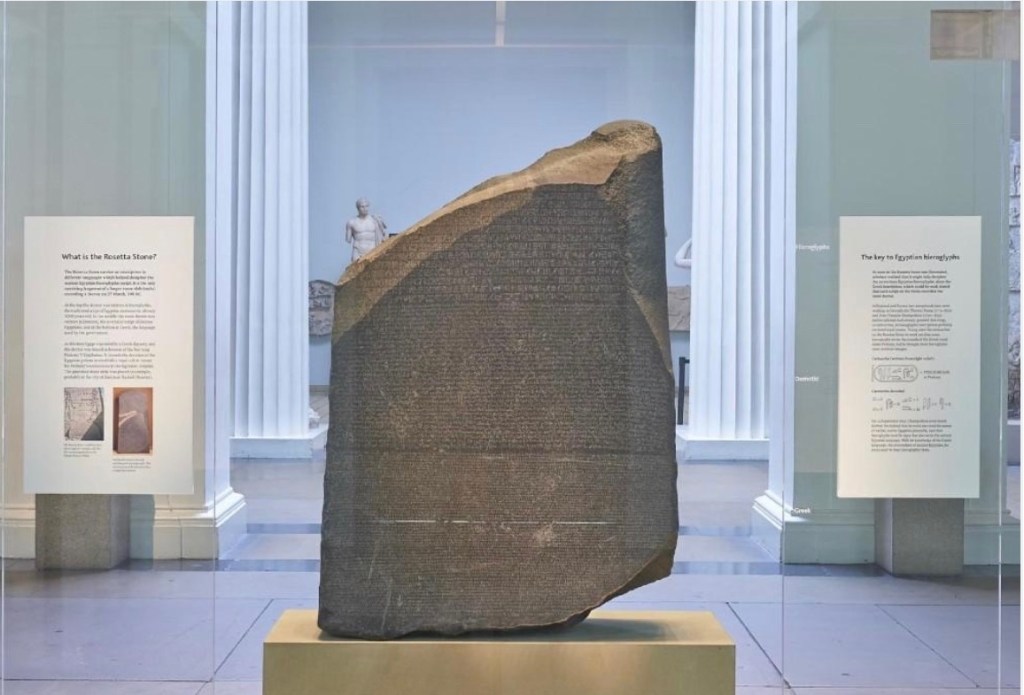
The stone, which came to be known as the Rosetta Stone, was covered in inscriptions in three different scripts: Greek, Demotic, and hieroglyphic. The discovery of the Rosetta Stone was a breakthrough for scholars who had been trying to decipher ancient Egyptian hieroglyphs for centuries.
The Greek inscription on the stone provided the key to unlocking the hieroglyphic script, as scholars were able to use their knowledge of Greek to decipher the meaning of the hieroglyphic symbols. This allowed them to read and understand the ancient Egyptian texts and gain a deeper insight into the culture and history of this ancient civilization.
The Rosetta Stone is now housed in the British Museum in London, where it is one of the museum’s most prized possessions. Its discovery in 1799 remains a significant moment in the history of archaeology and ancient studies, and it continues to inspire scholars and researchers around the world to this day.
https://www.britishmuseum.org/blog/everything-you-ever-wanted-know-about-rosetta-stone
 ukhomeschool