
- This day is also known as World Friendship Day.
- The idea of celebrating friendships came about in the 1930s through the greeting cards company, Hallmark.
- The proposed date was 2 August, however, it never gained popularity in the US as people viewed it as a profiteering.
- Though unpopular in both the US and Europe, the idea of honoring friendships was adopted by several countries in Asia from the 1950s on wards, including China, Malaysia and India, where friends exchange gifts. It is also popular in Latin America.
- In 1958, an organization called the World Friendship Crusade proposed 30 July as a day to recognize friendships. The WFC was founded by Dr Ramón Artemio Bracho of Paraguay as a way of using friendship to foster culture and peace.
- On 27 April 2011, the United Nations declared 30 July as the official International Day of Friendship, stating “Our world faces many challenges, crises and forces of division… To confront those crises and challenges, their root causes must be addressed by promoting and defending a shared spirit of human solidarity that takes many forms – the simplest of which is friendship.”
- The aim of International Friendship Day is to help bridge the gaps between people of different ages, races, colors, nationality, and religion in order to build strong communities that embrace difference.
- Celebrated on the first Sunday of August each year, the official origin of Friendship Day in America goes back to 1935, when Congress announced its importance and the need to dedicate a day especially for honoring friends.
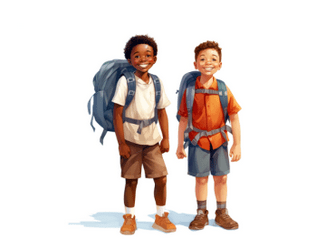
More about Friendship
- What is friendship? Though difficult to define, according to psychologists, it’s a relationship marked by people voluntarily coming to rely on one another for emotional and social support and interaction.
- Friendships are different to other relationships because they often bring a lot of pleasure and fulfillment when in the company of your friend.
- Friendships are about mutual giving and taking, meaning each person contributes to the relationship to make it strong and beneficial.
- Friendships evolve over time. They can go through phases of being strong, go through times of distance or separation, and vary based on how much time and commitment each person has to devote to the relationship.
- Perhaps most important to healthy friendships is mutual respect for each other.
- In 1997, the United Nations named Winnie-the-Pooh as the world’s Ambassador of Friendship.
- Winnie-the-Pooh has many wonderful quotes about friendship, including “A day spent with you is my favorite day. So today is my new favorite day.”
- The traditional color for friendship is yellow, which is why yellow roses are associated with friendship.
- A popular way to honor friends on Friendship Day is through poetry, making personalized wristbands, or having matching pendants on necklaces.
Friendship Day Thank You Letters
https://www.twinkl.co.uk/resource/t-c-255098-what-makes-a-good-friend-activity-sheet
https://www.liveworksheets.com/w/en/english-second-language-esl/68532
https://www.teachstarter.com/gb/teaching-resource/friendship-flower-template-gb/
https://www.teachstarter.com/gb/blog/international-day-friendship-activities-gb/
what qualities make a good friend, or to share stories about a time when a friend helped them out.
role-play different friendship scenarios, like how to resolve a conflict with a friend, or how to support a friend who’s going through a tough time. This will give them a chance to practice their communication skills, and it might even help them learn how to be better friends in real life.
you can make it as serious or as silly as you want, depending on the group dynamic. So if your students are more of a playful bunch, you could even have them role-play as their favorite cartoon characters, and act out friendship scenarios based on that. It’ll be a lot of fun, and they’ll still be learning valuable skills along the way.
Comprehension is definitely important! After all, the goal of the lesson is for them to understand and internalize the value of friendship. So, to assess their comprehension, you could have them answer some questions after the role-playing and craft activities. You could ask them to describe what they learned from the lesson, or what they think makes a good friend. You could even have them come up with their own friendship scenarios and role-play them out. That way, you can be sure that they truly understood the lesson.
 ukhomeschool