
https://www.poetryfoundation.org/
https://thebookerprizes.com/the-booker-library/prize-years
https://www.bl.uk/20th-century-literature
read, discuss, analyse
Have you ever read a book that has made you think differently about
something?
Most critics see the genre as dating back to the early 18th Century and point to the
publication of Robinson Crusoe as the starting point of the novel as a literary form.
Robinson Crusoe (by Daniel Defoe) tells the story of a young man who is shipwrecked
on an island off the coast of South America. This article from the British Library explores
how the art form developed from the publication of Robinson Crusoe in 1719
https://www.bl.uk/restoration-18th-century-literature/articles/the-rise-of-the-novel
How do you study a
novel?
On the English Literature course you will get the chance to study lots of different
types of novels, including Dystopian fiction, the Gothic, Victorian novels and modern
novels. However, the first point of analysis is always the same – from whose perspective
is the story being told?
Getting
started…
One of the most popular novels we look at is John Fowles’ The Collector. Here’s an extract
from the start of the novel for you to have a read through. This extract is told from the
perspective of a young man named Clegg.
‘When she was home from her boarding-school I used to see her almost every day
sometimes, because their house was right opposite the Town Hall Annexe. She and her
younger sister used to go in and out a lot, often with young men, which of course I didn’t
like. When I had a free moment from the files and ledgers I stood by the window and used
to look down over the road over the frosting and sometimes I’d see her. In the evening I
marked it in my observations diary, at first with X, and then when I knew her name with M. I
saw her several times outside too. I stood right behind her once in a queue at the public
library down Crossfield Street. She didn’t look once at me, but I watched the back of her
head and her hair in a long pigtail. It was very pale, silky, like burnet cocoons. All in one
pigtail coming down almost to her waist, sometimes in front, sometimes at the back.
Sometimes she wore it up. Only once, before she came to be my guest here, did I have the
privilege to see her with it loose, and it took my breath away it was so beautiful, like a
mermaid.’
When you have read the extract a couple of times have a think about the following
questions, annotate the extract and note down your thoughts. We’ll talk through your
ideas in class!
- What do we learn about Clegg?
- What do you think is happening?
- Are there any details that make you think something sinister is going
on? - What details might hint at (foreshadow) further
events?
Why not try listening to one of these podcasts for some more ideas?
https://www.penguin.co.uk/podcasts
https://www.waterstones.com/podcast
https://www.bbc.co.uk/programmes/b006s5sf
The BBC recently produced a series of documentary films called ‘Novels That Shaped
the World’.
Episode 1 ‘A Woman’s Place’ focuses on the role of women in the novel, looking at how
women’s rights, lives and works have been fundamental to the development of prose
fiction.
https://www.bbc.co.uk/programmes/m000b8mf
Episode 2 ‘The Empire Writes Back’ considers how different writers have presented
changing attitudes to the British Empire and colonialism
https://www.bbc.co.uk/programmes/m000bhgt
Episode 3 ‘The Class Ceiling’ looks at the context of class, considering how the poorest
members of society have been presented in fiction and why class is still such an important
motif
https://www.bbc.co.uk/programmes/m000bpvx
Whatever you do this summer, make some time for reading. It will help you to develop
your skills as a literary analyst and prepare you for the demands of GCSE Level Literary study
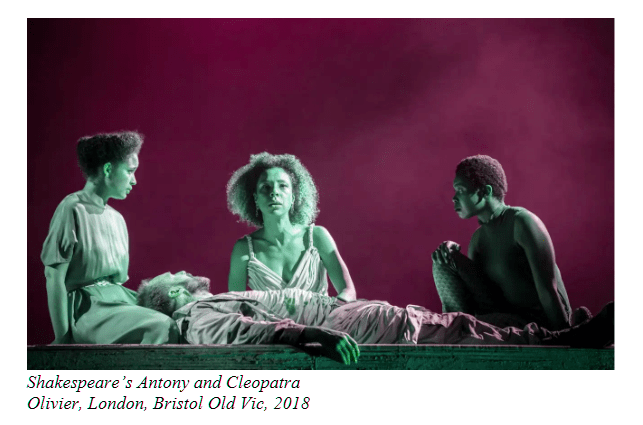
Activity 1
Let’s begin with your experiences of drama so far…
We want to know which plays you’ve studied at school, and what you thought about them. Which
moments from these plays stand out in your memory? Which characters did you love, hate, or love to
hate?
At school, we studied…
The most memorable aspect of this play was…
If you’ve experienced going to the theatre, tell us about it. Which theatre(s) have you been to? Which
play(s) have you watched? How would you describe the experience?
I have visited___________________ to watch…
I would describe this experience as…
If you haven’t been to the theatre yet, is there a play you would like to watch? Or a theatre you would
like to visit?
I haven’t been to the theatre yet.
I would love to watch…
I would love to visit…
Activity 2
Next, we want you to think about the role of drama within our society
Watch the videos below, and share your thoughts:
Oskar Eustis states that theatre is about social participation. As a form, drama allows us to experience
new perspectives. This enables us to build our capacity for empathy.
Think back to your own experiences of watching / studying drama.
Were there moments when you were encouraged to see an experience from a particular point of
view?
In the play____________ , you are encouraged to see things from __ ‘s perspective
when…
This enables you to appreciate that…
https://www.ted.com/talks/adong_judith_how_i_use_art_to_bridge_misunderstanding#t-286799
Adong Judith states that as an art, theatre can be used to bridge understanding. It can help us to see
another person’s truth, even if that truth is very different to our own.
Has a drama text ever allowed you to experience something far removed from your own daily reality?
Has a drama text ever challenged your own views / perspectives?
Share your ideas.
I am going to discuss…
This text enabled me to experience…
It helped me to appreciate…
Activity 3
Watch a play online
There are lots of plays being shared / streamed for free online.
What’s On Stage regularly share information about free plays being aired online:
You can even sign up for a free newsletter so you’re never in danger of missing out on a great free
performance
Pick a performance that appeals to you, get your snacks at the ready and enjoy!
Create a mini-review for us.
Tell us what you thought of the plot, characters, the set, the performance of the actors, the experience
of watching the theatre from home.
I watched…
This play follows the story of…
It explores…
Central to the performance is…
‘ s performance as. is…
The set…
Audiences will be left feeling…Overall…
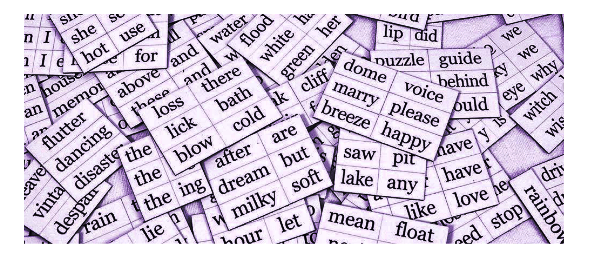
First of all- what poems have you read and enjoyed and up until right now?
what did you enjoy about them?
How did they make you feel?
Did you learn anything about the poet and the time the
poem was written?
Think about the answers to the questions, then tell us about one poem below, in
your own words. (There are a couple of starter sentences in blue.)
- I’m going to tell you about ___ by__________________. I’ve chosen this
poem because…
Another interesting way of thinking about poetry is by looking at metaphors. What is poetry? There
are many ways of answering this. Here are some examples.
Poetry is… - “the spontaneous overflow of powerful feelings” – William Wordsworth
- “a search for syllables to shoot at the barriers of the unknown and the unknowable” – Carl
Sandburg - “a state of free float” – Margaret Atwood
- “a deal of joy and pain and wonder, with a dash of the dictionary” – Khalil Gibran
- “the compression of an idea” – Patience Agbabi
Which of these do you like or agree with? Why? Explain which metaphor grabs you below
Then
see if you can create your own metaphor to capture what poetry is!
- The metaphor that grabs me is the one by ___ because…
- Poetry is…
Okay, here are three poems for you to read. Which one do you like best? Why? What do you think
these poems are about? What kind of feelings and moods is the speaker expressing? What did the
poet want to achieve with this poem? Who is the poet and what is the poem’s form? You may want
to read the poem, let it ‘brew’ in your mind, come back and read it again. If we were sitting in a
classroom and were about to discuss one of these poems, what would you say about it?
1
A lovely spring night
suddenly vanished while we
viewed cherry blossoms
Basho
2
Oh, oh, you will be sorry for that word!
Give back my book and take my kiss instead.
Was it my enemy or my friend I heard,
“What a big book for such a little head!”
Come, I will show you now my newest hat,
And you may watch me purse my mouth and prink!
Oh, I shall love you still, and all of that.
I never again shall tell you what I think.
I shall be sweet and crafty, soft and sly;
You will not catch me reading any more:
I shall be called a wife to pattern by;
And some day when you knock and push the door,
Some sane day, not too bright and not too stormy,
I shall be gone, and you may whistle for me.
Edna St Vincent Millay
3
of course i want to be successful
but i don’t crave success for me
i need to be successful to gain
enough milk and honey
to help those around
me succeed
Rupi Kaur
Form: 1 haiku 2 sonnet 3 free verse
Now, have a go at finding a poem for yourself. It could be anything! Something very modern,
something written a long time ago; something short, something a bit longer. Here are some good
websites:
https://www.theguardian.com/books/series/saturdaypoem
https://www.nationalpoetrylibrary.org.uk/online-poetry/poems
Once you’ve settled on a poem, put the link to it here. Why did you choose this poem? What was it
about it that caught your eye? Why do you like it?
Finally, have a go at writing a poem! This can be- again- anything. Express yourself! If you’re stuck
for ideas, use one of the poems you’ve read so far as a starting point. So, write a haiku or a sonnet or
some free verse. Write about cherry blossom, strong feelings for someone or something, something that
captures an idea about success, desire, fear- anything! Share it with us here, or keep it locked away until
you’re ready to share it – either is fine
https://www.aqa.org.uk/subjects/english/gcse/english-literature-8702/assessment-resources
 ukhomeschool