
The maths grid method for multiplication is a written method for multiplying numbers. Learn how to use it and find a lot of resources to support your teaching.
What is the maths grid method of multiplication?
The grid method in maths is a written method, which is used when multiplying numbers. It involves partitioning numbers into tens and units before they are multiplied. The grid method for multiplication is also known as the box method, because it involves adding numbers into boxes.
At school, the grid method is taught because it makes multiplying numbers easier by breaking them into their constituent values and multiplying them step-by-step.
How can the grid method make multiplying numbers easier?
Multiplication with the grid method makes tricky sums seem a lot less daunting as it makes it easier for pupils to follow a process.
The grid method is popular with a lot of teachers because it’s a way of introducing children to multiplication involving larger numbers by using what they already know about the operation.
Now, let’s look into an example to make it easier to understand how to use the grid method of multiplication.
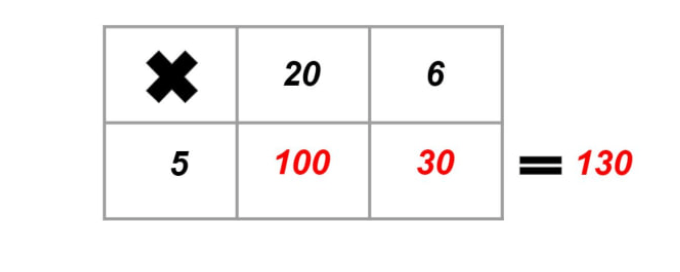
Example: let’s find the answer to 26 x 5.
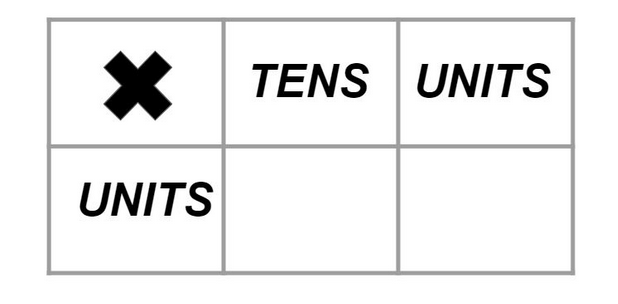
- To put the numbers in the grid, you first need to know that 26 is made of 20 and 6. The 20 would go in the TENS column, the 6 would go in the horizontal UNITS column, and the 5 would go in the vertical UNITS column. See the table below of how these are laid out.
- You would then multiply the 20 by the 5, and write the answer (100) in the column below.
- Next, you would do the same with the 6 and the 5, to get the answer 30.
- Finally, add the two answers together to get the final answer to the original sum.
This method of multiplication is usually introduced to children in year 3. By then, children should be able to recognize the place value of each digit in one-, two-, and three-digit numbers. This includes being able to partition these numbers.
As they move through school and into upper KS2, children will begin to use this method to multiply a two-digit number by a two-digit number, as well as a three-digit number by a one-digit number.
How to multiply a two-digit number by a two-digit number with the grid method
Children will begin to move on to multiplying two-digit numbers by other two-digit numbers in year 4 and 5.
Before you start teaching them to use the grid method for these slightly more advanced multiplications, you should first check that they:
- have a solid understanding of times tables;
- can multiply any number by 10;
- can multiply one-digit numbers by multiples of 10 (for example, 6 x 20, 8 x 70 and so on);
- can multiply two multiples of 10, (for instance, 40 x 90);
- can reliably add four numbers, some of which are three-digit.
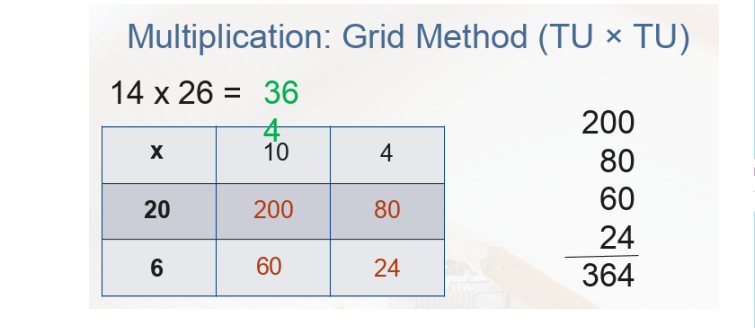
- Break down the first number into tens and units and write it down in the grid.
- Similarly, break down the second number into tens and units.
- Now, time to multiply the numbers! Multiply the tens and units of the first number by the tens and units of the second number.
- Find the total of the numbers you got by multiplying. For the example above, you should add 200 + 80 + 60 + 24. This results in 364 as the answer to the calculation 14 × 26.
How to multiply a three-digit number by a one-digit number with the grid method
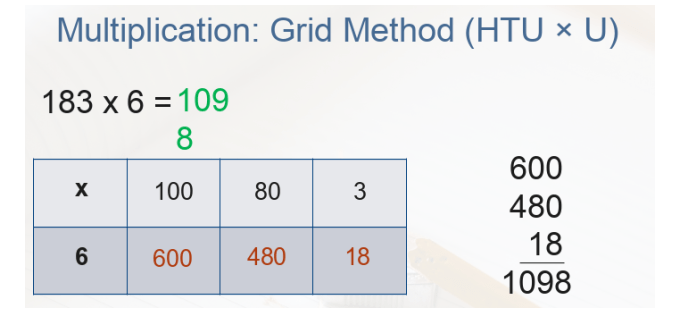
- Break down the number into hundreds, tens and units and put both numbers into a grid.
- Multiply each digit in the first number by the second number.
- Find the total of the three numbers you got by multiplying.
How to multiply a three or four-digit number by a two-digit number with the grid method
- Break down the first number into thousands, hundreds, tens and units.
- Break down the second number into tens and units.
- Multiply each digit in the first number by the second number.
- Find the total of the numbers you got by multiplying.
As children grow in competence, they’ll learn the column multiplication method for multiplying numbers this big.
How to multiply a decimal by a one-digit number with the grid method
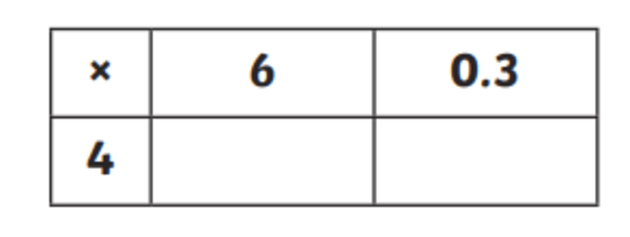
Let’s use the example 4 x 6.3.
- Break down the number units and tenths and put both numbers into a grid.
- Multiply each digit in the first number by the second number. In this case:
4 x 6 = 24
4 x 0.3 = 1.2 - Find the total of the two numbers you got by multiplying. So that means our answer is:
24 + 1.2 = 25.2
Multiplying amounts of money with the grid method
Multiplying an amount of money with the grid method is similar to the example above, so let’s reword the question so it reads like a typical money word problem:
James is going to the cinema with his three friends.
Each cinema ticket costs £6.30.
How much will four cinema tickets cost altogether?
Simply follow the same steps above. You’ll need to remember to include your £ sign in your answer and add an extra zero at the end if necessary to get £25.20.
If the cinema tickets cost £6.35 instead of £6.30, just add an extra column in your grid. Remember, we’ll be dealing in hundredths this time, so it’ll be 0.05.
The Grid Method Multiplication in the Maths Curriculum
This method of multiplication is not specifically mentioned in the primary maths national curriculum. But it’s still a written method, which many maths teachers use when introducing their class to multiplication with larger numbers.
As year 5 and year 6 pupils learn how to use long multiplication, the multiplication grid method is a fantastic tool for preparing year 3 and year 4 children for the trickier methods they’ll learn about further on.
Some of the benefits of using the multiplication grid method include:
- simplifies the steps to be followed when multiplying numbers;
- easy to understand as it’s structured;
- a relatively fast way of multiplication once children understand well in which box each number needs to go.
 ukhomeschool