
The Nativity Story, also known as the Christmas Story or the Nativity of Jesus, is a story that tells the conception and birth of Jesus Christ. Throughout the many centuries of Christianity, the Christmas Story has developed into a yearly tradition and is central to the celebration of Christmas in the Christian faith.
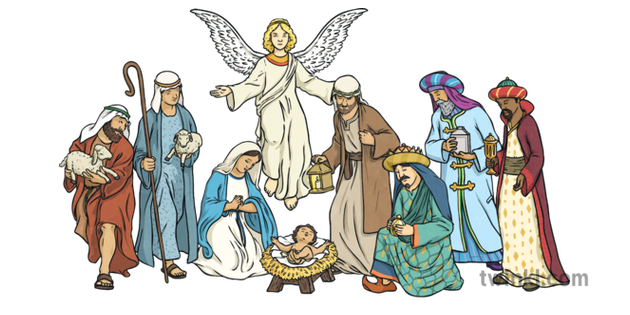
What is the Nativity Story?
Over many centuries, the story of the Nativity has changed and developed depending on which culture and people were telling the story. Though, some elements of it have always been included. Here is the Christmas story:
An Angel visits Mary
Mary and Joseph were a married couple living in Nazareth, around 2000 years ago. One night, Mary was visited by the Angel Gabriel (the arch-angel). Gabriel explained that God was to send his son to earth for mankind and that Mary would soon have a baby, that baby would be named Jesus and would be God’s son.
Following the visitation by the angel, Mary told Joseph, and they began to prepare for the birth of their son. Joseph wanted to return to Bethlehem for the birth of their child, so he prepared for the journey
Travelling to Bethlehem
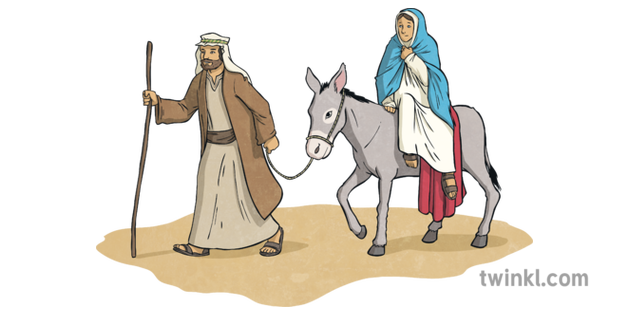
Mary and Joseph sold their goods in Nazareth, taking with them only what they could carry, as well as their donkey. Mary rode on the donkey over the hills of Galilee, and Joseph walked beside her.
The journey would have been long and difficult, travelling through long stretches of desert and harsh landscapes. Eventually, Mary and Joseph would have seen the candlelights of Bethlehem on the horizon.
No room at the inn
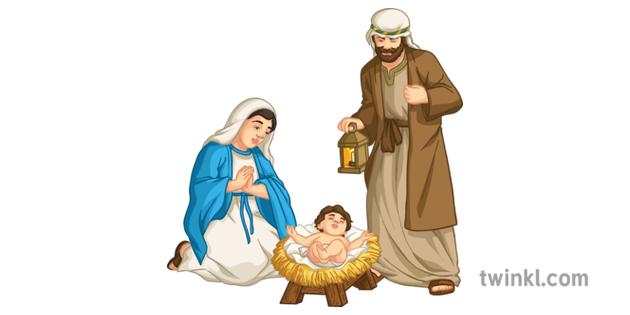
Unfortunately, when Mary and Joseph arrived in Bethlehem, it was incredibly busy. All the rooms at the inns had already been filled. Mary was very pregnant at this time and needed to rest. Luckily, they met a kind innkeeper who let Mary and Joseph stay in his stable for the night.
Mary gave birth to Jesus that night in the stable. She wrapped the newborn baby in a white cloth and lay him to sleep in a manger filled with hay.
The Shepherds of Bethlehem
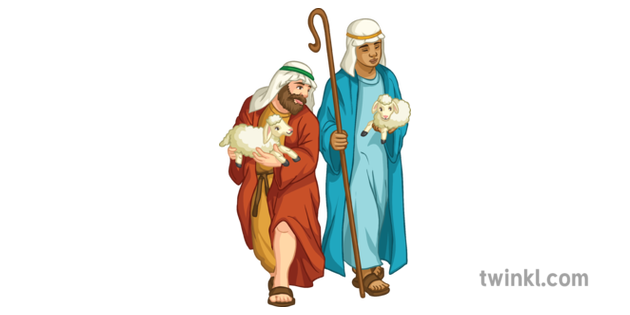
Whilst Mary and Joseph, and the newborn Jesus, slept in the stable, some shepherds on a hillside that overlooked the city of Bethlehem saw a bright star in the sky. As they watched the bright star hang over the city, an angel came down from the sky and told the shepherds that the Son of God had been born in the city, and they should go to him.
The shepherds left their herds and came down from the hillside to find the newborn baby. They visited Mary, Joseph and Jesus at the stable and knelt before them to pledge their love to the Son of God.
Three kings travel across the desert
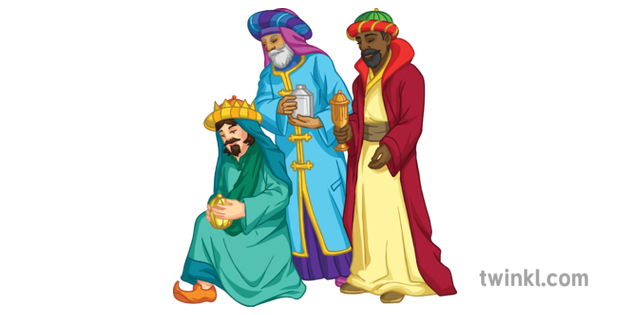
Far away in the East, three wise men also saw a bright light in the sky. These wise men were kings from the countries far to the East of Bethlehem. They took the bright star as a sign that a new king had been born, and they began to follow it.
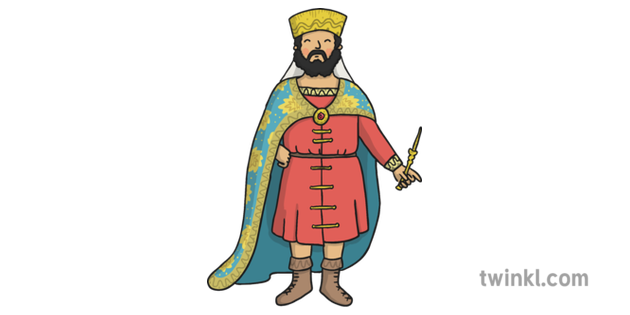
The three wise men followed the star to Jerusalem, where King Herod ruled. They assumed that the new king had been born to Herod. They spoke to Herod and asked to see the child that would be the King of the Jews. This news troubled Herod, who believed himself to be the King of Kings. The wise men left Jerusalem to continue their search.
Eventually, the three kings reached Bethlehem, knelt before the baby and offered gifts of gold, frankincense and myrrh. That night, they all shared a dream from an angel. They were warned not to tell King Herod where Jesus was.
King Herod hears about Jesus’ birth
King Herod only grew more angry when the three kings did not return with news of Jesus’ location. He was worried about being overthrown and ordered his soldiers to go to Bethlehem and kill all the baby boys.
Luckily, Joseph had dreamt of Egypt, and he took Mary and Jesus there, knowing they would be safe from the reach of King Herod.
compare the Nativity stories told by St Matthew and St Luke.
explain the key truths through a gospel evaluation.
father christmas
Santa Claus Is Coming To Town
You better watch out
You better not cry
Better not pout
I’m telling you why
Santa Claus is coming to town
He’s making a list
And checking it twice;
Gonna find out Who’s naughty and nice
Santa Claus is coming to town
He sees you when you’re sleeping
He knows when you’re awake
He knows if you’ve been bad or good
So be good for goodness sake!
O! You better watch out!
You better not cry
Better not pout
I’m telling you why
Santa Claus is coming to town
Santa Claus is coming to town
=
Santa Claus—otherwise known as Saint Nicholas or Kris Kringle—has a long history steeped in Christmas traditions. Today, he is thought of mainly as the jolly man in red who brings toys to good girls and boys on Christmas Eve, but his story stretches all the way back to the 3rd century, when Saint Nicholas walked the earth and became the patron saint of children. Find out more about the history of Santa Claus from his earliest origins to the shopping mall Santas of today, and discover how two New Yorkers—Clement Clark Moore and Thomas Nast—were major influences on the Santa Claus millions of children wait for each Christmas Eve.
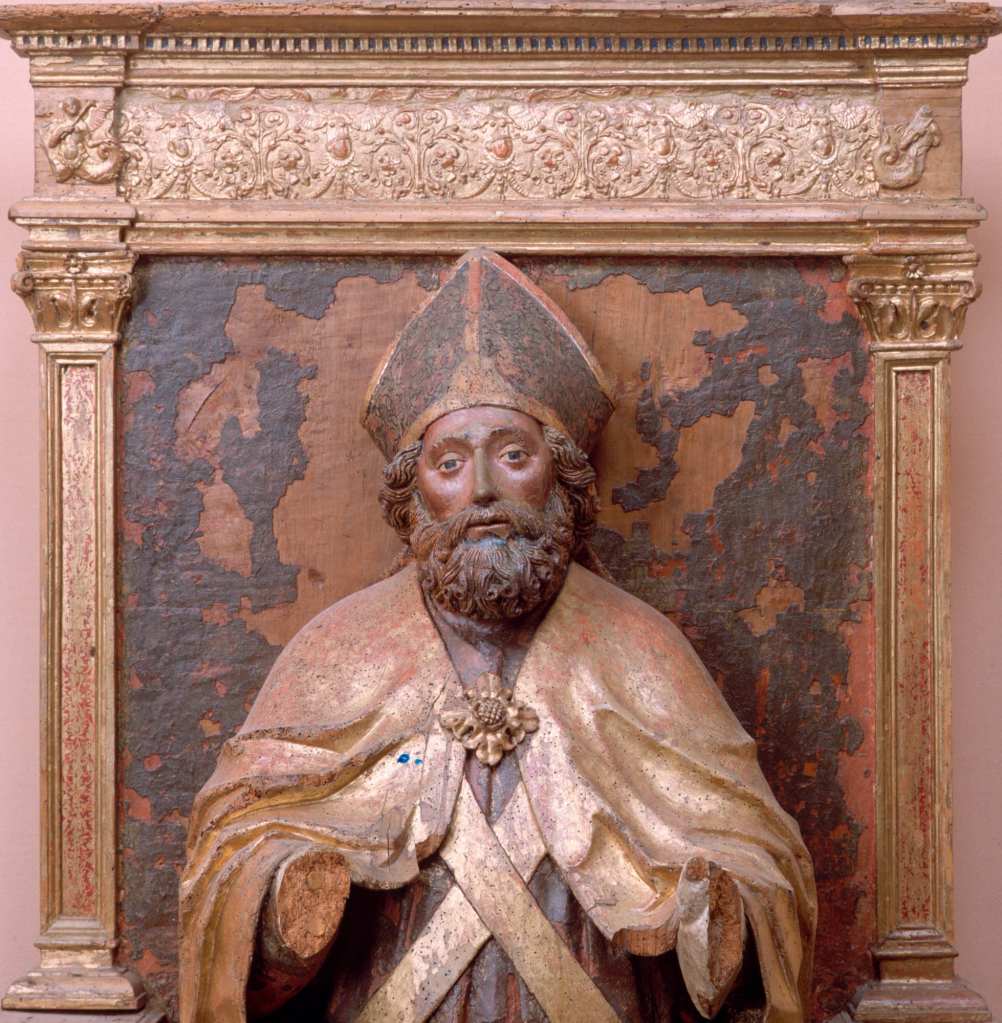
The Legend of St. Nicholas: The Real Santa Claus
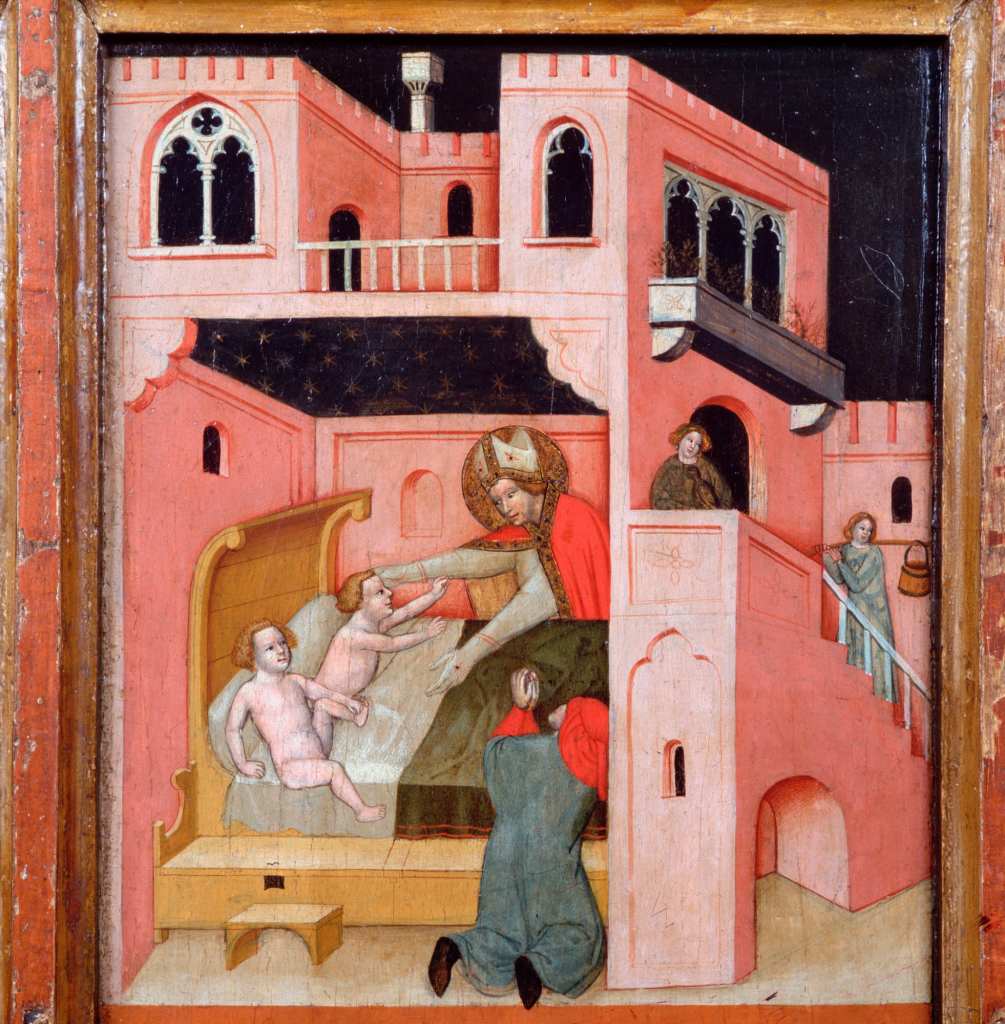
The legend of Santa Claus can be traced back hundreds of years to a monk named St. Nicholas. It is believed that Nicholas was born sometime around 280 A.D. in Patara, near Myra in modern-day Turkey. Much admired for his piety and kindness, St. Nicholas became the subject of many legends. It is said that he gave away all of his inherited wealth and traveled the countryside helping the poor and sick. One of the best-known St. Nicholas stories is the time he saved three poor sisters from being sold into slavery or prostitution by their father by providing them with a dowry so that they could be married.
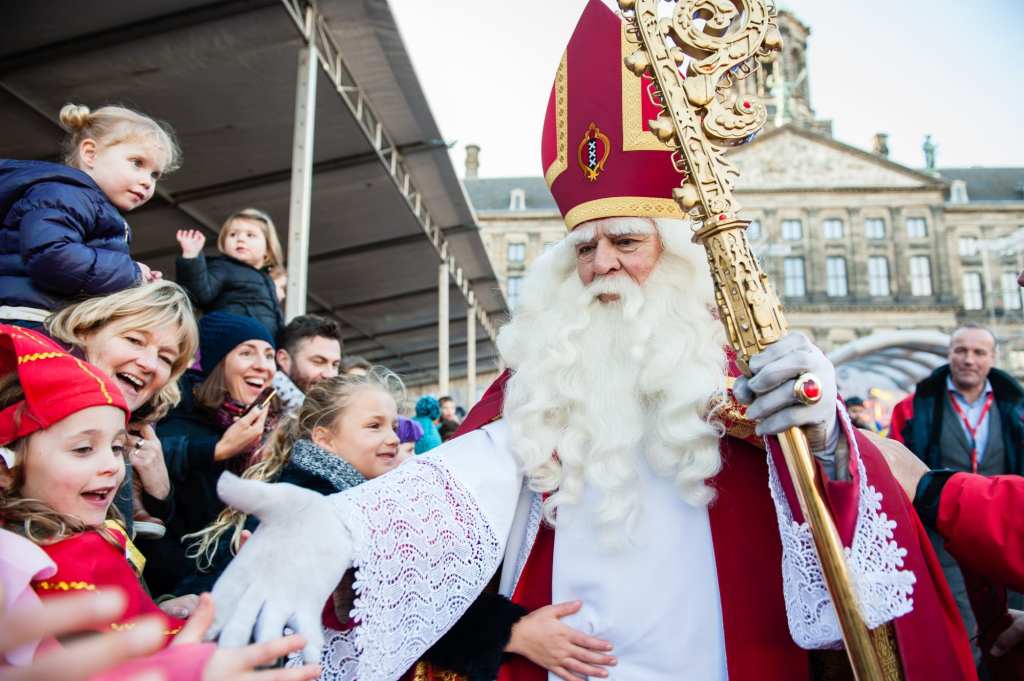
Over the course of many years, Nicholas’s popularity spread and he became known as the protector of children and sailors. His feast day is celebrated on the anniversary of his death, December 6. This was traditionally considered a lucky day to make large purchases or to get married. By the Renaissance, St. Nicholas was the most popular saint in Europe. Even after the Protestant Reformation, when the veneration of saints began to be discouraged, St. Nicholas maintained a positive reputation, especially in Holland.
Did you know? The Salvation Army has been sending Santa Claus-clad donation collectors into the streets since the 1890s.
Sinter Klaas Comes to New York
St. Nicholas made his first inroads into American popular culture towards the end of the 18th century. In December 1773, and again in 1774, a New York newspaper reported that groups of Dutch families had gathered to honor the anniversary of his death.
The name Santa Claus evolved from Nick’s Dutch nickname, Sinter Klaas, a shortened form of Sint Nikolaas (Dutch for Saint Nicholas). In 1804, John Pintard, a member of the New York Historical Society, distributed woodcuts of St. Nicholas at the society’s annual meeting. The background of the engraving contains now-familiar Santa images including stockings filled with toys and fruit hung over a fireplace. In 1809, Washington Irving helped to popularize the Sinter Klaas stories when he referred to St. Nicholas as the patron saint of New York in his book, The History of New York. As his prominence grew, Sinter Klaas was described as everything from a “rascal” with a blue three-cornered hat, red waistcoat, and yellow stockings to a man wearing a broad-brimmed hat and a “huge pair of Flemish trunk hose.”
Shopping Mall Santas
Gift-giving, mainly centered around children, has been an important part of the Christmas celebration since the holiday’s rejuvenation in the early 19th century. Stores began to advertise Christmas shopping in 1820, and by the 1840s, newspapers were creating separate sections for holiday advertisements, which often featured images of the newly-popular Santa Claus. In 1841, thousands of children visited a Philadelphia shop to see a life-size Santa Claus model. It was only a matter of time before stores began to attract children, and their parents, with the lure of a peek at a “live” Santa Claus. In the early 1890s, the Salvation Army needed money to pay for the free Christmas meals they provided to needy families. They began dressing up unemployed men in Santa Claus suits and sending them into the streets of New York to solicit donations. Those familiar Salvation Army Santas have been ringing bells on the street corners of American cities ever since.
Perhaps the most iconic department store Santa is Kris Kringle in the 1947 classic Santa Claus movie “Miracle on 34 Street.” A young Natalie Wood played a little girl who believes Kris Kringle (played by Edmund Gwenn, who won an Oscar for the role) when he says he is the real Santa Claus. “Miracle on 34 Street” was remade in 1994 and starred Lord Richard Attenborough and Mara Wilson.
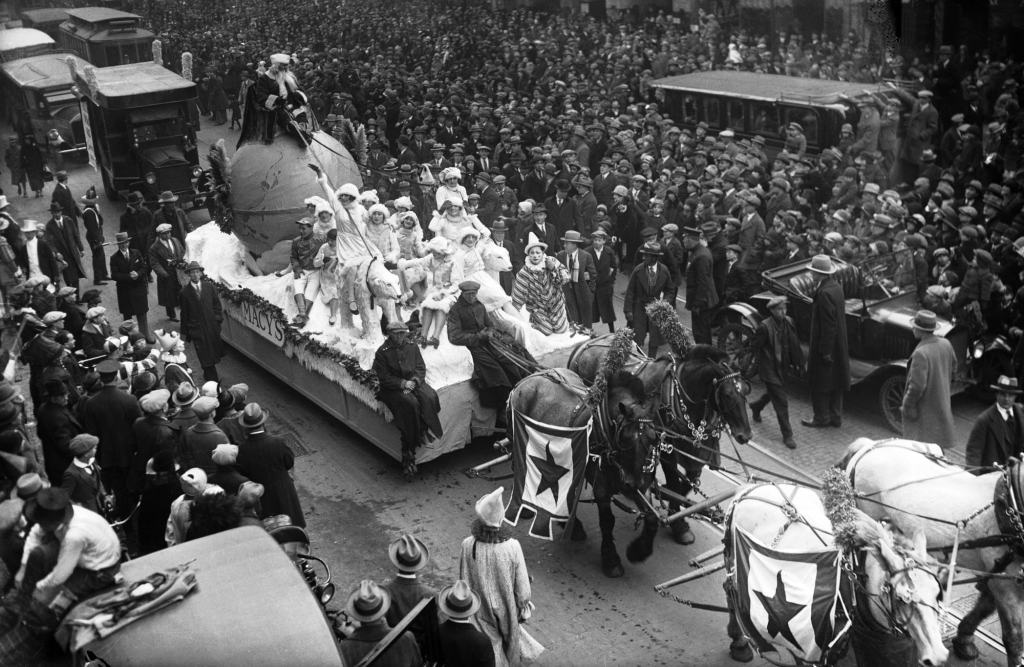
The Macy’s Santa has appeared at almost every Macy’s Thanksgiving Day Parade since it began in 1924, and fans of all ages still line up to meet the Macy’s Santa in New York City and at stores around the country, where children can take pictures on Santa’s lap and tell him what they want for Christmas.
‘Twas the Night Before Christmas
In 1822, Clement Clarke Moore, an Episcopal minister, wrote a long Christmas poem for his three daughters entitled “An Account of a Visit from St. Nicholas,” more popularly known as “‘Twas The Night Before Christmas.” Moore’s poem, which he was initially hesitant to publish due to the frivolous nature of its subject, is largely responsible for our modern image of Santa Claus as a “right jolly old elf” with a portly figure and the supernatural ability to ascend a chimney with a mere nod of his head! Although some of Moore’s imagery was probably borrowed from other sources, his poem helped popularize the now-familiar image of a Santa Claus who flew from house to house on Christmas Eve in “a miniature sleigh” led by eight flying reindeer to leave presents for deserving children. “An Account of a Visit from St. Nicholas” created a new and immediately popular American icon.
In 1881, political cartoonist Thomas Nast drew on Moore’s poem to create the first likeness that matches our modern image of Santa Claus. His cartoon, which appeared in Harper’s Weekly, depicted Santa as a rotund, cheerful man with a full, white beard, holding a sack laden with toys for lucky children. It is Nast who gave Santa his bright red suit trimmed with white fur, North Pole workshop, elves and his wife, Mrs. Claus
Santa Claus Around The World
18th-century America’s Santa Claus was not the only St. Nicholas-inspired gift-giver to make an appearance at Christmastime. There are similar figures and Christmas traditions around the world. Christkind or Kris Kringle was believed to deliver presents to well-behaved Swiss and German children. Meaning “Christ child,” Christkind is an angel-like figure often accompanied by St. Nicholas on his holiday missions. In Scandinavia, a jolly elf named Jultomten was thought to deliver gifts in a sleigh drawn by goats. English legend explains that Father Christmas visits each home on Christmas Eve to fill children’s stockings with holiday treats. Père Noël is responsible for filling the shoes of French children. In Italy, there is a story of a woman called La Befana, a kindly witch who rides a broomstick down the chimneys of Italian homes to deliver toys into the stockings of lucky children.
Christmas Traditions in the United States
In the United States, Santa Claus is often depicted as flying from his home to home on Christmas Eve to deliver toys to children. He flies on his magic sleigh led by his reindeer: Dasher, Dancer, Prancer, Vixen, Comet, Cupid, Donner, Blitzen, and the most famous reindeer of all, Rudolph. Santa enters each home through the chimney, which is why empty Christmas stockings—once empty socks, now often dedicated stockings made for the occasion—are “hung by the Chimney with care, in hopes that St. Nicholas soon would be there,” as Clement Clarke Moore wrote in his famous poem. Stockings can be filled with candy canes and other treats or small toys.
Santa Claus and his wife, Mrs. Claus, call the North Pole home, and children write letters to Santa and track Santa’s progress around the world on Christmas Eve. Children often leave cookies and milk for Santa and carrots for his reindeer on Christmas Eve. Santa Claus keeps a “naughty list” and a “nice list” to determine who deserves gifts on Christmas morning, and parents often invoke these lists as a way to ensure their children are on their best behavior. The lists are immortalized in the 1934 Christmas song “Santa Claus is coming to Town”:
“He’s making a list
And checking it twice;
Gonna find out Who’s naughty and nice
Santa Claus is coming to town
He sees you when you’re sleeping
He knows when you’re awake
He knows if you’ve been bad or good
So be good for goodness sake!”
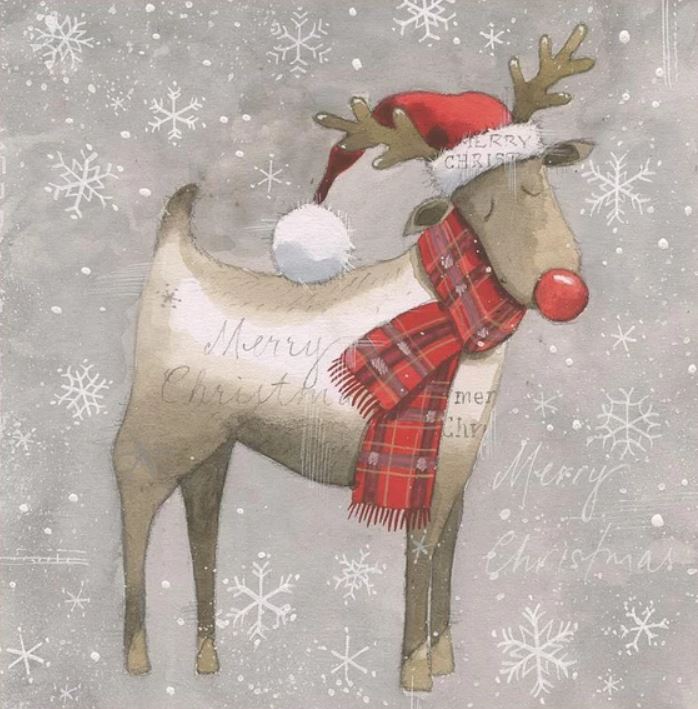
The Ninth Reindeer, Rudolph
Rudolph, “the most famous reindeer of all,” was born over a hundred years after his eight flying counterparts. The red-nosed wonder was the creation of Robert L. May, a copywriter at the Montgomery Ward department store.
In 1939, May wrote a Christmas-themed story-poem to help bring holiday traffic into his store. Using a similar rhyme pattern to Moore’s “‘Twas the Night Before Christmas,” May told the story of Rudolph, a young reindeer who was teased by the other deer because of his large, glowing, red nose. But, When Christmas Eve turned foggy and Santa worried that he wouldn’t be able to deliver gifts that night, the former outcast saved Christmas by leading the sleigh by the light of his red nose. Rudolph’s message—that given the opportunity, a liability can be turned into an asset—proved popular.
Montgomery Ward sold almost two and a half million copies of the story in 1939. When it was reissued in 1946, the book sold over three and half million copies. Several years later, one of May’s friends, Johnny Marks, wrote a short song based on Rudolph’s story (1949). It was recorded by Gene Autry and sold over two million copies. Since then, the story has been translated into 25 languages and been made into a television movie, narrated by Burl Ives, which has charmed audiences every year since 1964.
These 6 Christmas Traditions Are Actually Pagan Customs
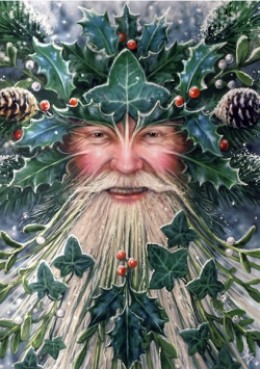
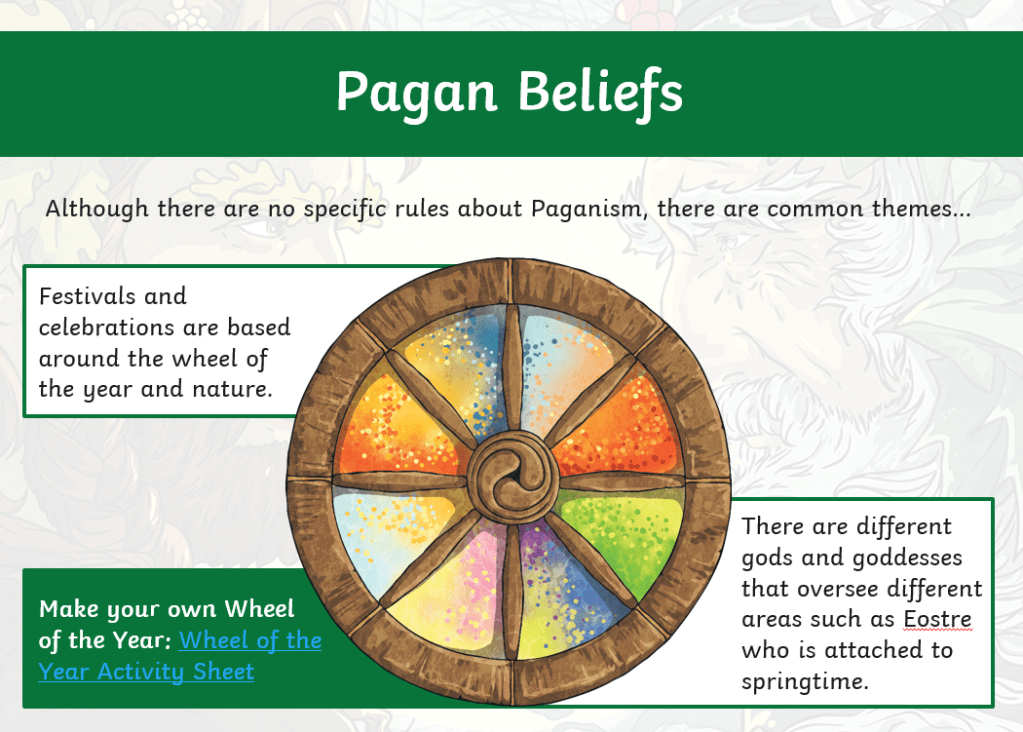
Humans as a species love to take inspiration from different cultures, customs, and traditions, and believe it or not, Christmas is no different. If you thought those cosy traditions you knew and loved were just about celebrating Christmas, think again! Things like kissing under a mistletoe, carolling, wreaths, and even gift-giving were all aspects of pagan holidays that were adapted into Christmas celebrations in the early years.
Decorating trees, feasting with loved ones, hanging up socks by the fireplace, and drinking yourself silly are no different – they’re all a part of pagan history and sacred holidays. In fact, most of the cultural aspects we associate with Christmas are steeped in pagan roots.
Some pagan traditions that have become associated with Christmas:
- Gift-giving,
- The image of Santa Claus,
- Christmas stockings,
- Christmas carolling,
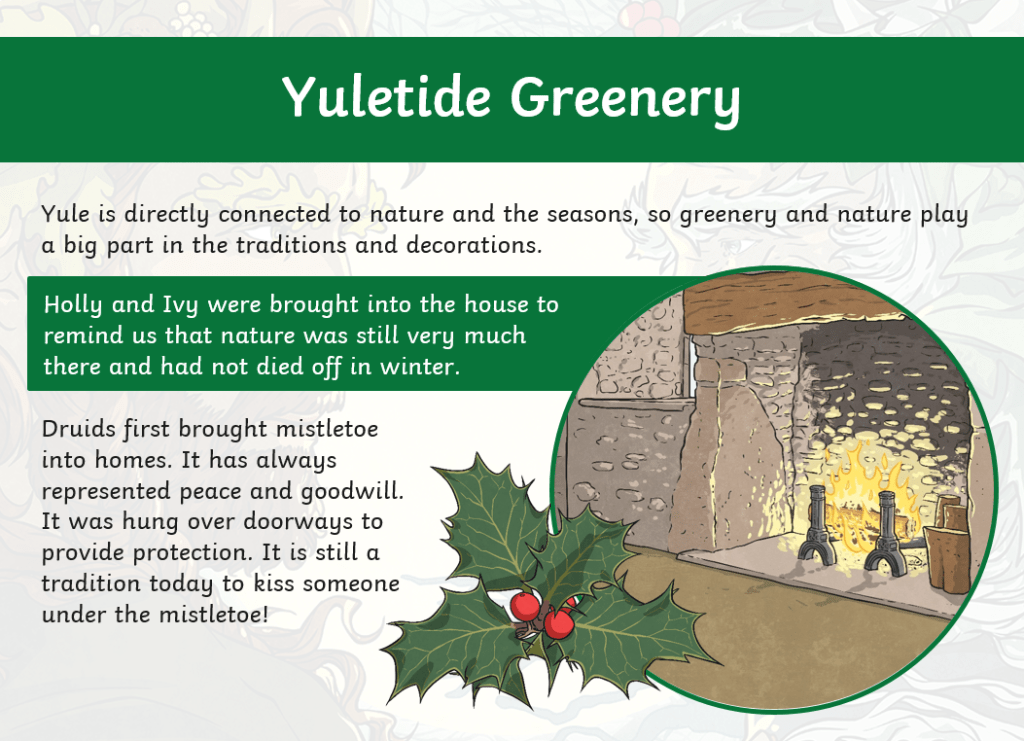
- Decking the halls with holly, and
- Decorating trees.
Who were the Pagans?
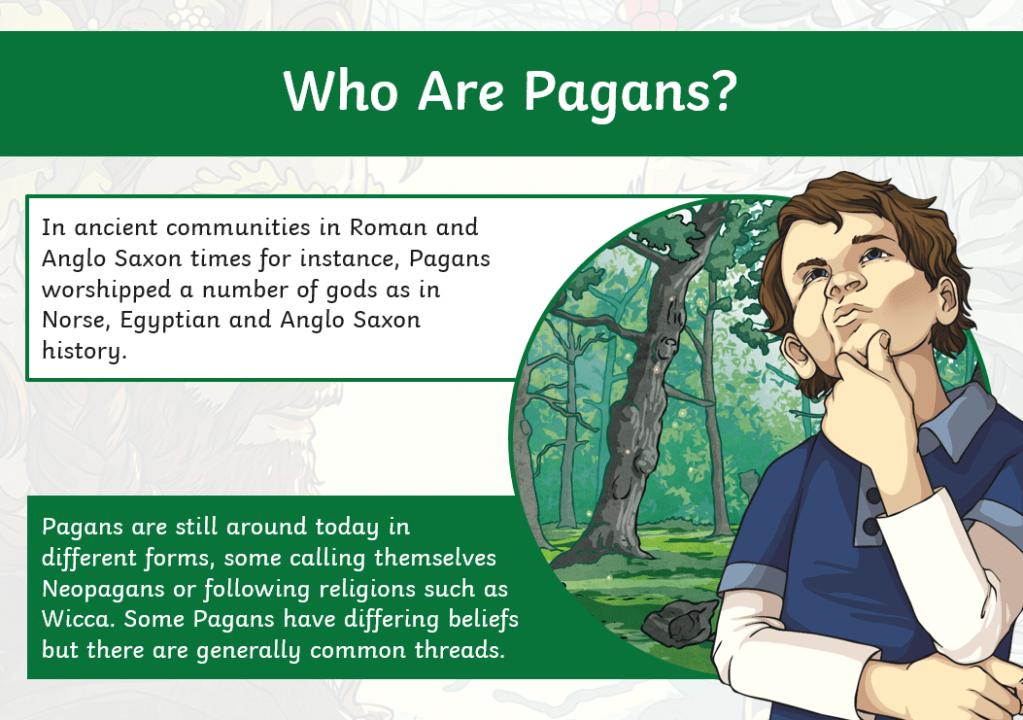
First thing’s first, what do we mean when we say pagan? This is a sweeping term that encompasses anyone from the Romans to the Norse in Scandinavia. As Christianity spread through Europe in the early ADs, missionaries got to know a lot of different groups of people with varying religious systems and beliefs. All of these people and religions were lumped into the catch-all term of ‘pagan’.
Although Christians had the goal of spreading their religion across Europe, they were still quite fascinated by many of the customs and ways of the pagans. Clearly they were fascinated enough to pick up a few of those beliefs and traditions and adapt them as part of Christian celebrations!
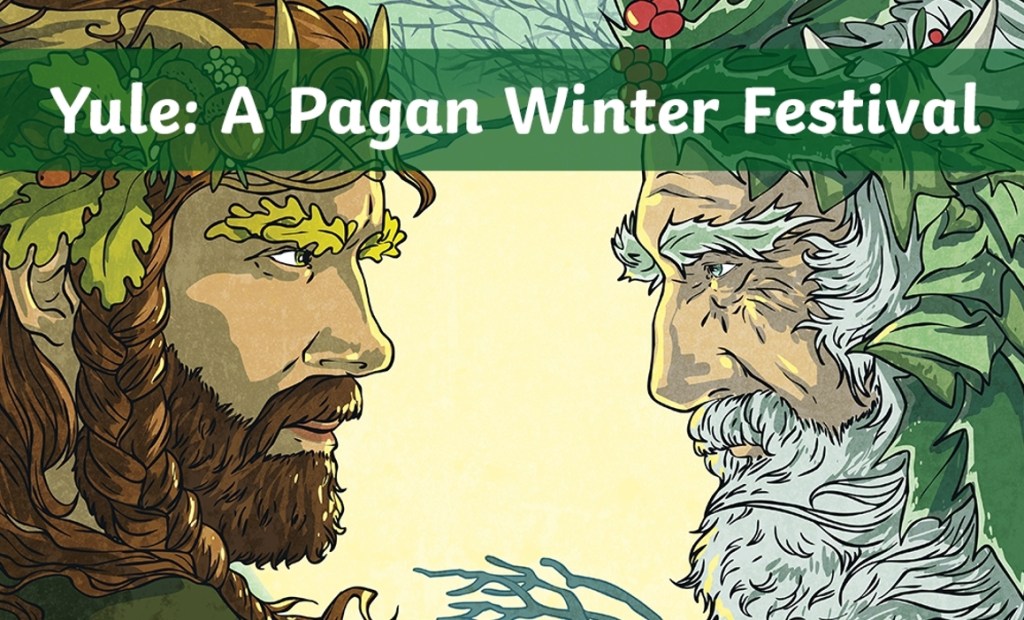
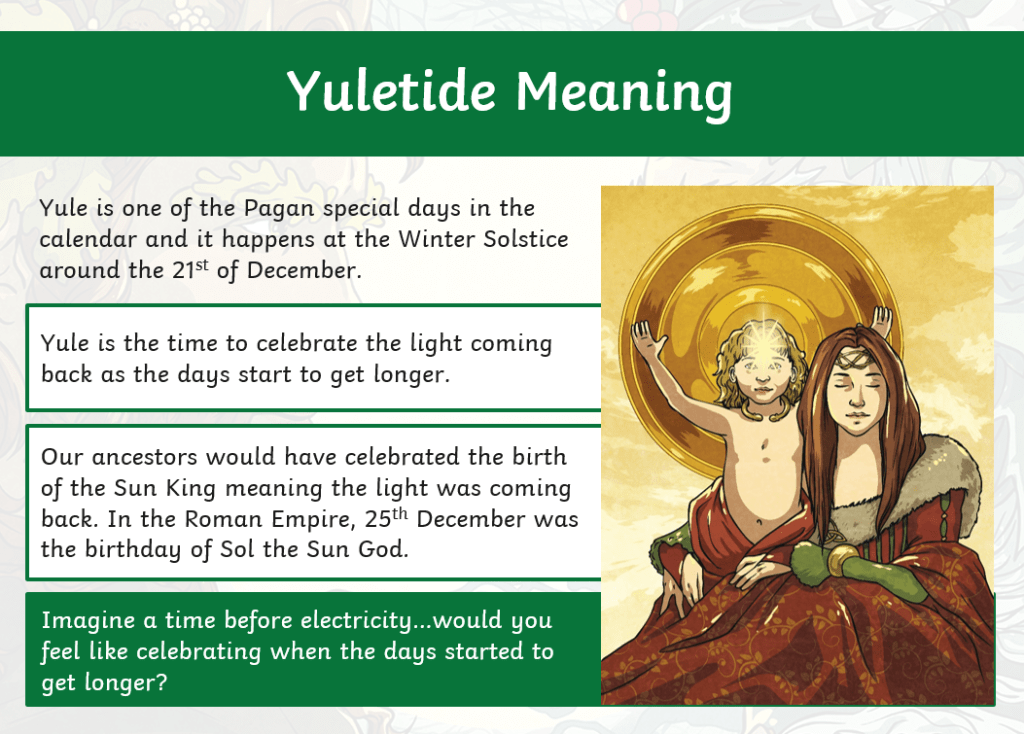
The winter solstice celebration
Keep reading and you’ll find that Christmas is inspired by traditions from the Romans, Celtics, Norse, Druids, and more (all pagan). At the time, all of these different groups shared one big celebration that just hapened to fall around Christmas time – the winter solstice. People living in the northern hemisphere celebrate winter solstice (or the shortest day of the year) smack bang in the middle of December, and this is why Christmas just so happened to fall around the same time as many existing pagan holidays.
The winter solstice was a huge part of pagan life. As they were primarily agricultural people, winter marked the end of the year’s harvest and the chance to enjoy the company of loved ones and rest from toiling the fields. Pagans could stop farming through the winter, and instead devoted themselves to worshipping their various gods and celebrating with those around them. As winter in the northern hemisphere tends to be a dark, cold, and hungry period of time, the winter solstice was celebrated to help keep people entertained and enjoy themselves until the sun rolled around again.
So, now that you have an idea of the background, let’s look at some pagan traditions that have become associated with Christmas.
1. Gift-giving and Saturnalia
Not only is December a time to celebrate winter solstice, but between the 17th and 24th of the month, the Romans also celebrated Saturnalia. This was a pagan holiday in honour of the agricultural god, Saturn. Romans would spend the week of Saturnalia much like how we spend Christmas holidays today – feasting, drinking, giving gifts, and being joyful.
These days we fork out lots of money on Christmas gifts, but back then the Romans exchanged small gifts for the sake of good luck. The idea was to give a gift in the hope of bringing in a bountiful harvest the next year. Rather than have huge lists of gifts to give, the Romans also shared only one gift with one other person. Somewhere along the line, giving gifts for luck and prosperity became a multimillion dollar business… isn’t that funny?
2. Santa’s image & Christmas stockings
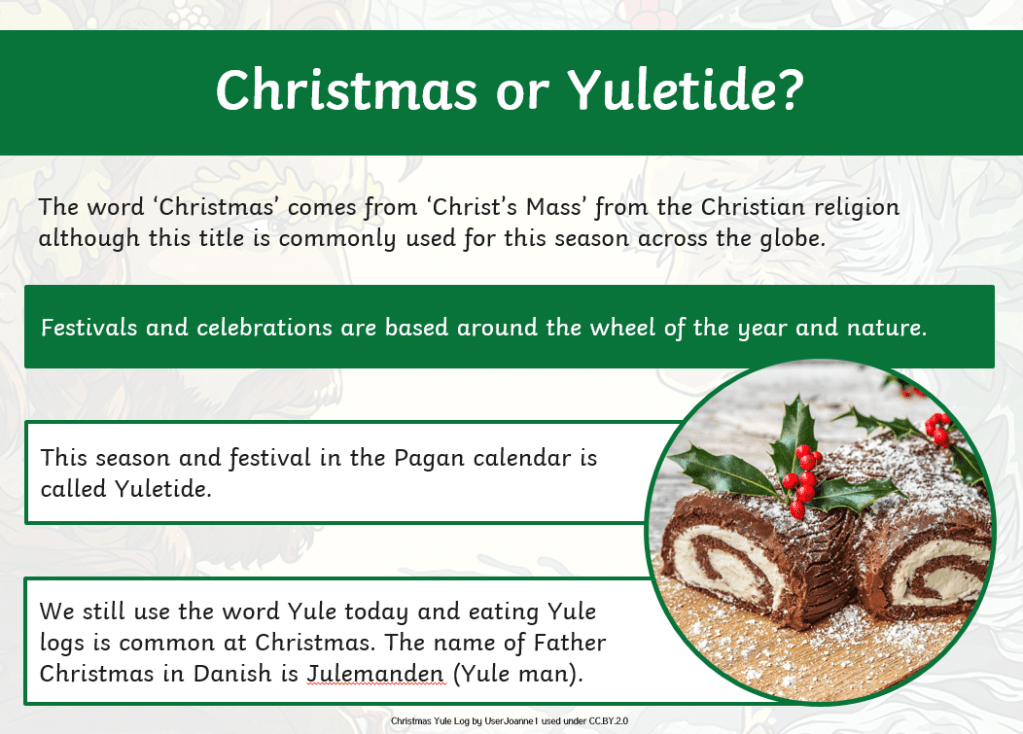
Our current modern day image of Santa Claus, clad in red fur with a big white beard, was largely developed by Coca-Cola in the 1930s. But the idea of an old man giving gifts to children dates much earlier than that, back to the time of the pagans.
Father Christmas, otherwise known as St. Nicholas, was a patron saint of children, the poor, and prostitutes. Living around 4th century AD, St. Nicholas was a generous bishop who was known for giving gifts to the poor, sporting a big beard and a long cloak much like the Santa we know and love.
But even before St. Nicholas, there was another bearded old man called Odin. This diety was worshipped by early Germanic pagan tribes, traditionally portrayed as an old man with a long, white beard with an 8-legged horse called Sleipnir who he would ride through the skies (just like Santa’s reindeer). During the winter, kids would fill their booties with carrots and straw and leave them by the chimney for Sleipnir to feed on. Odin would fly by and reward the children with little presents in their booties, much like we do with Christmas stockings today.
The Santa Claus we all imagine in our heads today is a mish-mash of the generous St. Nicholas, the god Odin and Sleipnir, and Coca-Cola’s iconic red-dressed character.
3. Christmas carols
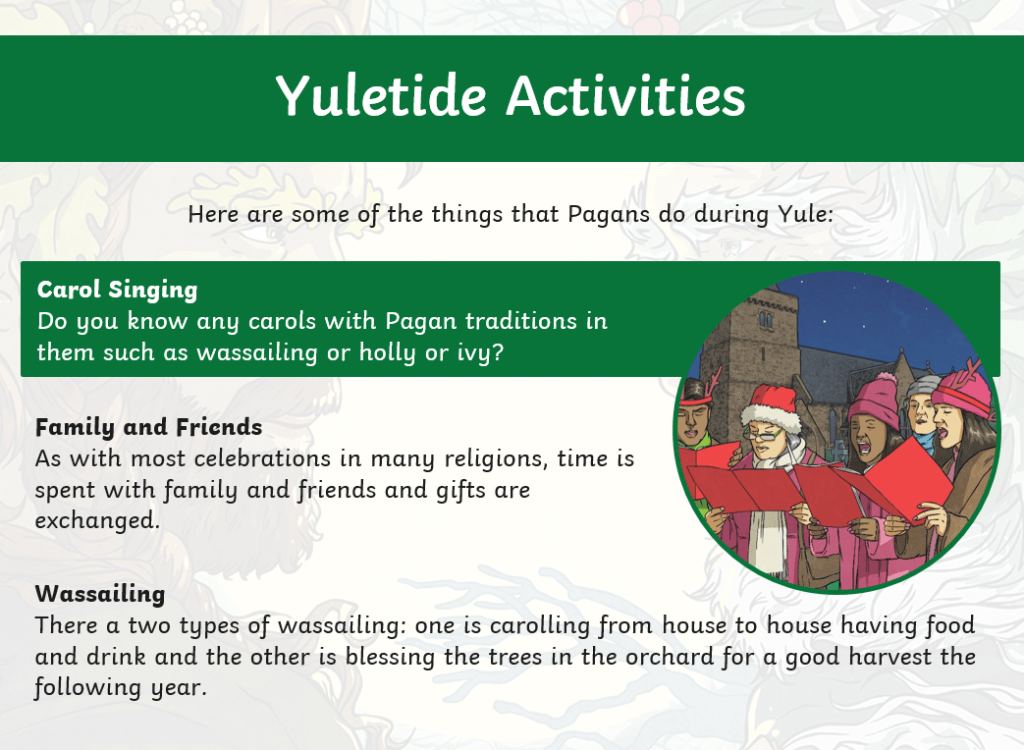
While the carols we sing for Christmas are undeniably Christian, the tradition itself of going door-to-door singing to your neighbours comes from another pagan tradition called wassailing. The rather funny word comes from the Anglo-Saxon phrase of ‘waes hael’, translating to ‘good health’. Every year, wassailers would roam through their villages in small groups, singing loudly with the aim of banishing evil spirits and wishing good health to those around them.
No wassailing group was complete without their traditional drink on hand – made from mulled ale, curdled cream, roasted apples, eggs, spices, and sugar. In the 13th century, St. Francis took inspiration from these happy choirs and started the tradition of Christmas carolling.
4. Kissing under a mistletoe
Ever wondered about the correlation between mistletoe and kissing? Well, funnily enough, the tradition goes all the way back to the pagans. Everyone from the Romans and Celts to the Druids and the Norse had a thing about mistletoe. It was considered to be a highly sacred plant, involved in several pagan rituals.
In the Roman world, mistletoe honoured the god Saturn. To keep him happy, they would perform fertility rituals underneath sprigs of mistletoe – yes, that’s exactly what it sounds like! We’ve certainly toned it down as far as mistletoes are considered, and left it with just a simple kiss – probably a good idea since family is always around.
In the world of the Druids, mistletoe symbolised peace and joy. In times of war, if enemies were to meet underneath woodland mistletoe then they would drop their weapons and form a truce until the next day. In a way, kissing is a form of truce…
5. Decking the halls with holly
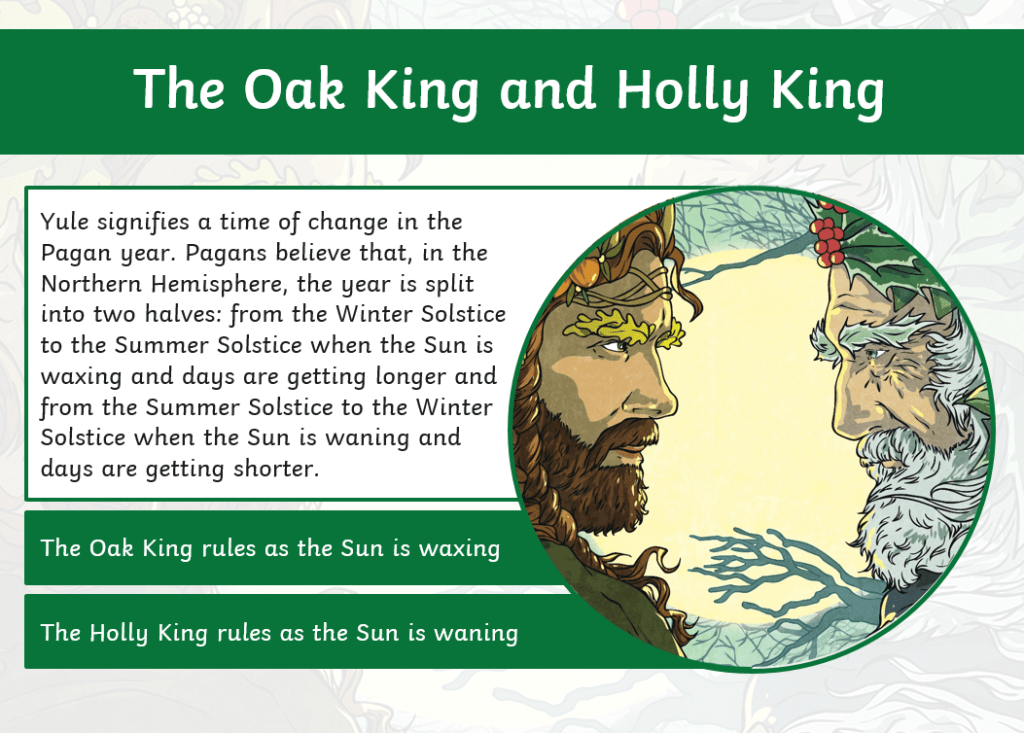
Mistletoe wasn’t the only sacred plant for pagans. Holly was another holy plant connected with the god Saturn. During the Saturnalia holiday, Romans made holly wreaths to exchange as gifts for good luck. At the time of Saturnalia, early Christians began to celebrate Christmas, however they were often persecuted for practicing their new religion. It was lucky that Christmas coincided with Saturnalia as it allowed Christians to harbour a cover for their Christmas celebrations.
To avoid detection and make it look like they were celebrating Saturnalia, Christians started hanging holly wreaths around their homes. This allowed them to recognise other Christians and still do something nice to celebrate their sacred holiday. Eventually, as pagans decreased, holly became a symbol of Christmas instead of Saturnalia.
6. Christmas tree decorating
We sure have taken a lot of inspiration from the Romans, and tree decorating is just another borrowed tradition! Besides feasting, drinking, and exchanging gifts during Saturnalia, Romans also hung small metal ornaments on trees outside their homes. Each of these little ornaments represented a god, either Saturn or the family’s personal patron saint.
Early Germanic tribes practiced a similar tree decorating tradition, this time with fruits and candles to honour the god Odin throughout winter solstice. Christians seemed to have merged the tree decorating with ornaments, candles, and fruits to make Christmas tree decorating one extravagant tradition.

 ukhomeschool