
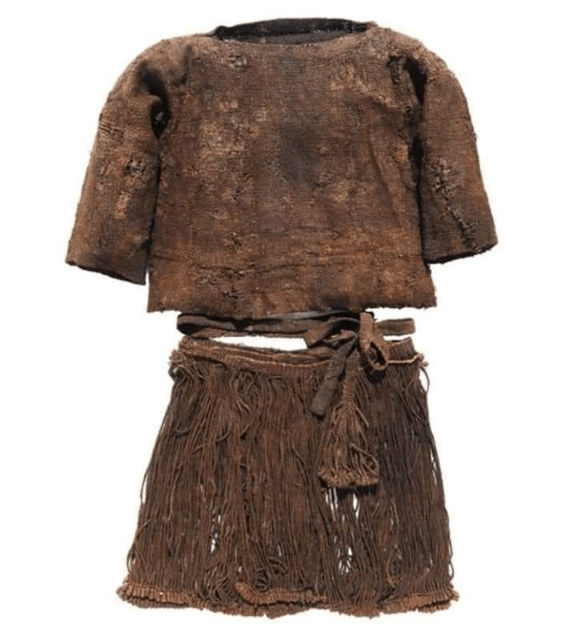
https://www.bbc.co.uk/news/world-europe-32835804
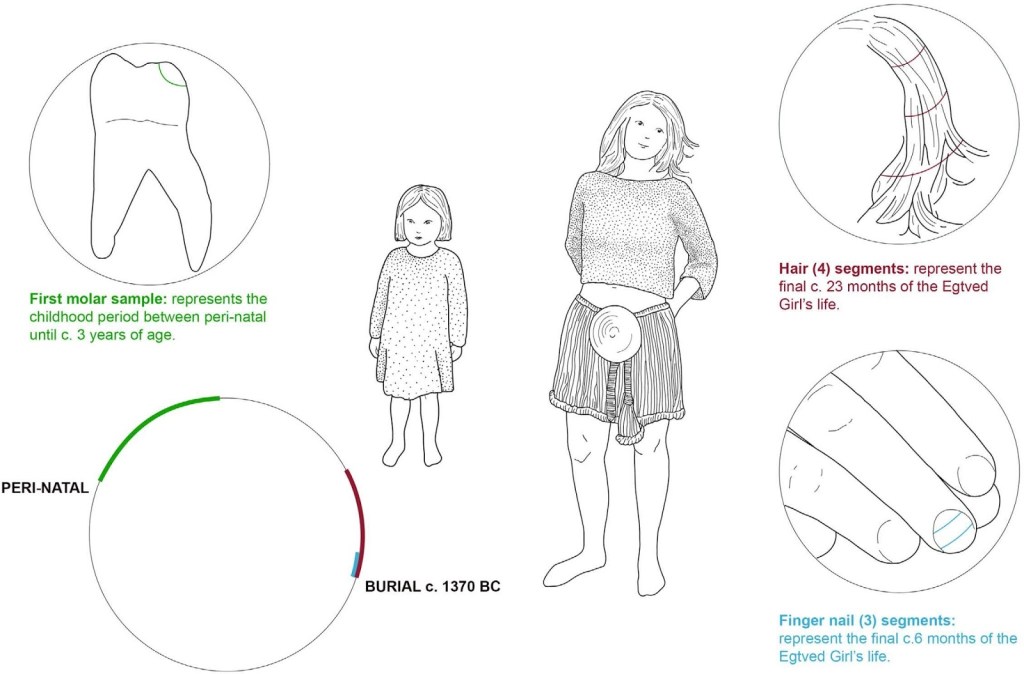
Drawing depicting the sampling strategy to reconstruct a high-resolution life-mobility-timeline of the Egtved Girl. Tooth enamel was sampled to reconstruct the first years of her life, segments of scalp hair to reconstruct, at least, the 23 final months of her life as well as segments of one of her fingernails to reconstruct the final approximately 6 month of her life.
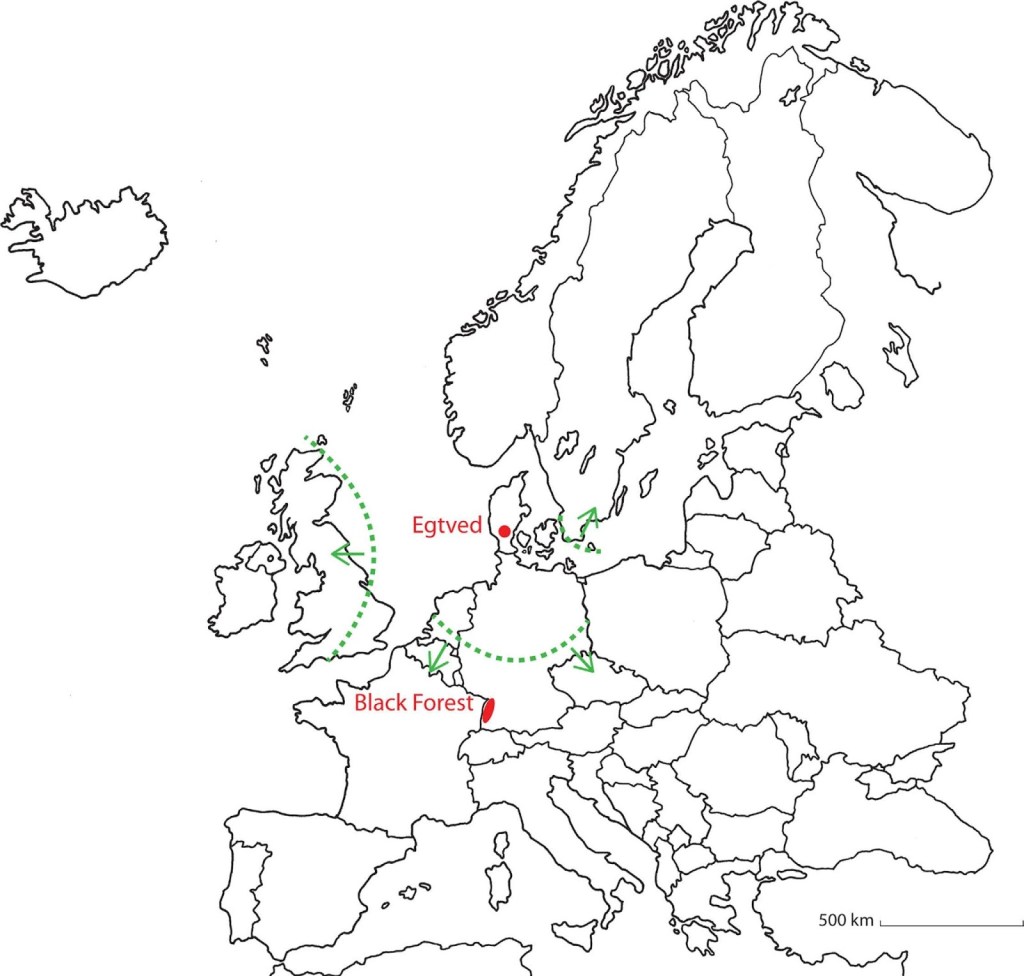
Map showing the location of the Egtved burial site (red dot). Borders of the nearest areas with bioavailable 87Sr/86Sr values that potentially fit the tooth enamel, the child’s bone, wool garments and oxhide belonging to the Egtved find are marked with green lines and arrows. Of these regions the Black Forest area (red ellipse) appears to be the most plausible place of origin as constrained by the multiple strontium isotope codes contained in materials from the Egtved find combined with the archaeological artefact record patterns.
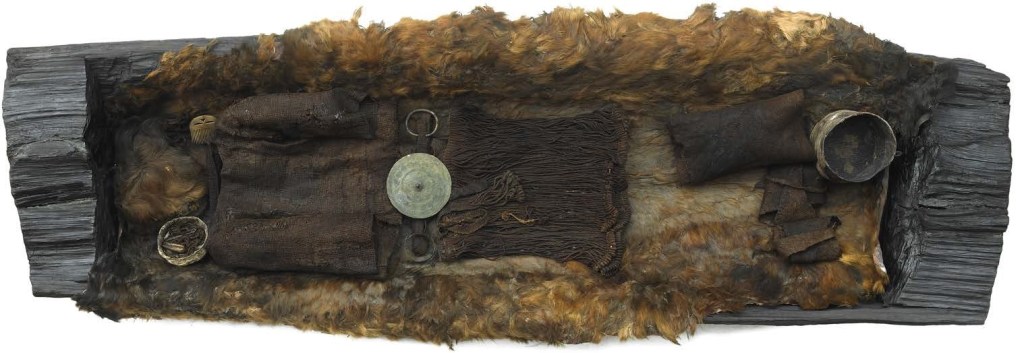
A photo of the remains of a Bronze Age high status female found inside an oak-coffin in a monumental burial barrow at Egtved, Denmark. The Egtved Girl’s garments are extremely well preserved and her exceptional wool costume consists of several wool textile pieces as well as a disc-shaped bronze belt plate, symbolizing the sun.
http://sciencythoughts.blogspot.com/2015/06/interpreting-life-history-of-egtved-girl.html
https://www.livescience.com/50911-bronze-age-danish-burial.html
 ukhomeschool